At a glance
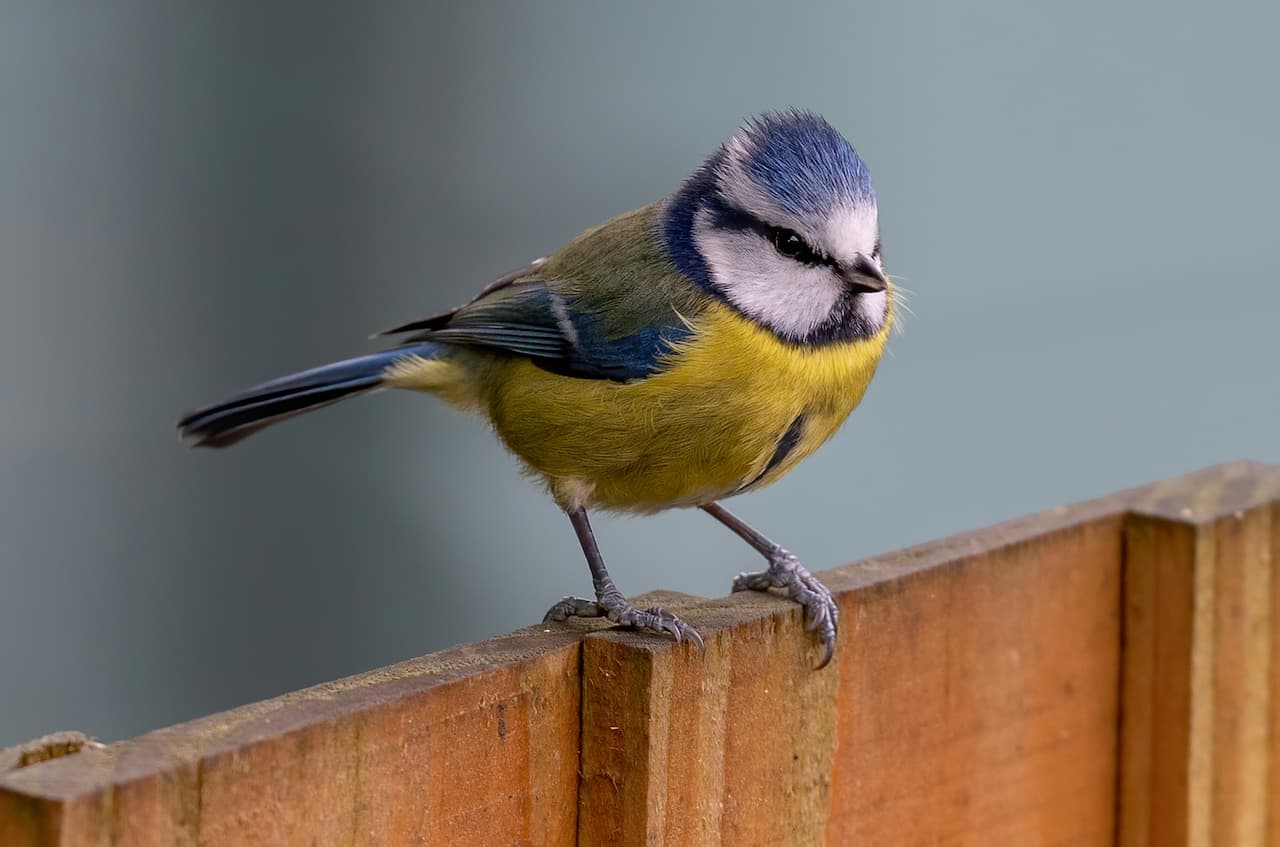
The blue tit is one of Britain’s most recognisable and best-loved garden birds. Small, acrobatic and brilliantly coloured – with a vivid blue cap, yellow underparts and green back – it is a fixture at feeders and nest boxes across the country from January to December. Blue tits are resident in the UK year-round, and a garden that provides the right combination of food, water and nesting habitat can support the same pair or family group across multiple seasons. Few garden wildlife investments pay off as visibly or as quickly as a well-positioned nest box checked the following spring to find a completed nest and a clutch of eggs inside.
Attracting blue tits successfully is partly about feeders and partly about understanding what the species needs at each stage of its year. Like many garden birds, blue tits eat very differently depending on the season – supplementary seed and fat-based food matters most in winter, while the breeding season from April to June is almost entirely dependent on live caterpillars. A garden with a well-stocked feeder but no caterpillar-supporting trees or shrubs will attract blue tits to feed but is unlikely to support successful nesting. This guide covers both elements – the feeder management that keeps blue tits visiting and the habitat features that allow them to breed.
About blue tits
The blue tit (Cyanistes caeruleus) is a small passerine bird of the tit family, weighing around 11 grams – roughly the weight of a 10 pence coin. Despite its tiny size it is remarkably bold, regularly dominating feeders shared with larger birds and capable of hanging upside down to access food that other species cannot reach. This acrobatic ability makes it a particularly entertaining feeder visitor and is an adaptation for foraging in the outer twigs and undersides of branches in its natural woodland habitat, where it hunts insects and spiders through the breeding season.
Blue tits are primarily woodland birds that have adapted exceptionally well to garden environments. The garden, with its diverse mix of trees, shrubs, feeders and nest boxes, provides most of what the species needs within a small area. A blue tit pair typically holds a territory of around 1-2 hectares during the breeding season, but in winter they join larger roving flocks – often mixed with great tits, long-tailed tits and other species – that move through gardens searching for food. A well-stocked feeder in winter can attract these flocks repeatedly as they circuit through an area.
Food and feeding
Blue tits at feeders will take a wide range of foods, but their strong preference is for high-fat, high-energy items that reflect their need to maintain body temperature through British winters. Sunflower hearts are arguably the single best feeder food for blue tits – they are high in fat and protein, have no husk to discard, and are taken readily from any feeder type. Unsalted peanuts in a wire mesh feeder are equally popular and have the advantage of encouraging the acrobatic hanging behaviour that makes blue tits so entertaining to watch. Fat balls and suet products are taken readily through winter and are particularly valuable during cold snaps when natural food is scarce.
The critical food consideration for blue tits is what happens during the breeding season. Adult blue tits switch almost entirely to caterpillars to feed their chicks, and a clutch of 8-12 chicks can require over 100 caterpillars per day during peak demand. This food is not available from a feeder – it must come from the garden environment itself, primarily from the leaves of native trees and shrubs. Oak is the most important single tree for blue tit chick food in Britain, supporting hundreds of species of caterpillar. If there are mature oaks anywhere near the garden the blue tits will range to them; planting native trees and shrubs in the garden increases the local caterpillar supply directly.
Nest boxes
Blue tits are one of the most reliable users of nest boxes in the UK. A correctly sized and positioned box has a high probability of occupation in any garden where blue tits are present, making nest boxes one of the most rewarding and straightforward contributions a garden owner can make to local bird populations. The key specification is the entrance hole diameter – 25mm is the correct size for blue tits, small enough to exclude great tits and starlings but correctly sized for the blue tit’s body. A 28mm hole allows great tits to enter and compete for the box; a 32mm hole is suitable for house sparrows but too large for blue tits to defend effectively.
Height is the next most important factor. Blue tits naturally nest in tree cavities and prefer boxes positioned at least 2-3 metres off the ground, with 3-4 metres being ideal. Lower boxes are more vulnerable to predation by cats and grey squirrels – both significant threats to nesting blue tits in UK gardens. Facing the box north or north-east avoids overheating in summer, which can kill chicks in a warm June or July. A small overhang on the roof helps keep rain out of the entrance hole. The box should be fixed firmly – a box that moves in the wind is less likely to be used than one that is completely stable.
Clean the box every October without fail. Old nesting material harbours parasites – particularly blow fly larvae and nest mites – that can kill chicks in subsequent seasons. Remove all old material, scrub the box with boiling water (no detergent) and allow to dry completely before replacing. A clean box is significantly more likely to be reused the following spring than one with old nest material left in place.
Garden habitat features
Beyond feeders and nest boxes, the garden features that support blue tits most effectively are those that increase insect availability through the breeding season. Native trees and shrubs support far higher caterpillar numbers than ornamental exotics, because native species have co-evolved with the insects that feed on them and have a much broader community of leaf-feeding larvae. A single native oak, birch or hawthorn supports orders of magnitude more caterpillar species than an ornamental cherry or photinia of the same size.
A wildlife pond in the garden increases insect diversity significantly – many aquatic insects emerge as adults that provide food for blue tits foraging in waterside vegetation. Dense shrubs of any kind increase the invertebrate habitat available, as leaf litter, bark and woody stems all support populations of insects and spiders that blue tits hunt through autumn and winter when caterpillars are absent. Allowing some areas of the garden to grow a little rougher – an unmown corner, a leaf pile, a log pile – contributes meaningfully to the insect prey available to the garden’s blue tit population. A wildlife pond that also attracts frogs and other invertebrate-supporting wildlife creates a richer garden ecosystem that benefits blue tits alongside many other species.
Seasonal calendar
Blue tits follow a well-defined annual cycle. Understanding what the species is doing each season allows garden support to be timed effectively and ensures that the most critical interventions – clean feeders in winter, undisturbed nest boxes in spring – happen at the right time.
Blue tits share garden space well with other species and a garden set up for blue tits will simultaneously benefit robins, house sparrows and many other visiting birds. The overlap between what different species need – clean feeders, fresh water, insect-rich planting, undisturbed nesting cover – means that improving the garden for one species almost always benefits several others at the same time.
Share on socials: