At a glance
I’ve been growing tomatoes outdoors on the allotment for a long time now, and in that time I’ve lost crops to blight more than once. The first time it happened I was confused about why everything had gone so quickly, and then when I understood it I was mostly annoyed that I hadn’t been paying enough attention to the weather. Blight is one of those things that comes on fast and, by the time you’re sure of it, you’re usually already too late to save the plant.
This article covers late blight, which is the disease that destroys entire crops and the one almost every UK grower who loses tomatoes outdoors is dealing with. Early blight is also briefly mentioned because the title raises it and people ask, but it’s a different organism and in a normal UK summer most people never see it. What follows is what I know about late blight: how to spot it, how it arrives, what you can do once it’s there, and how to make it less likely to hit the same way next season.
What tomato blight actually is, and why early blight barely matters in the UK
Tomato blight is caused by Phytophthora infestans. Not a true fungus, despite the white growth it produces, but something called an Oomycete, which behaves in some ways like a fungus but is a separate class of organism entirely. The same pathogen causes potato blight. The spores are microscopic, wind-carried, and present in some quantity on nearly every allotment in the country for most of the growing season.
The question is never whether the spores are there. They almost certainly are. The question is whether the weather has given them what they need to infect. Prolonged surface wetness on the leaves, ideally several hours of it, is what the pathogen needs to get established. In a dry summer, even with spores blowing around, infection is much less likely. In a wet and warm July or August, a plant left unchecked can go from first symptoms to total collapse in about a week.
Early blight is something different. It is caused by a fungus called Alternaria solani, which is not Phytophthora at all. In the UK it is rarely the disease people are dealing with. Early blight is primarily a problem in the warmer, more humid parts of the United States and in some continental European climates. In an exceptionally warm UK summer it can show up, but most of what gets called “early blight” in UK gardens, the brown spots that appear early in the season on lower leaves, is more likely to be a different problem: nutrient deficiency, leaf mould, or septoria leaf spot. If you are growing tomatoes outdoors in the UK and something is destroying your plants in midsummer, the one to understand and plan for is late blight. Early blight is the rarer footnote.
How to recognise it, and how it looks different from other problems
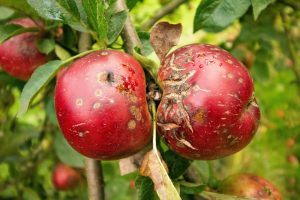
The disease always starts on the leaves. The very first sign is usually a patch on the leaf that looks waterlogged rather than dry, rapidly spreading and with a slightly light-green appearance around the edges of the rotting area. When the conditions are right for the pathogen to be actively spreading, there will be a fine white growth visible on the underside of the leaves where the new infection is occurring. That white growth on the underside is the clearest indicator. It is a different colour from leaf mould (which is greyish-brown) and leaf mould is mainly a greenhouse problem anyway. Late blight is the one that shows white.
From the leaves, the disease moves to the stalks and stems, where it produces brown lesions with the same tendency to develop white growth under humid conditions. The stems turn deep brown or black, the marks spread, and at this point the plant begins to lose its ability to function at all. Stems become soft, then mush.
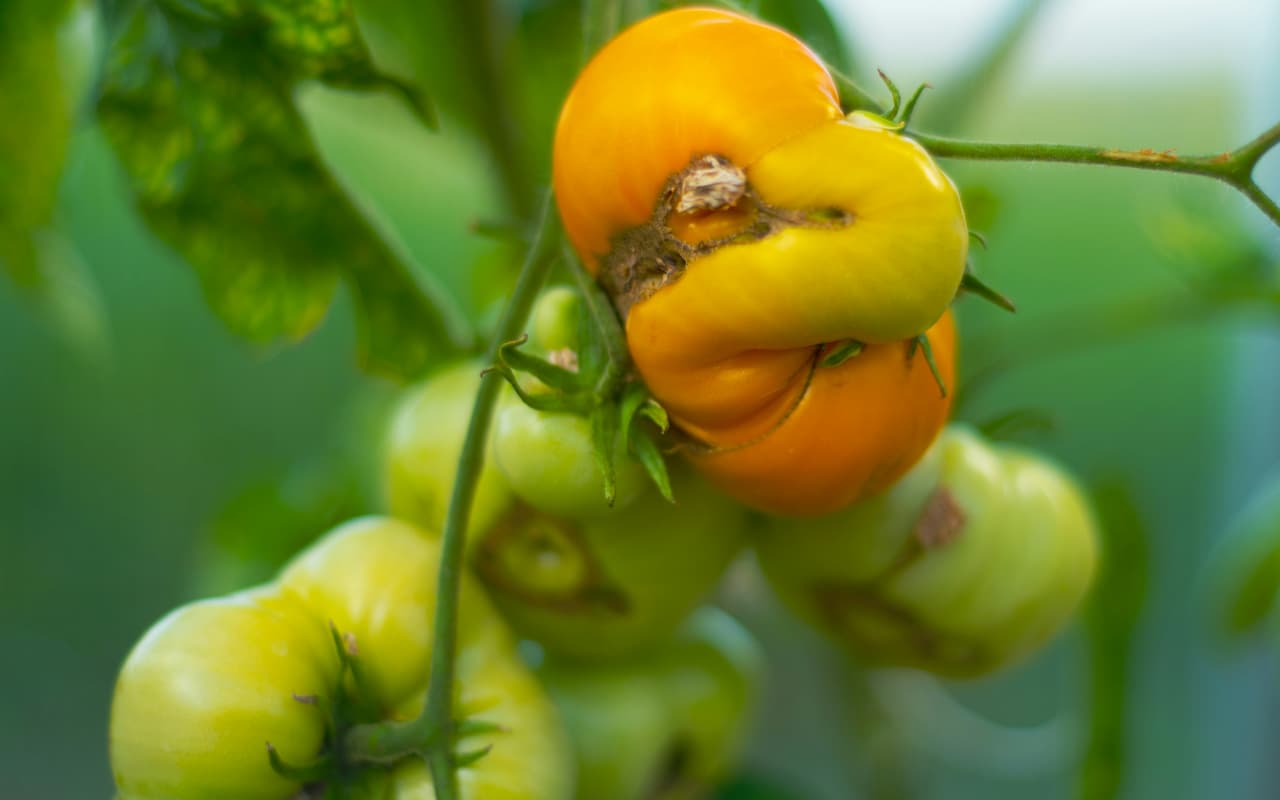
The fruit is usually affected last, but by the time you are seeing brown patches on stems the fruit is already compromised even if it does not yet show it. Green fruit develops watersoaked patches that turn brown. Ripe fruit decays rapidly. Brown areas on the outside of fruit are not just surface damage; the rot goes in. Once a plant is infected, any fruit that looks healthy at that moment has probably already been infected and will rot when you try to ripen it indoors.
How it arrives, why it always comes from the same place, and what the Hutton Criteria mean
The primary source of late blight each year in the UK is potato crops. The pathogen overwinters in infected potato tubers left in the ground from the previous season: from gardens, allotments, and commercial potato fields. The spores released from those infected potato plants travel on the wind. This is why you can grow tomatoes on ground that has never had blight, in a garden with no potatoes nearby, with pristine hygiene, and still get it: the spores come from miles away and from crops you never see. The usual UK experience is that tomato blight follows potato blight by a week or two, once potato blight has been reported locally.
Tomato material from the previous year is not the source of the following year’s infection. Tomatoes die back completely in winter; there are no living tissues to harbour the pathogen through the cold. It is potatoes, not tomatoes, that carry it from one season to the next.
What you can track is when the conditions are right for infection to take hold. In the UK, outbreaks can occur from June onwards, and they tend to arrive earliest in the South West where warm, wet weather combines earlier in the season. A Hutton Criteria period is defined as two consecutive days with a minimum temperature of 10 degrees and at least six hours per day with relative humidity at or above 90%. When those conditions occur, blight risk is high and spores that land on wet leaf surfaces can infect quickly. The BlightSpy tool, now run by James Hutton Limited, maps forecast blight risk across the UK and is free to use. Looking at it when wet weather is forecast in summer tells you when to be especially alert, and if you are considering preventive action, when that action might be timed.
One more thing about how the disease spreads, because this affects what you do about disposal. Some newer strains of the blight pathogen can now produce resting spores in the tissues of infected plants. These resting spores can survive in soil and can survive home composting, because home compost heaps do not reliably reach the temperatures needed to destroy them. Municipal and commercial composting does reach those temperatures. This is why blighted plant material should not go on the home compost heap. It should go to the council green waste, be burned, or be deeply buried below the level of normal cultivation.
What to do when a plant has blight
There is no cure. Once late blight has taken hold in a plant, there is nothing that can save it. There are no fungicides available to home gardeners in the UK for treating blight, and copper-based sprays that were previously used as a preventive were withdrawn from amateur use some years ago. This is not a gap that is likely to be filled soon: the pathogen evolves quickly and chemical controls even at commercial scale have limited effectiveness once infection is established. The only response once blight is confirmed is a managed retreat.
First, take out any plant that has clearly succumbed. The longer blighted plants stay in the ground, the more spores they produce and shed into the area. The canes, stakes, and any support structures that were in contact with the plant should be cleaned before storage or reuse. A disinfectant like Jeyes Fluid on tools and canes will do it, used per the product instructions. With the fruit: once a plant is infected, pick off everything that looks unaffected and use it straight away. Do not try to ripen green tomatoes from an infected plant, because many of them will already be carrying the disease internally without showing it yet. Green tomatoes made into chutney or sauce are a far better use of them. If you catch it very early, while just a small number of leaves are affected, removing those leaves may delay the spread slightly. It will not stop the disease.
There are no fungicides available to UK home gardeners for blight. Copper-based sprays were withdrawn from amateur use some years ago. Any product claiming to cure established blight infection should be viewed with scepticism. Prevention and managed removal are the only tools available.
How to prevent it, and the practices that make a real difference
Growing tomatoes in a greenhouse helps a lot. The spores are wind-carried and getting into a closed greenhouse is harder than landing on an outdoor plant. Greenhouse tomatoes can still get blight, but it is much less likely, and when it does get in, keeping the greenhouse well ventilated and the foliage dry is the main defence, because the high humidity inside a greenhouse once blight has established can accelerate the disease very rapidly.
For outdoor plants, the key is to stop the leaves from being wet for extended periods. The pathogen needs prolonged surface wetness to infect. Water at the base of the plant, not over the foliage. If you are watering in the evening, any moisture on the leaves will sit there all night. Morning watering, at the roots, gives any accidental splash the rest of the day to dry off. This is one of those things I should do consistently and sometimes forget to, and the difference between a careful season and a lazy one in this respect is real.
Keep an eye on the BlightSpy forecast during the main growing season. When Hutton Criteria conditions are predicted for your region, watch the plants more closely during and after that period. Catching the very first symptoms and removing the affected plant promptly is about the best outcome available once blight has arrived.
Which resistant varieties are worth growing, and how much resistance actually means
No variety is completely immune to late blight. The pathogen evolves and new strains can potentially overcome whatever resistance a cultivar was bred for. Resistance that held consistently one year may start to show gaps in another, especially if new genetic variants are circulating in the area. What resistance actually means in practice is not “will not get blight” but “will get it later, less severely, and may still produce something when susceptible varieties have already died”.
Crimson Crush is the one to start with. It is an F1 variety bred specifically for outdoor growing in the UK climate and the standout resistant option. It has performed well in trials when blight was extremely widespread and susceptible outdoor varieties were lost. Mountain Magic is the other F1 that has performed consistently well in the same conditions. Both are widely available from seed companies and both are worth growing if you do not already know them.
Losetto and Lizzano are cherry varieties with good blight tolerance, useful if you prefer cherry types or want something for pots. The spread of leaf and the way they grow makes them reasonably manageable for disease risk anyway. Legend holds the RHS Award of Garden Merit and has some tolerance, producing a salad-type tomato with good yield.
Latah and Red Alert are sometimes included in blight-resistant lists, but they work differently. They are early-maturing varieties that tend to crop before the main blight season hits in late summer, so they avoid the worst of it rather than being resistant. That is still useful, since the timing does help. But it is avoidance, not resistance, and a bad blight year that starts earlier will catch them as much as anything else.
Ferline is occasionally mentioned as a resistant variety. In my experience and in the accounts of people who have grown it in UK conditions, the resistance is minimal. It is a perfectly fine tomato in a good summer, but it is not what you want if blight is the reason you are choosing a variety.