At a glance
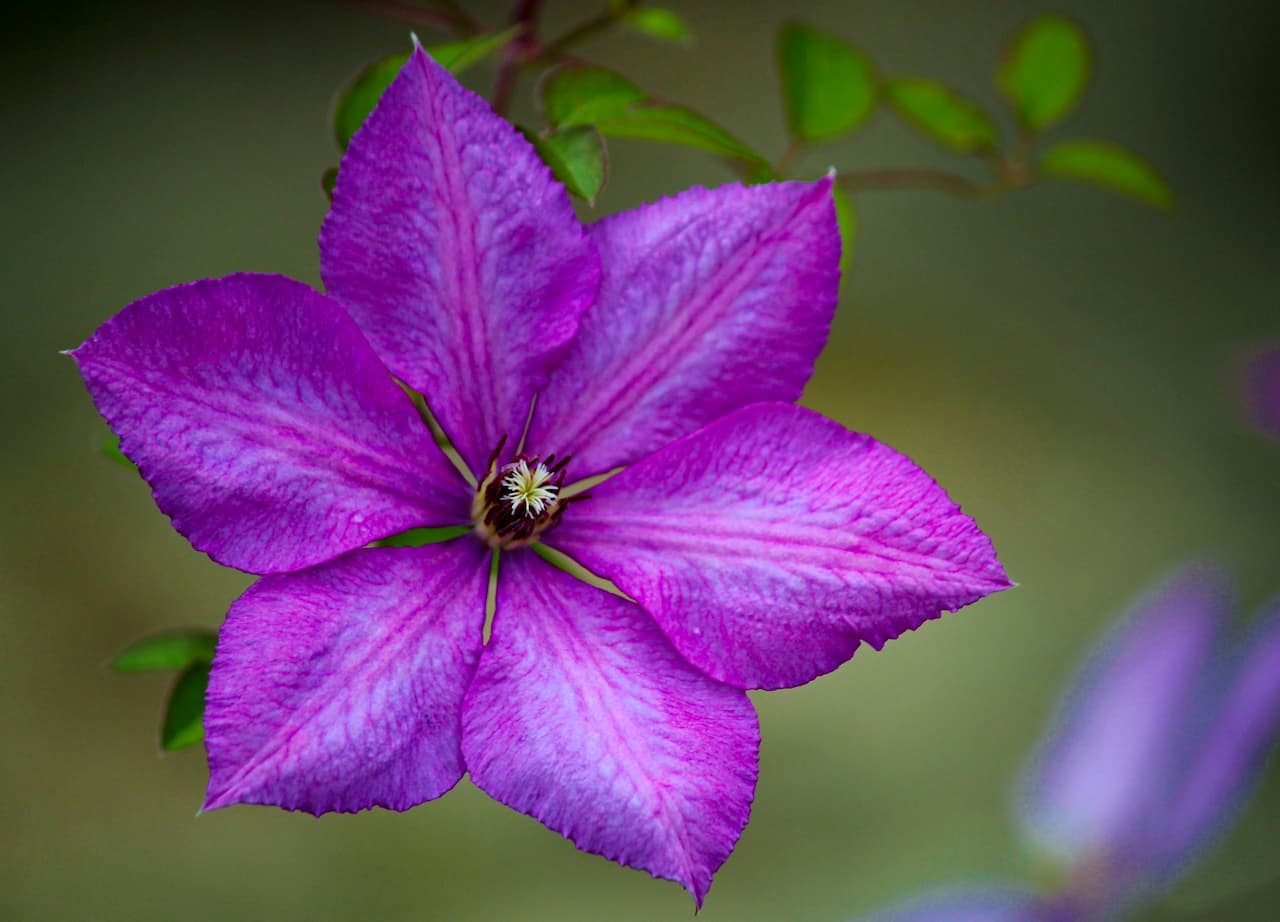
Clematis are the most versatile climbers in the British garden. There are varieties that flower in late winter, others that peak in early summer, and still more that carry colour from midsummer right through to autumn. They suit fences, walls, arches, pergolas and obelisks equally well, and they can be combined with shrubs and other climbers to extend the flowering season of a single structure across many months. With over 250 species and several thousand cultivars, there is a clematis for almost every situation.
The single most important thing to understand about clematis is that different varieties belong to different pruning groups, and pruning the wrong group at the wrong time will cost you a whole season’s flowers. Get the pruning group right and clematis are genuinely easy plants – drought-tolerant once established, long-lived and largely trouble-free beyond their one susceptibility to clematis wilt in their early years.
Pruning groups explained
All clematis belong to one of three pruning groups, numbered 1, 2 and 3. The group determines when the plant flowers and therefore when – and how hard – it should be pruned. When you buy a clematis, the pruning group should be on the label. If it is not, note the flowering time and use that to identify the group.
Best varieties for UK gardens
Group 1 clematis include the early-flowering species such as Clematis montana and C. armandii. Montana is the most vigorous of all clematis, covering a large wall or fence in a few seasons with masses of small pink or white flowers in April and May. It needs space – it will reach 8-10 metres if unchecked – but is beautiful and trouble-free. Armandii is evergreen with attractive glossy leaves and white flowers in early spring, but needs a sheltered south-facing wall in colder parts of the UK.
Group 2 varieties produce the classic large-flowered clematis of early summer – the ones most people picture when they think of clematis. Nelly Moser is the most widely grown, with pale mauve flowers striped with carmine pink. The President is a deep purple-blue with a long flowering season. Duchess of Edinburgh is an unusual white double-flowered variety. All Group 2 clematis flower twice – once in early summer on old wood and again in late summer on new growth.
Group 3 contains the late-flowering clematis that bloom from midsummer onward. Jackmanii is the classic – deep purple flowers produced in abundance from July to October – and is one of the most reliable clematis in cultivation. Viticella varieties are superb for late summer colour, very disease-resistant and available in a wide range of colours from white through pink to deep red and purple. Ernest Markham is a rich magenta Group 3 that performs reliably even on a north-facing fence.
Planting and position
The golden rule for clematis planting is to bury the crown 5-8cm below the soil surface. This is deeper than most other plants are planted, and the reason is clematis wilt – a fungal disease that can kill the stems above ground. If the crown is buried deep, the plant has buds below soil level from which it can regrow even if the top growth is killed. A clematis planted at the standard depth may never recover from a wilt attack; one planted deeply almost always does.
Most clematis prefer sun or partial shade for their top growth, but their roots should be kept cool and moist. The traditional advice of placing a large flat stone or a tile over the root zone serves this purpose well, as does underplanting with a low ground-covering plant. A north or east-facing position is perfectly adequate for many varieties – Group 3 viticellas in particular perform reliably on north-facing fences where other climbers struggle. Plant 30-40cm away from a wall or fence to avoid the dry soil immediately against the structure, and lean the plant toward its support on planting.
Combine groups for a longer season. Plant a Group 1 and a Group 3 clematis through the same trellis or shrub. The Group 1 flowers in spring, the Group 3 from midsummer onward. The result is a structure with colour for six months or more without any single plant becoming dominant.
How to prune by group
Group 1 – tidy after flowering
Prune immediately after flowering finishes in late spring. Remove dead, damaged or overcrowded stems only. Do not cut back hard – the plant is already setting growth for next year’s flowers. Montana can be cut back harder if it has outgrown its space, but do this immediately after flowering, never in autumn or winter.
Group 2 – light prune in late winter
In February or early March, work through the plant stem by stem. Cut each stem back to the highest pair of plump, healthy buds you can find. Remove any dead or weak stems entirely. The plant will flower on old wood in early summer and again on new growth later in the season.
Group 3 – hard prune in late winter
In February or early March, cut all stems back hard to around 30cm from the ground, just above a pair of healthy buds. This sounds drastic but Group 3 clematis flower only on new growth produced in the current season – the old stems from last year will not flower again. A hard prune produces vigorous new growth and a better display than leaving old stems in place.
Feeding, watering and care
Feed clematis in early spring as growth resumes with a high-potassium fertiliser – the same feed used for tomatoes works well. A second feed in midsummer supports the second flush of flowers in Group 2 varieties and the main flowering period of Group 3. Avoid high-nitrogen feeds which produce lush leafy growth at the expense of flowers. Water regularly during the first two seasons while roots establish, and during dry spells in summer when plants are in active growth and flower.
Common problems
Share on socials: