At a glance
Bindweed is one of the most frustrating weeds in the UK garden, and one of the most misunderstood. The reason it keeps coming back after digging, hoeing or pulling is not that gardeners are doing anything wrong – it is that bindweed’s root system extends to depths of three to five metres, with a network of brittle white rhizomes that regenerates from any fragment left in the soil. A single plant can have a root system spreading over several square metres underground, and any attempt to physically remove it leaves enough root material behind to produce dozens of new shoots. Understanding this is the starting point for actually defeating it: the goal is not to dig it out but to exhaust its energy reserves by repeatedly removing all top growth before it can photosynthesize and replenish the roots below.
Bindweed can be controlled permanently, but the timescale is honest rather than quick. Most gardeners dealing with an established infestation should expect two to five growing seasons of consistent treatment before the weed stops returning. The approach varies depending on whether the bed contains other plants, whether chemical use is acceptable and how severe the infestation is. Like ground elder and horsetail, bindweed is a weed that rewards persistence rather than single dramatic interventions. Every time it is cut back before it can photosynthesise, the root system weakens incrementally – and eventually the root reserves are exhausted.
Identifying bindweed types
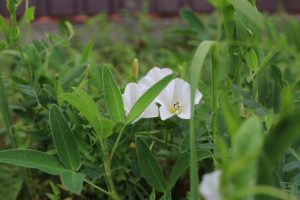
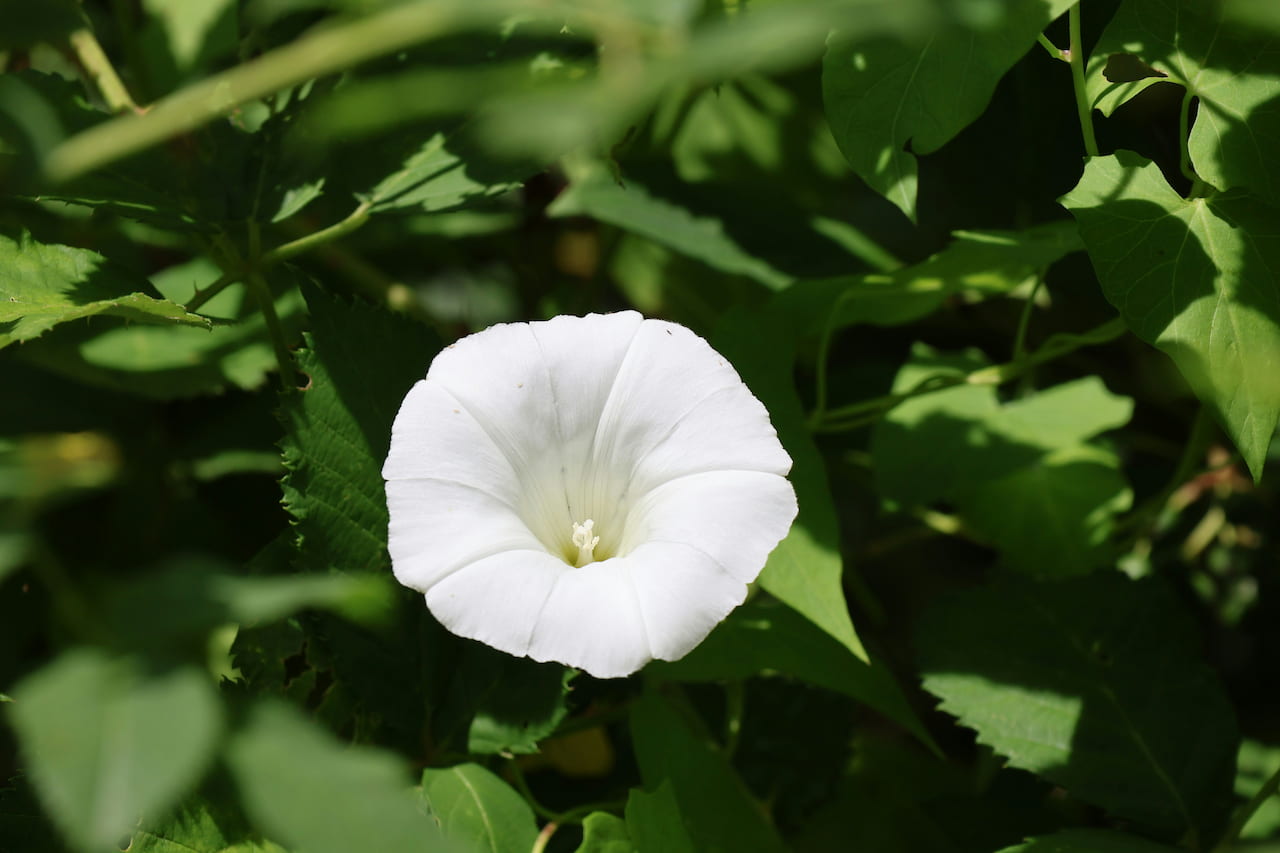
Field bindweed (Convolvulus arvensis) is the most troublesome species and the one most gardeners encounter in ornamental borders and vegetable plots. It has small, trumpet-shaped flowers in pink or white and arrow-shaped leaves, and its roots extend to extraordinary depths – up to five metres in established plants. This is the species that has caused generations of gardeners to despair because no amount of digging ever seems to eradicate it. Hedge bindweed (Calystegia sepium) is larger in every respect – leaves, flowers and root system – and is most commonly found scrambling up through hedges, fences and established shrubs. Its large white trumpet flowers are actually attractive, which leads some gardeners to tolerate it longer than they should before attempting control. Black bindweed (Fallopia convolvulus), despite the shared name, is an annual plant with no persistent root system – it is related to knotweed rather than true bindweed, and is far easier to control by simply removing plants before they set seed.
Why bindweed is so hard to kill
The reason bindweed defeats most conventional weed control approaches lies in the biology of its root system. The white, fleshy roots store large reserves of carbohydrate energy – the same function that bulbs serve in flowering plants. When top growth is removed by digging, hoeing or pulling, the plant simply draws on these reserves to produce new shoots from any remaining root fragments. Because the roots are brittle and break easily during digging, every attempt to remove bindweed physically typically leaves behind dozens of root sections, each capable of regenerating. Research has shown that fragments as small as 2cm can produce viable new plants.
There is a further complication: bindweed seeds can remain viable in the soil for over twenty years. Even if the existing root system were somehow completely removed, seeds left in the soil from previous seasons would continue to germinate. This combination of an almost indestructible root system and a persistent seed bank is why the only reliable approaches to bindweed control involve either exhausting the root reserves over multiple seasons, or using a systemic weedkiller that travels from the leaves down into the roots. Purely surface treatments – including most mulches at normal depths – suppress top growth but do not exhaust the roots.
Removal – step by step
Unwind and remove all top growth
Begin by carefully unwinding bindweed stems from any plants they have climbed into. Do not pull sharply – the stems snap easily and each broken piece can root if composted incorrectly. Work methodically and collect all stems into a bag for disposal. Do not compost bindweed – the roots in particular can survive typical compost heap temperatures and will re-establish anywhere the compost is used.
Dig out the upper root zone
In clear ground (no other plants), fork out as much root as possible from the top 30-40cm. Remove every piece of root you can find – any fragment larger than 2cm can regenerate. Do not rotavate: machine cultivation chops roots into many small pieces and dramatically increases the number of new plants that emerge. Bag all root material for council green waste or burn it. Do not compost.
Suppress regrowth consistently through the season
As new shoots emerge from the remaining roots – which they will – remove them immediately, every time. The goal is to deny the plant any opportunity to photosynthesize and rebuild its root reserves. Hoe off seedlings weekly during the growing season. In planted areas where hoeing is not possible, pull emerging shoots by hand as soon as they appear. Each season of consistent removal weakens the root system further.
Apply thick mulch to clear areas
On cleared ground, a mulch of cardboard topped with 10-15cm of bark chip or wood chip suppresses bindweed shoots effectively while the light exclusion weakens the root system below. Standard mulch depths of 5cm are insufficient – bindweed will push through them readily. The cardboard layer is critical as an additional light barrier. Renew the mulch annually as it breaks down. This approach works well in new beds before planting.
Repeat for multiple seasons
One season of removal will not be enough. Continue the cycle of removing all top growth as soon as it emerges throughout each growing season. Most gardeners see a significant reduction in bindweed by the end of the second season, with near-elimination by season three or four for field bindweed. Hedge bindweed with a more established root system may take longer. Keep records of where regrowth appears each season to track progress and identify any remaining root concentrations.
Weedkiller options
Glyphosate (sold under brand names including Roundup, SBK and others) is the most effective chemical option for bindweed. It is a systemic herbicide – absorbed through the leaves and transported down through the plant into the root system, where it kills tissue that contact sprays cannot reach. For glyphosate to work effectively on bindweed, the plant must be in active growth with a good leaf area for absorption, and the treated stems must not be disturbed for at least six to eight hours after application to allow translocation to begin. Applying to wilting, stressed or very young shoots gives poor results.
The most effective glyphosate technique for bindweed in a planted border – where you cannot spray freely without risk of damaging other plants – is to train the bindweed stems up a cane or bamboo stick before treating. Allow 30-45cm of stem to develop on the cane, then paint undiluted glyphosate onto the leaves using a small brush or glyphosate gel product. This targeted approach avoids contact with surrounding plants entirely. Treat every two to three weeks through the growing season and expect two to three seasons of repeat treatment before the root system is exhausted. Glyphosate is not effective on dry, dormant or very small seedling leaves – time applications to periods of active summer growth for best results.
Preventing it coming back
Once bindweed has been reduced to a manageable level, prevention focuses on two things: stopping regrowth from any remaining root fragments and preventing new plants establishing from seed. For the root fragments still present at depth, continued vigilance through the growing season is essential – removing any emerging shoots promptly before they develop leaves prevents them contributing energy back to the roots. Even in the third or fourth year of control, sporadic shoots will emerge from deep roots and must be removed immediately rather than allowed to develop.
The no-dig approach is one of the most effective long-term strategies for bindweed management in vegetable beds. By avoiding soil disturbance that brings dormant seeds and deep roots closer to the surface, and by maintaining a permanent surface mulch of compost that suppresses emerging seedlings, no-dig growing significantly reduces bindweed pressure over time compared to conventional cultivation. Bindweed seeds germinating on the surface of a compost mulch are far easier to hoe off than those emerging from soil that has been disturbed and aerated by digging.
Where bindweed is entering from a neighbouring garden through a fence or hedge boundary, the source cannot be addressed from your side alone. In this situation, a buried root barrier – a solid membrane installed vertically in the soil along the boundary to a depth of 45-60cm – blocks the lateral spread of rhizomes from next door. This is most practical during a garden redesign when the ground near the boundary is being worked anyway. Alternatively, managing bindweed in borders with a cane-and-paint glyphosate method provides long-term control even when the source remains on the neighbouring property.
Never rotavate ground containing bindweed root. It seems logical to rotavate heavily infested ground to break up the soil and expose roots, but rotavating through bindweed creates a much worse problem than it solves. The machine chops the brittle white roots into hundreds of small sections, each of which regenerates into a new plant. A border with a moderate bindweed problem will emerge from rotavation with a severe one. Always fork out by hand, picking up every root fragment carefully.
Common problems and solutions
Share on socials: