At a glance
Bug Clear Ultra is one of the most widely available insecticides in UK garden centres, sold as a ready-to-use spray for controlling a broad range of sap-sucking pests on ornamental plants and edibles. It contains acetamiprid, a systemic neonicotinoid-related insecticide that is taken up through the plant’s tissues and kills insects that feed on the treated plant for several weeks after application. Understanding what it is, what it genuinely controls, and – crucially – when not to use it is essential for anyone considering it as part of a pest management approach.
The most important context for Bug Clear Ultra is that it is a systemic insecticide that persists in plant tissues including pollen and nectar. This makes it harmful to aphid-feeding beneficial insects as well as pest species, and raises specific concerns around use on flowering plants. The guide below covers correct application for situations where the product is appropriate, and clear guidance on the situations where a different approach is strongly preferable.
What Bug Clear Ultra Is and How It Works
Bug Clear Ultra contains acetamiprid, which belongs to the neonicotinoid family of insecticides. Unlike contact insecticides that kill insects immediately on spray contact, acetamiprid is systemic – it is absorbed through the plant’s leaves and roots and circulates through the vascular system. Any insect that feeds on the treated plant’s sap then ingests the insecticide and is killed. This systemic action is what makes Bug Clear Ultra effective against pests hidden beneath leaves or within shoot tips where spray coverage is difficult to achieve.
The systemic action persists for two to three weeks after application, which means that newly hatched insects arriving on the plant after spraying are also killed. This extended protection distinguishes it from contact sprays that provide no residual control once the spray has dried. The trade-off is that the insecticide circulates through the entire plant including flowers, pollen and nectar, which creates a risk to pollinators throughout the treatment period and beyond.
Which Pests It Controls
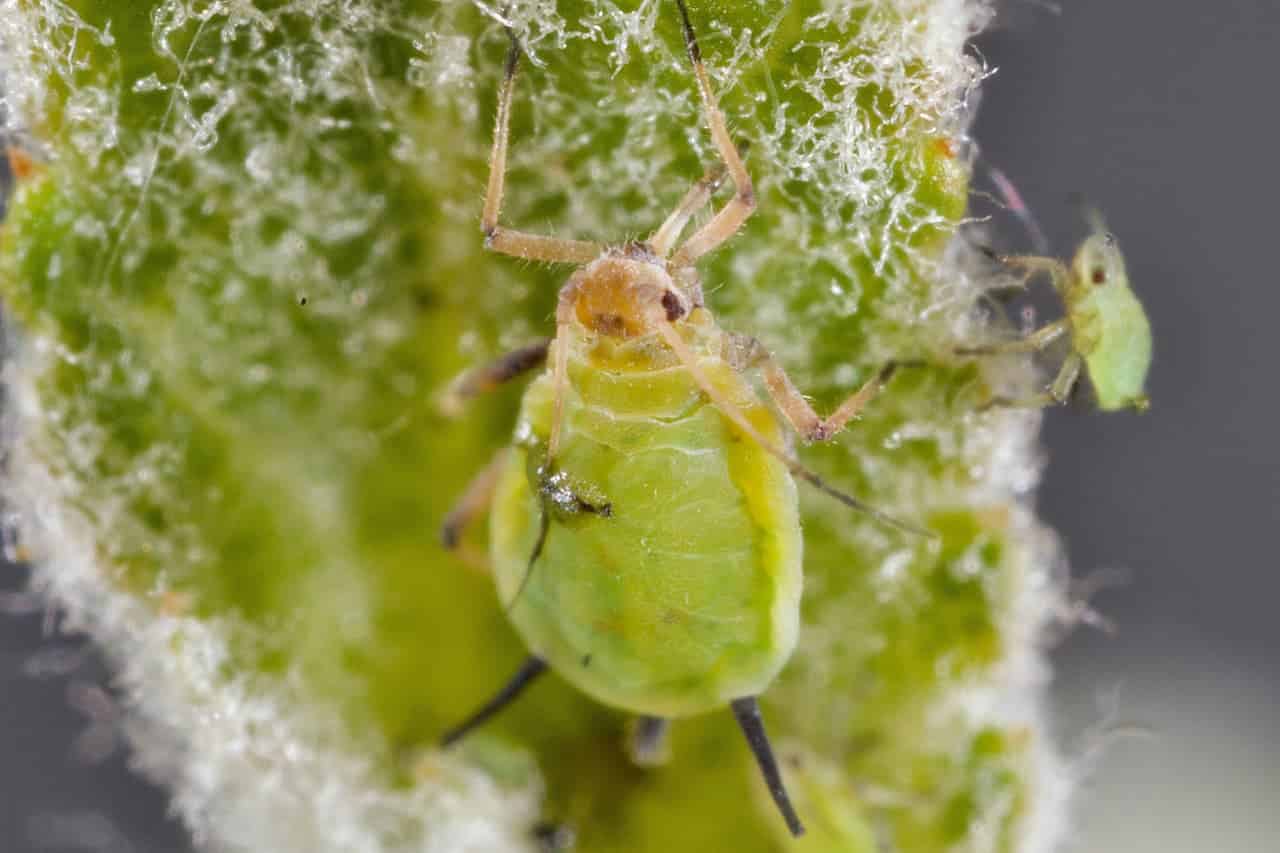
Bug Clear Ultra is genuinely well-suited to whitefly and aphid control, where its systemic action reaches insects hidden in leaf axils and on the undersides of leaves that spray coverage misses. For thrips, which hide in flowers and developing buds, the systemic action provides the most reliable coverage – contact sprays rarely penetrate far enough into developing flower tissue to be effective against this pest. It is not effective against soil pests, vine weevil larvae, slugs or caterpillars, which are not sap-feeders and do not ingest the product through feeding on leaves.
When Pest Pressure Is Highest
Monitoring plants from April onwards allows early intervention before infestations become severe. A light aphid infestation spotted in May is far easier to address – including with non-chemical methods – than an established colony in July covering multiple shoot tips. Whitefly is most troublesome on greenhouse crops through summer but also affects outdoor tomatoes, brassicas and ornamental plants. Treatment in June or early July before populations peak gives the best results with fewer applications required.
How to Use It Correctly
Choose the right time of day
Apply in the evening when bees and other pollinators are not active. Never spray during the day when flowers are open and bees are foraging. Early morning is acceptable if evening is not possible – avoid the warmest part of the day when bee activity peaks.
Check the weather
Do not spray if rain is forecast within four hours – the product needs time to be absorbed before it washes off. Do not spray in wind that could carry spray drift onto nearby flowering plants or into neighbouring gardens. Still, dry evenings are ideal.
Spray to full coverage
Apply until the plant surface is thoroughly wetted, including the undersides of leaves where aphids and whitefly congregate. The systemic action helps reach insects missed by spray, but good coverage ensures faster initial knockdown. Use the ready-to-use spray for smaller plants; the concentrate for larger areas.
Do not repeat too soon
The label allows a maximum of four applications per season with at least seven days between treatments. Resist the temptation to re-spray after two days if results appear slow – the systemic action takes 24-48 hours to kill insects that are actively feeding and the treatment continues working for two to three weeks after application.
Store correctly
Keep in the original container, out of reach of children, in a cool location away from direct sunlight. Do not decant into food or drink containers. Dispose of empty containers responsibly – do not pour down drains or into water courses.
Pre-Harvest Intervals and Safety
Bug Clear Ultra is approved for use on edible crops but carries specific pre-harvest intervals (PHIs) that must be observed. The PHI is the number of days between the last application and harvest – eating produce before this interval has elapsed means consuming food with residues above the permitted level. The ready-to-use formulation and the concentrate have different PHIs, and both differ by crop type.
Always read the current label before each use. Formulations, approved uses and PHIs for Bug Clear Ultra have changed over time as the product has been updated. Advice in articles, forums and even the manufacturer’s older marketing may not reflect the current approved label. The label on the bottle you purchase is the legal document – it supersedes all other information including this guide.
Bee and Pollinator Risk
Acetamiprid is classified as a neonicotinoid and carries a high risk to bees and other pollinators when applied to flowering plants. The systemic action means that the insecticide circulates into pollen and nectar, exposing pollinators through normal foraging behaviour even when spray has long since dried. This is not an acute spray risk that can be managed by timing alone – it is a persistent contamination of the plant’s food sources that continues for the duration of the treatment window and for some time beyond it, as residues break down slowly in plant tissue.
The practical implications are clear. Do not apply Bug Clear Ultra to any plant that is in flower or about to flower. Do not apply to plants grown primarily for their wildlife value. On vegetables, remove any open flowers before application and discard them. On ornamentals, wait until after flowering has fully finished before treating if the plant will flower again, and consider whether treatment is worthwhile on a plant that flowers throughout summer. For gardens managed with wildlife in mind, the products in the alternatives section below are significantly preferable for most pest situations. Aphid pressure in particular can often be managed without systemic insecticides – biological controls such as encouraging ladybird populations, lacewings and parasitic wasps through mixed planting provide sustainable long-term control that chemical approaches cannot replicate.
When to Use Alternatives Instead
Bug Clear Ultra is not the right product for every pest situation, and there are many circumstances where an alternative approach will be more appropriate – either because of pollinator concerns, because the pest is not a sap-feeder, or simply because a less toxic option will be effective enough. The table below covers the most common situations and the better choice in each.
A strong jet of water removes aphids from most plants without any chemical input. Directing a hosepipe at infested shoot tips dislodges the vast majority of aphids, and the survivors rarely re-establish in significant numbers if repeated two or three times over a fortnight. For plants in a garden managed for wildlife, this approach avoids the systemic contamination of pollen and nectar entirely. Reserve Bug Clear Ultra for severe infestations on non-flowering plants where manual methods have already been tried and failed to bring the population under acceptable control.
Share on socials: