At a glance
Owls are among the most dramatic and sought-after wildlife visitors to UK gardens and countryside. Watching a barn owl quarter rough grassland at dusk or hearing the tawny owl’s iconic call from a nearby tree on a still autumn night are experiences that gardeners and landowners frequently describe as among their most memorable wildlife encounters. The good news is that owls can be supported and attracted to gardens and rural properties more successfully than many people realise – the key is understanding which species is realistic for your location and what habitat it actually needs.
Unlike most garden birds, owls cannot be attracted primarily through feeding. They are predators that need hunting habitat – rough grassland, hedgerow edges and margins with sufficient vole and mouse populations to support regular use. No amount of nest box provision will bring owls to a garden that does not have suitable hunting ground nearby. The most effective approach is habitat-first: create or improve the rough grassland and structural features that support small mammal prey, then add nest boxes as the final step once the habitat is in place. This guide works through that approach for each of the three owl species most likely to be encountered in UK gardens and rural properties.
UK owl species – which might visit
Five owl species breed in the UK but three are the most relevant to garden and rural property owners: the barn owl, the tawny owl and the little owl. Each has different habitat requirements, different likelihood of visiting the garden and different approaches to attracting it. Short-eared owls and long-eared owls do occur in the UK but are primarily birds of open moorland and conifer plantations respectively, and are extremely unlikely to visit a typical garden. Of the three main species, the tawny owl is the most likely to be present in suburban and wooded gardens, the barn owl is the primary target for rural landowners with rough grassland, and the little owl is a smaller and more diurnal species that can occasionally be seen in daylight hunting invertebrates across open farmland and orchard areas.
Creating hunting habitat
The single most important thing a landowner or gardener can do to support owls is to create or maintain areas of rough, unmanaged grassland. All three UK garden owl species hunt primarily for small mammals – voles, mice and shrews – and these prey species require rough grass with a dense, tussocky structure to live in. Short-mown lawn, hard-surfaced areas and closely managed borders provide almost no small mammal habitat. A garden or plot with a margin of rough grass left uncut through summer and autumn, ideally bordering a hedgerow or field edge, provides genuine hunting habitat.
The minimum useful rough grass area for supporting owl hunting is generally considered to be around 0.2 hectares – roughly half an acre. Below this size the prey populations that establish are rarely sufficient to support regular owl use. Larger areas of rough grass, particularly those connected to hedgerows, field margins or other semi-natural habitats, are significantly more productive. If the garden itself is too small to create sufficient rough grass, working with neighbouring landowners to establish connected grassland margins significantly increases the effectiveness of any individual plot. A wildflower meadow approach – cutting once in late autumn and allowing diverse native plants to establish – creates richer habitat than rough grass alone and supports both the prey species that owls need and many other garden wildlife species.
Stop using rodenticides near owl habitat. Second-generation anticoagulant rodenticides (SGARs) – the most commonly used rat and mouse poisons – accumulate in the tissues of small mammals and are a leading cause of owl mortality in the UK. Barn owls are particularly vulnerable. If rodent control is necessary near owl habitat, use traps rather than poison, and keep any bait stations covered to prevent access by non-target wildlife.
Owl nest boxes
Nest boxes for owls are much larger and more species-specific than standard bird nest boxes, and siting them correctly is critical to whether they are used. Each species has distinct requirements for box design, positioning and the surrounding habitat. A barn owl box erected in a suburban garden with no rough grassland will almost certainly never be occupied, regardless of its quality. Conversely, the right box in the right location in suitable habitat can attract occupation within a season. It is worth noting that all owl species and their active nests are fully protected under the Wildlife and Countryside Act 1981, and nest boxes that are in active use must not be disturbed during the breeding season.
Barn owls specifically
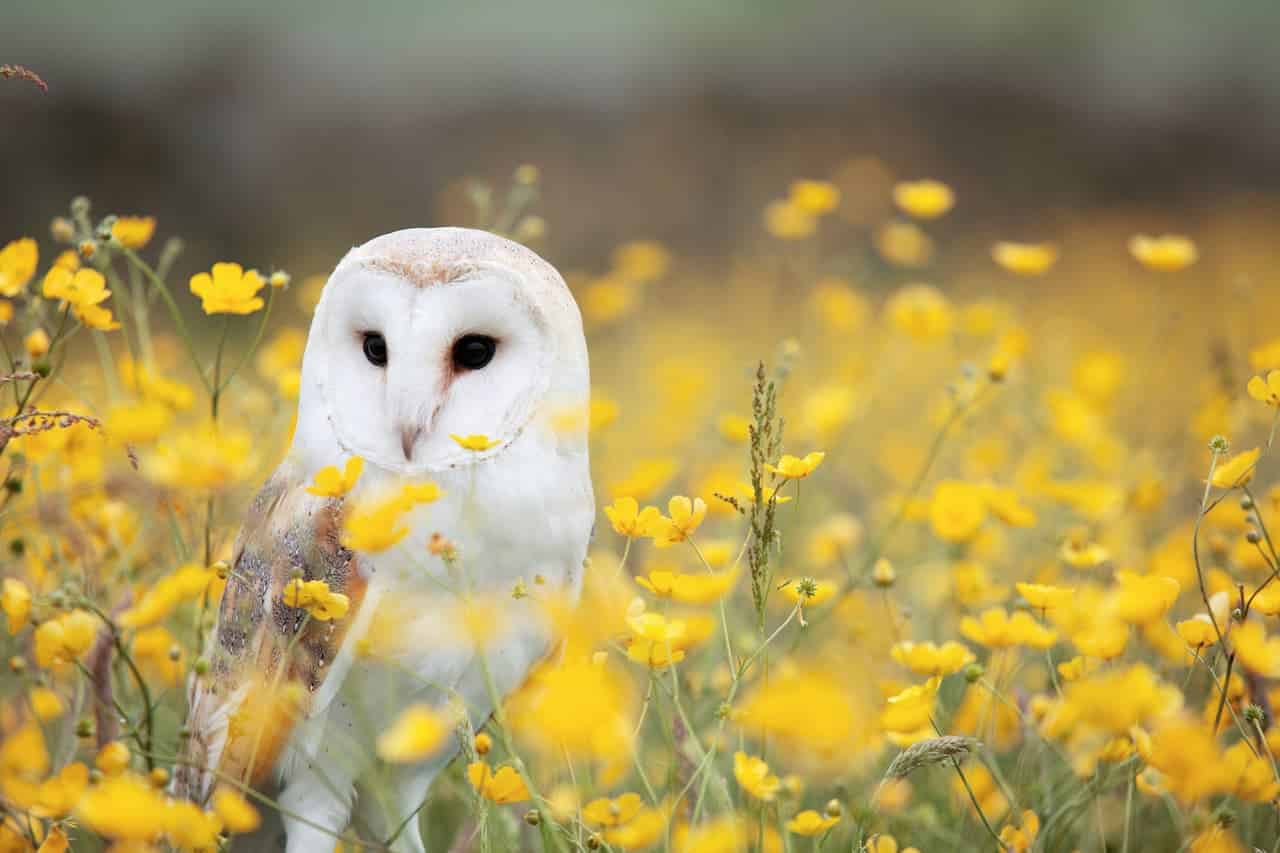
The barn owl is the most iconic of the three garden-adjacent owl species and the one that receives the most conservation attention. Its population declined significantly through the twentieth century due to loss of rough grassland habitat, changes in farming practice that reduced small mammal prey availability, and widespread use of rodenticides. Numbers have partially recovered in recent decades thanks to nest box programmes and sympathetic farming, but barn owls remain on the Amber List of conservation concern. They are genuinely helped by individual landowners who manage even modest areas of rough grass alongside appropriate nest box provision. Barn owls are remarkably specialised in their habitat requirements – a field margin of rough grass alongside a hedgerow, left uncut from spring through autumn and mown once in late winter to prevent scrub encroachment, provides exactly the conditions that support the vole populations barn owls depend on. A single pair of barn owls requires around 10 hectares of hunting habitat to support a breeding attempt in a typical year, so individual garden contributions are most impactful when they connect to or extend existing habitat rather than existing in isolation.
Tawny and little owls
The tawny owl is Britain’s most common owl and the species most likely to be heard in suburban and urban gardens that have mature trees nearby. Its distinctive hooting call – the classic hoot-hoot-hoo of a still autumn night – is actually a pair duetting, with the male producing the long hoot and the female the shorter response. Tawny owls are woodland birds that have adapted well to the mature trees of older residential areas, parks and cemeteries, and are present in many suburban gardens without the residents realising. They are primarily hunters of small mammals but will also take small birds, amphibians and large invertebrates, and they are active throughout the night rather than at the dawn and dusk periods most associated with barn owls.
A log pile and dense planting that support populations of voles, mice and shrews make a garden more productive hunting territory for tawny owls. A tawny owl box positioned on a mature deciduous tree – oak, ash or beech – at 3-5 metres is a realistic and often successful addition to gardens with suitable tree cover. Unlike barn owls, tawny owls are territorial year-round and a pair that adopts a box will use it for roosting as well as nesting, making its presence in the garden more consistently detectable through the year. The little owl is a smaller, diurnal species that can sometimes be seen hunting in daylight. It was introduced to Britain in the nineteenth century and is now established across much of England and Wales. It hunts primarily invertebrates and small vertebrates and favours old orchards, farm buildings and hedgerow-rich farmland. A little owl box on a fence post or low branch at the edge of rough grassland has a reasonable chance of attracting occupation in suitable rural habitat, making it a worthwhile and low-cost addition alongside habitat improvement work for any of the other species.
Share on socials: