At a glance
Circular paving slabs open up design possibilities that rectangular formats cannot. A single large sandstone circle set into a lawn creates an instant focal point. A series of stepping stone discs across a grass path adds rhythm and visual interest without the formality of a straight paved edge. A full circle feature insert set into a square patio breaks up the grid and gives the eye somewhere to land. The round format is inherently less rigid than the standard square or rectangular slab, which makes it one of the most effective tools for softening contemporary hard landscaping and adding a naturalistic quality to formal garden layouts.
The UK market for circular paving covers a wide range of materials, sizes and intended uses. A 300mm concrete stepping stone disc and a 1200mm natural sandstone circle feature are both sold as circular paving slabs but they serve completely different functions and have very different installation requirements. This guide covers the five most useful types, ranks them by performance and explains which is the right choice for each application.
How circular slabs are used
Understanding the intended use is essential before buying – the right circular slab for a garden path is a different product from the right one for a feature circle on a patio. The three main applications each have different size, material and installation requirements.
Match slab diameter to garden scale. A 600mm circle looks proportionate in a small courtyard but insignificant in a large garden. A 1200mm feature circle that works beautifully in a medium garden can overwhelm a small patio. The rule of thumb: the circle diameter should not exceed one-third of the shortest dimension of the space it sits in.
Quick verdict summary
All 5 circular paving slabs ranked
A natural sandstone circle in the 600-900mm range is the benchmark choice for a UK garden feature or path. The organic colour variation in Indian sandstone – warm buff, grey-blue and silver tones – gives each circle slab a unique character that manufactured products cannot replicate. Set into a lawn, a large sandstone circle reads as a natural focal point rather than an imposed hard surface. Set into a patio of square slabs, it breaks the grid in a way that immediately improves the design.
The maintenance requirement is the main trade-off. Natural sandstone is porous and should be sealed on installation and every two to three years thereafter to protect against staining, moss and algae. An unsealed sandstone circle in a UK garden will develop green algae growth within a season in most positions. Sealed and maintained, the stone improves with age – the weathered patina of a well-kept sandstone circle after five years has a quality that new stone cannot match.
As an Amazon Associate I earn from qualifying purchases.
A 600mm porcelain circle offers the maintenance-free performance of fired ceramic in a format that works equally well as a feature insert or a bold stepping stone. Porcelain does not stain, does not require sealing and will not develop algae growth in the way natural stone can. The consistent colour and perfectly smooth edge profile give it a more contemporary character than natural stone – which suits some gardens and looks out of place in others. For a modern or minimalist garden design, porcelain is frequently the stronger choice.
As an Amazon Associate I earn from qualifying purchases.
Reconstituted stone circle sets – typically sold as a central disc surrounded by a ring of curved pieces that together form a complete circle – are the most practical mid-range choice for a feature patio insert. The multi-piece format allows larger circle diameters (600-900mm) at a lower cost than a single cut stone, and the joints between pieces actually add visual interest. Quality varies between manufacturers – look for a minimum 35mm thickness and clean, consistent colouring rather than obviously moulded plastic-looking surfaces.
As an Amazon Associate I earn from qualifying purchases.
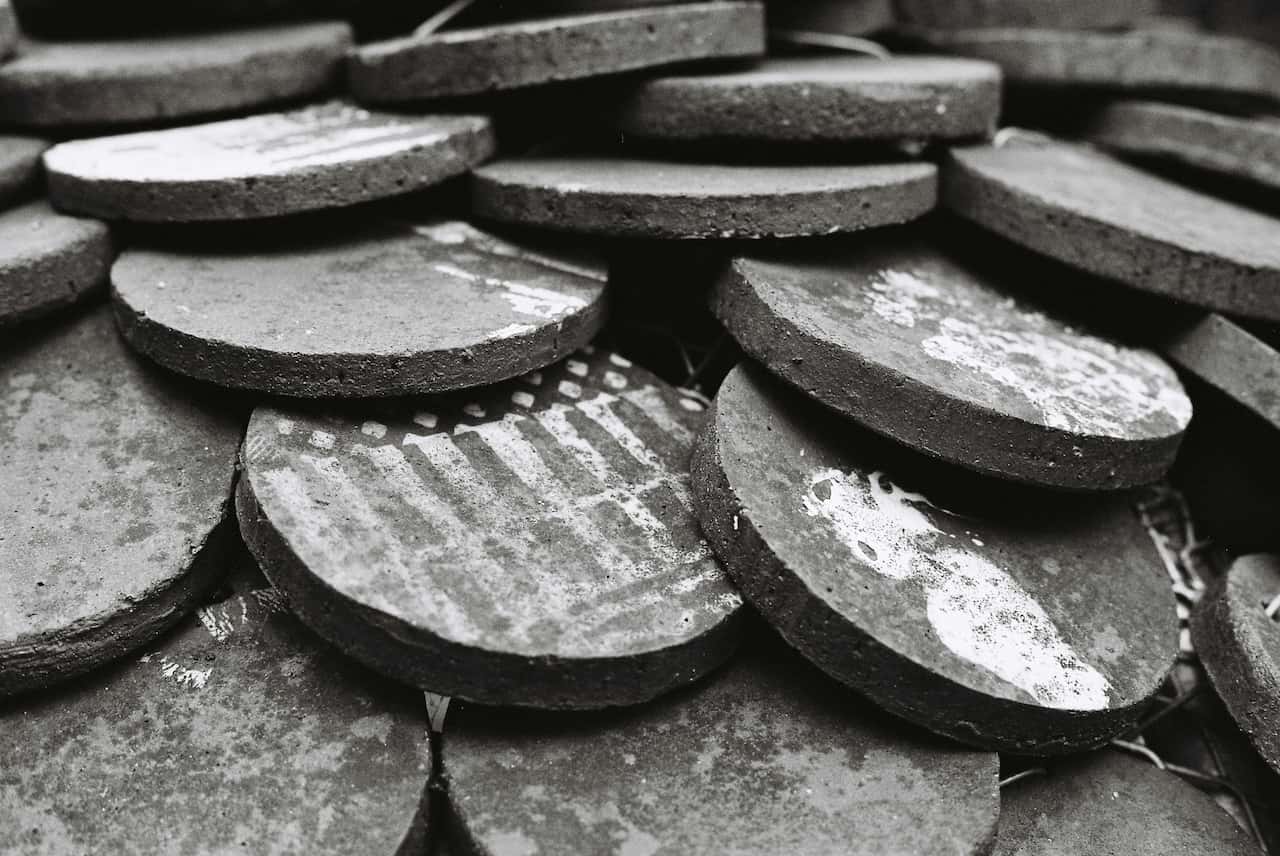
Concrete stepping stone discs at 300-450mm diameter are the most accessible and widely used form of circular paving in UK gardens. They are inexpensive enough to buy in quantity for a full garden path, lightweight enough to lay without help, and available in a range of surface finishes from smooth to pebble-effect to riven. The practical lifespan is 10-20 years depending on quality and exposure – cheaper options lose their surface texture and begin to look tired within five years in a UK garden, while better-quality concrete discs maintain their appearance considerably longer.
As an Amazon Associate I earn from qualifying purchases.
Mixed media circle kits combine a stone or concrete centre disc with a surrounding ring of contrasting material – typically pebbles, cobbles or smaller stone pieces – to create a more decorative feature circle. These kits are designed for visual interest rather than functional paving and work best as a garden focal point rather than a walked surface. Quality varies considerably between suppliers – the best options use genuine natural stone components while cheaper versions use resin-bonded aggregates that can delaminate within a few seasons in UK frost conditions.
As an Amazon Associate I earn from qualifying purchases.
Head to head comparison
| Type | Material | Best use | Cost | Score |
|---|---|---|---|---|
| Natural Sandstone | Natural stone | Feature / path | £65-120 | 4.6 / 5 |
| Porcelain Circle | Fired ceramic | Feature / modern | ~£85 | 4.4 / 5 |
| Reconstituted Stone | Cast stone | Feature insert | ~£35 | 4.0 / 5 |
| Concrete Discs | Concrete | Stepping stones | £8-15 each | 3.8 / 5 |
| Mixed Media Kit | Mixed | Decorative focal | ~£45 | 3.5 / 5 |
Final verdict and recommendations
The right circular slab is determined entirely by application. There is no single best option across all uses – a stepping stone path through a lawn requires a completely different product from a feature circle on a sandstone patio. The two most common mistakes are buying decorative mixed media kits for functional paths (they deteriorate quickly under regular foot traffic) and buying small-diameter stepping stones for a feature circle application where a larger single piece would read far better visually. Sizing is also frequently underestimated – measure the space carefully and lay out a circle of the intended diameter with string or chalk before committing to a purchase.
For a garden feature or focal point: Natural sandstone circle, 600mm or larger. The organic variation in natural stone looks better at rest and improves with weathering in a way that manufactured products do not.
For a contemporary or low-maintenance garden: Porcelain circle, 600mm. Zero maintenance, consistent colour, 50-year lifespan.
For a budget feature insert: Reconstituted stone circle set. Solid value and good visual results at a fraction of the natural stone cost.
For a functional stepping stone path: Concrete discs in the best quality you can afford. Focus on thickness (35mm minimum) and surface texture rather than price per piece.
Natural sandstone wins clearly on character and long-term visual quality. Porcelain wins on zero-maintenance performance. Concrete stepping stone discs win on accessibility and value for functional paths. Know which application you are buying for before you choose the material – the wrong product for the job will disappoint regardless of quality.
Share on socials: