At a glance
Rocket is one of the most rewarding salad crops for a UK kitchen garden. It germinates within days, produces its first harvestable leaves in four to six weeks, and continues cropping on a cut-and-come-again basis for weeks after that. The distinctive peppery heat of fresh rocket is at its best picked straight from the garden – supermarket rocket, harvested young and stored in modified atmosphere packaging, is a pale imitation of what a garden-grown plant produces. Growing your own is not just more economical; it is genuinely a different product.
Like spinach and radishes, rocket is a cool-season crop that thrives in spring and autumn but struggles through the hottest weeks of summer. It bolts quickly in heat, producing a flowering stem that makes the leaves small, very pungent and eventually unpleasant. Managing the timing of sowings around the temperature calendar is the main skill involved in producing a good rocket harvest across a long season. Get this right and rocket provides continuous pickings from April through to November with minimal effort.
Varieties to grow
Two distinct types of rocket are commonly grown in UK gardens, and they differ significantly in flavour, leaf shape, bolt resistance and growing behaviour. Understanding the difference is the first step to choosing the right plant for the right time of year.
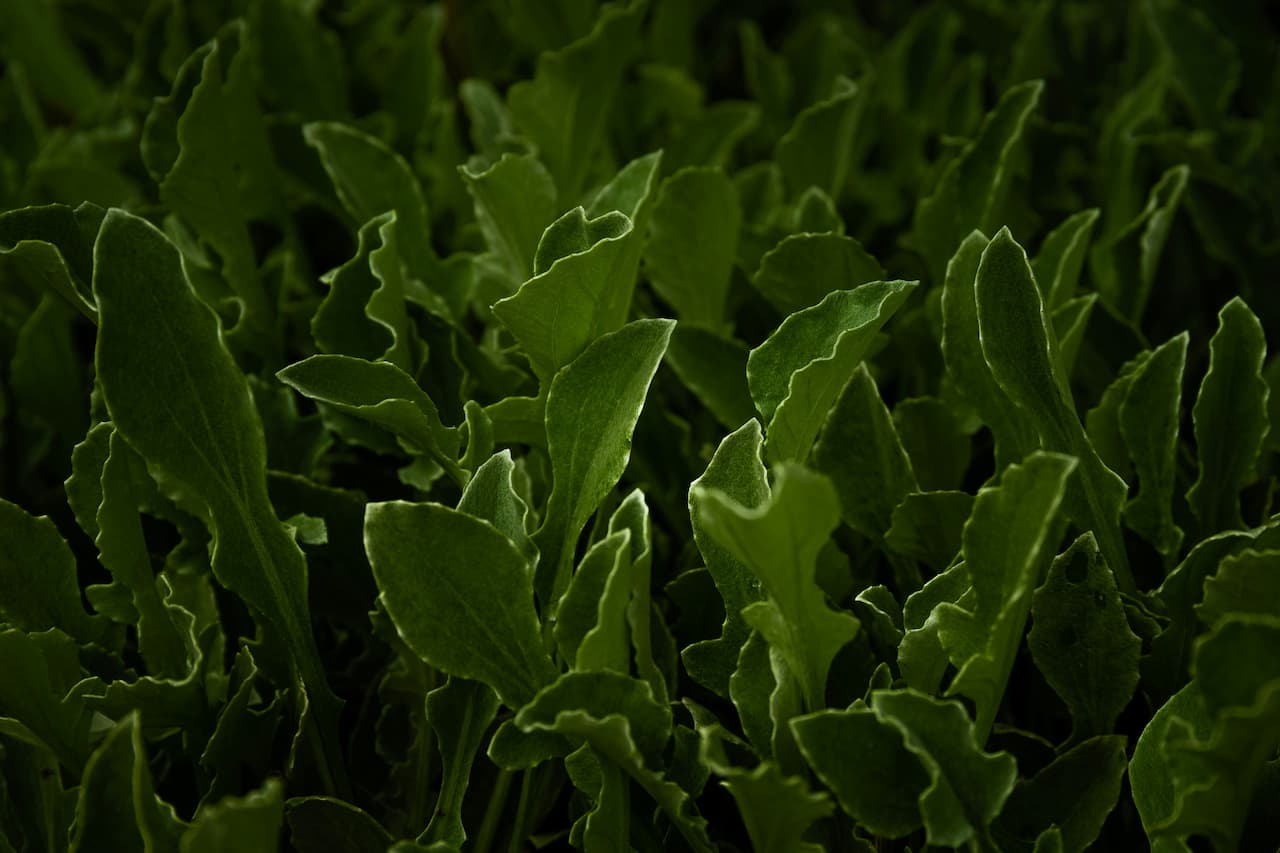
Salad rocket (Eruca vesicaria) is the variety most commonly sold in seed packets and the right starting point for most growers. Its broad, lobed leaves are mildly peppery and suit salads where rocket is one component among others. It grows quickly but bolts readily in heat and long days, which limits its useful summer season unless managed carefully. Wild rocket (Diplotaxis tenuifolia) has narrower, more deeply cut leaves with a significantly stronger, more intensely peppery flavour – it is the type often used in restaurant cooking for that reason. It is slower to establish than salad rocket but dramatically more bolt-resistant, making it far better suited to summer production. Unlike salad rocket which is an annual, wild rocket behaves as a perennial in most UK gardens and will regrow from the rootstock year after year if left in place.
Apollo is the variety most widely recommended for its combination of broad leaves, reasonable bolt resistance and mild flavour. It is the best choice for anyone new to growing rocket. If summer cropping is the priority, wild rocket or a named bolt-resistant variety such as Skyrocket is the more practical choice.
Sowing and succession planting
Rocket is direct-sown outdoors – it does not transplant well and there is rarely any advantage to starting it under cover. Sow in shallow drills 1cm deep and 20-25cm apart, broadcasting the seed thinly along the drill. Germination is rapid in warm soil – typically five to seven days from late March onward. In cooler early spring conditions germination takes a little longer but is still reliable. Thin seedlings to 10cm apart once they are large enough to handle, using the thinnings in salads.
The key to a continuous rocket harvest is succession sowing – making small sowings every two to three weeks rather than one large sowing. A single row of rocket matures quickly, provides a flush of leaves, and then bolts. Three shorter rows sown at three-week intervals provide a steady, overlapping supply across a much longer period. Rocket also suits interplanting with slower crops – sown between rows of spring onions or radishes, it fills the gaps while the slower crops develop and is harvested before competition becomes an issue.
Harvesting cut-and-come-again
Rocket is best harvested on a cut-and-come-again basis rather than pulling whole plants. Use scissors or a sharp knife to cut the leaves 3-4cm above the soil surface, leaving the growing points and the smallest central leaves intact. The plant will regrow from these growing points and produce a second flush of leaves within two to three weeks. A well-managed row of salad rocket will typically provide three or four cuts before the flavour becomes too pungent or the plant bolts. Wild rocket, being perennial and slower-growing, can be cut back repeatedly over a much longer period – established plants will regrow from the rootstock for several seasons.
Pick leaves when they are young and small – larger, older leaves develop a more intense bitterness and heat that can overwhelm a salad. The ideal picking size is leaves 5-8cm long. Harvest in the morning when the leaves are at their freshest and store unwashed in a sealed bag in the refrigerator for up to three days. Like spinach and chard, rocket wilts rapidly after picking if left at room temperature – refrigeration immediately after harvest makes a significant difference to shelf life.
Seasonal calendar
Preventing bolting
Bolting – the plant diverting energy from leaf production to flower and seed set – is triggered by a combination of high temperatures, long days and drought stress. Once a rocket plant bolts the leaves become small, fibrous and unpleasantly hot; the plant’s productive life is effectively over at that point. Prevention requires a combination of variety selection, timing and site management.
The most effective approach for summer continuity is switching from salad rocket to wild rocket for June and July sowings. Wild rocket’s dramatically better bolt resistance means it remains in leaf production through conditions that would send salad rocket to flower within days. For salad rocket specifically, sowing in a position that receives afternoon shade in midsummer – or fitting a 30-50% shadecloth over the bed during July and August – reduces the temperature stress that triggers bolting and extends the productive window by several weeks.
Allow one plant to flower and set seed each season. Rocket self-seeds prolifically if a single flowering stem is left to mature. The seeds drop and germinate readily in the surrounding soil, producing volunteer seedlings in late summer and the following spring that require no effort at all. Mark one bolted plant and let it complete its seed cycle – the resulting seedlings are free, well-adapted to your soil conditions, and often appear exactly when you want fresh rocket to start cropping again.
Common problems and solutions
Share on socials: