At a glance
I wanted a pressure washer light enough to lug down to the allotment in the boot every week without it feeling like a chore, for hosing down tools, water butts and the occasional filthy wheelbarrow. The Bosch UniversalAquatak 135 was the one that fit the brief.
At 7.9kg without accessories it’s genuinely light for what it puts out, 135 bar and 410 litres an hour through a single lance with three settings built into one nozzle. The question was whether something this light and this simple could still do a proper job.
Overview and first impressions
The wheels come already fitted, so there’s genuinely less to put together than I expected. The handle clicks into place, you thread the high pressure hose through, and you’re done in about fifteen minutes. The handle also folds flat over the body for storage, and there’s a hook for the cable and lance so it all travels together in the boot rather than rattling around loose.
The one part of setup that gave me trouble was the water inlet connection. It’s meant to be a simple push-fit onto your hose adapter, but mine sat stubborn against an older Hozelock fitting and took a fair bit of working back and forth before it seated properly. Once it’s on it stays on, but that first connection wants more patience than the rest of the assembly put together.
The bit I hadn’t accounted for is that this one doesn’t draw from a water butt as standard. There’s a separate self-priming kit Bosch sells for exactly that, and since the allotment has no outside tap, I had to order it before the Bosch was any use to me down there at all. Worth knowing before you buy if a butt or tank is your only water source.
Keep it well back from render and painted walls until you know the setting. I caught the corner of a rendered wall on the wrong setting from too close and took a chip out of the paint. Bosch’s own guidance is to keep tyres and tyre valves at least 30cm away too, since the jet is strong enough to do real damage at close range.
Specifications and scores
How it performed in our tests
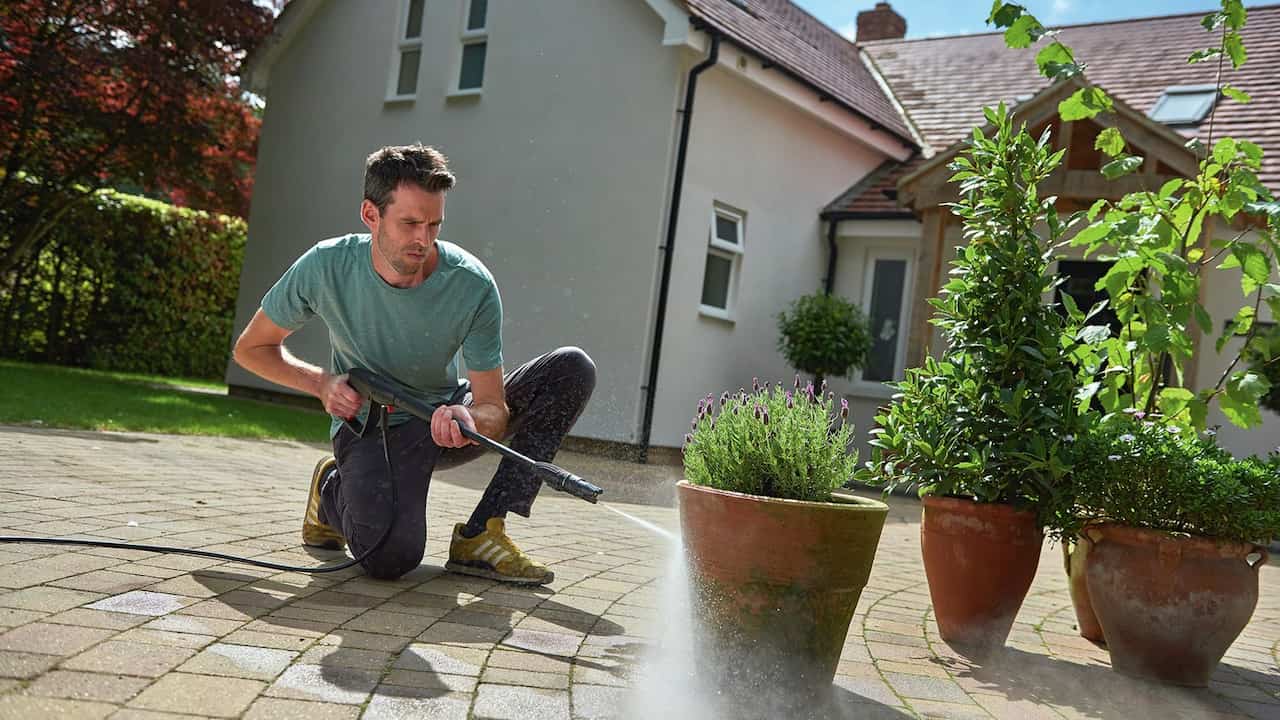
The water butts and tool handles at the allotment get a film of green slime over winter that I’d normally tackle with a stiff brush. On the rotary setting, the Bosch had a butt properly clean in a couple of minutes, faster than I expected from something this light. It won’t strip the most stubborn, years-deep ingrained dirt in a single pass, but for routine grime on tools, pots and the inside of a wheelbarrow it’s more than enough, and a lot less effort to lug down the path to do it.
On the car at home it made short work of bodywork and wheels. Fan setting for the initial rinse, pencil jet worked into the wheel arches and badge surrounds, and the whole thing was done in under fifteen minutes without ever feeling like it was working too hard. The detergent bottle attaches in place of the foam nozzle rather than through the same lance, so there’s a brief pause to swap it over, but once it’s on the foam coverage was even and didn’t need a second pass.
I also ran it over the garage walls and the bargeboards above the patio doors, both carrying years of algae splash, and fan setting shifted it without any drama. The single nozzle here doesn’t have a dedicated soft setting, so on decking I stuck to fan rather than rotary and kept the lance moving rather than dwelling on one board. It came up clean without raising the grain, but I’d treat decking carefully until you know how your own boards respond to it.
Listen for the click when you twist the lance. It’s easy to think you’ve changed setting when you haven’t quite felt it lock in, and you’ll be spraying on the wrong jet for the first few seconds without realising.
Settings and attachments
Everything runs through one lance here, twisting between fan, rotary and pencil jet rather than swapping attachments for different jobs. It’s a simple system, and once you’ve got used to feeling for the click it’s just as quick to move between settings as flicking a dial.
The detergent side works a little differently. Rather than a setting on the gun itself, you physically swap the standard lance for a separate 450ml foam bottle attachment. It takes a few seconds longer than just twisting a dial, but the foam coverage is genuinely good once it’s on.
Performance and limitations
What this machine does well, it does very well: it’s light enough to carry one-handed down the allotment path, the wheels and folding handle mean it packs away small, and for anything short of genuinely ingrained dirt the single lance covers every job I’ve thrown at it. It’s not trying to be the most powerful pressure washer you can buy, and it doesn’t need to be for most gardens.
Where it does fall short is on the toughest jobs. There’s no rotating turbo nozzle in the box, so deeply ingrained algae on concrete needs more passes and more patience than it would with a machine built specifically for that. The accessories, the self-priming kit especially, add to the cost quickly if you need them, which is a fair criticism given they’re not optional extras so much as things many buyers will actually need.
There’s also a longer-term concern worth flagging that comes from other owners rather than my own short time with it: the trigger handle and the hose connection points are the parts most often reported as wearing out or failing after a year or two of regular use. Nothing on mine has gone wrong yet, and Bosch backs it with a two year warranty as standard, but it’s the reason build quality doesn’t score quite as high as the rest of the machine.
- Light enough to carry one-handed, not just wheel
- Wheels pre-fitted, folding handle for storage
- One lance, no swapping between jobs
- Two year warranty as standard
- Water butt use needs an extra self-priming kit
- Water inlet connection was stiff to fit
- No rotating turbo nozzle for the most stubborn ingrained dirt
- Genuine accessories add up if you need several
- Anyone who needs to carry it somewhere, not just wheel it
- Routine cleaning rather than deeply ingrained dirt
- Anyone who’d rather not swap nozzles between jobs
- Anyone whose main job is years of ingrained algae on concrete
- Anyone relying on a water butt without budgeting for the extra kit
- Anyone wanting everything built into one buy with no extras
Final verdict
For what I actually needed, something light enough to take to the allotment and simple enough to use without thinking, the Bosch UniversalAquatak 135 has done exactly the job. It earns its place in the car boot and gets used most weeks.
If your cleaning jobs are mostly routine, cars, furniture, tools, the occasional path, this is genuinely all you need and you’ll appreciate the weight every time you move it. If your main job is years of ingrained algae on concrete, look for something with a dedicated turbo or rotating nozzle instead, since that’s the one area this isn’t built for.
Just budget for the self-priming kit from day one if a water butt or tank is your only water source. It’s not a flaw in the machine so much as a cost that catches people out, myself included.
A genuinely capable, lightweight pressure washer that handles routine cleaning with ease. Held back only by accessories you’ll likely need but have to buy separately, and a lack of the muscle for the toughest, most ingrained jobs.
Share on socials: