At a glance
A small garden is not a compromise – it is a different kind of challenge that, when approached well, produces spaces that are often more intimate, productive and carefully considered than their larger counterparts. The gardens that people remember are rarely the sprawling ones – they are the compact courtyard with a clever wall of climbers, the tiny terrace transformed by containers, the narrow strip that somehow fits a seating area, a raised bed and a water feature without feeling cramped.
The principles that make small gardens work are specific. Every decision matters more than it does in a large garden because there is less room to absorb mistakes or add afterthoughts. Getting the structure right before worrying about plants is the most important first step – and a step most people skip. If you are starting from scratch or reconsidering an existing layout, the guide to planning a garden layout covers the fundamental approach before any of the specific ideas below become relevant.
Design Principles for Small Gardens
Several principles consistently make small gardens feel and function better than their size suggests they should. Understanding them before making any specific decisions saves significant time, money and regret – the principles apply whether you are working with a 4 x 4 metre courtyard or a narrow terrace strip of 2 x 10 metres.
Layout and Structure
The most common mistake in small garden design is treating the space as a single zone. Even a tiny garden benefits from being divided – not with solid structures that block light, but with implied zones created by a change of level, a different surface material or a line of planting. Two small areas feel more generous than one large open space of the same total size, because each zone is experienced as a complete space rather than a fraction of something larger.
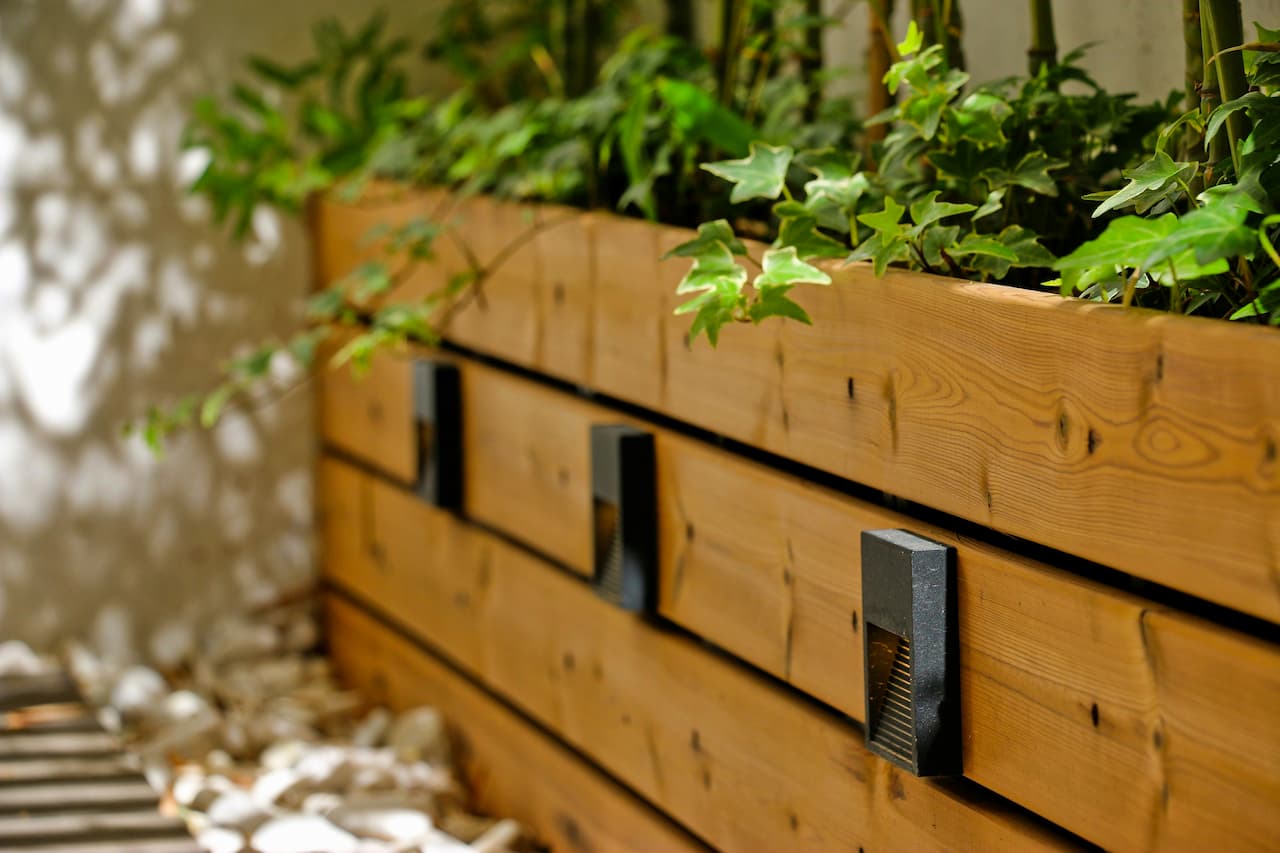
Raised beds are one of the most effective structural elements in a small garden. They define zones, add height variation, improve drainage and growing conditions, and make a garden look intentional and designed rather than accidental. A raised bed along one boundary immediately establishes a planting layer that draws the eye away from the fence or wall behind it. The guide to building a raised bed cheaply covers the practical construction in full – the same principles apply whether building for vegetables or for ornamental planting.
Avoid putting lawn in a very small garden unless genuinely needed for use. A small square of lawn in a tiny garden typically looks apologetic, requires regular maintenance and provides less value than the same area given over to hard surface and planting. Gravel, paving or decking are lower-maintenance alternatives that suit small spaces better and can accommodate containers, furniture and planting in a way that a rectangle of lawn cannot.
Vertical Space and Walls
The walls and fences of a small garden represent a significant growing area that most gardeners treat as background rather than opportunity. A well-planted boundary does two things simultaneously: it provides growing space and it hides the hard edge that visually confines the garden. The numbers make the case for using it.
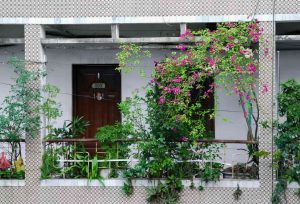
Climbing plants are the most natural way to use vertical space. Clematis, climbing roses, honeysuckle and jasmine all provide flowers, scent and often wildlife value on minimal horizontal footprint. For productive growing, wall-mounted planters and tiered shelving on south-facing walls work well for herbs, salads and small flowering plants.
Planting for Small Gardens
Plant choice in a small garden has consequences that do not apply in larger spaces. A plant that grows larger than expected, spreads aggressively or looks uninspiring for eleven months of the year is a real problem when you only have 20 square metres to work with. Every plant needs to earn its place – ideally contributing more than one season of interest and staying within predictable bounds. The discipline of asking “what does this plant do in January?” before buying is a useful filter that significantly improves small garden plant choices.
Choose plants with multiple seasons of interest wherever possible. A Rosa Gertrude Jekyll gives flowers in summer and attractive hips in autumn. A Cotoneaster horizontalis provides flowers in spring, berries through autumn and winter, and interesting branching structure year-round. An ornamental grass adds movement, texture and winter seed heads in a single plant. This multi-season thinking is more important in a small garden than in a large one, where the loss of one plant’s interest is absorbed by the surrounding planting.
Avoid aggressive spreaders – plants like Lysimachia, Persicaria and many Campanula species that spread by root and quickly overwhelm neighbours in a confined space. Check ultimate dimensions before buying anything. A shrub described as “vigorous” in a large border context will be invasive in a small garden. When in doubt, choose something smaller and slower – a small garden is far easier to scale up with extra plants than to bring back under control after one thuggish variety has colonised it.
Growing Food in Small Gardens
A small garden is not a barrier to growing food – it is simply a reason to prioritise the most productive and space-efficient crops. Salad leaves, herbs, tomatoes, courgettes and climbing beans all produce significant harvests from minimal ground space. The highest value crops for small space food growing are those that produce over a long season from a small footprint, with herbs being the most extreme example: a single 30cm pot of mixed herbs can supply a kitchen for an entire growing season.
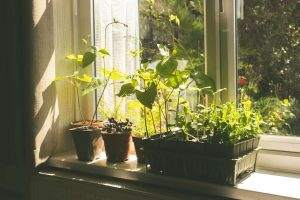
Containers are the most flexible option for food growing in a small garden. They can be repositioned to follow the sun, stacked to use vertical space and moved to accommodate social use of the garden. A collection of well-chosen containers on a sunny patio can produce more salad and herbs than many people expect from such a small footprint. Salad leaves grow quickly in containers, can be cut repeatedly and need very little root depth – a 20cm deep trough on a windowsill or patio edge is genuinely useful rather than token food growing.
Making the Most of Light
Light is the limiting factor in most UK small gardens, particularly those in terraced streets or surrounded by walls and fences. Understanding how light moves through your garden at different times of year is more important than almost any design decision. A planting scheme designed for full sun will fail on a north-facing plot just as surely as an ambitious vegetable garden in deep shade – and neither will be fixed by adding more plants.
Light-coloured surfaces – pale gravel, white or cream painted walls, light-coloured paving – reflect available light and make shaded spaces feel brighter and more open. Dark surfaces absorb light and can make a small shaded space feel oppressive and smaller than it is. This is a simple and cheap intervention that makes a significant visible difference, particularly in gardens that receive limited direct sun through the day. Repainting a boundary wall from dark brown to off-white costs little and changes the quality of the light in the whole space.
Features that Earn Their Space
In a small garden every feature needs to do more than one job. A raised bed provides growing space, defines a zone and adds structural height. A bench provides seating, a display surface for pots and potentially storage beneath. A water feature provides sound, movement, wildlife value and a focal point. Features that serve only one purpose are luxuries a small garden often cannot afford. Solar lighting is also worth considering – well-placed low-level lights extend the usable hours of a small outdoor space with no wiring or running costs. The installation approach and broader principles of garden lighting design are covered in our garden lighting guide. The table below shows how common small garden features score when assessed against how many useful roles they fulfil.
Draw your garden to scale before making any decisions. A simple plan on squared paper – even rough – immediately reveals whether ideas will actually fit and how proportions relate to each other. Many expensive small garden mistakes happen because the space was not measured and scaled before purchasing paving, furniture or plants. Five minutes with a tape measure and graph paper saves significant money and effort later.
Share on socials: