At a glance
Nobody tells you how overwhelming that first visit is. You turn up in late winter to collect your keys, somebody walks you across a muddy field to your plot, and then they leave. There it is. Twelve rods of weeds, compacted earth, possibly a shed with a broken door, and absolutely no indication of where to begin. If you have inherited a nightmare plot, you might also find a pile of someone else’s old pots, broken canes, and a cold frame with no glass.
The reason planning matters before you touch a spade is that enthusiasm in the first few weeks is easily misdirected. Most new allotmenteers spend spring planting everything they can think of across the entire plot, spend summer overwhelmed by the scale of maintenance, and arrive in autumn wondering why half of it failed while the other half produced more courgettes than any household could possibly eat. Planning does not take the joy out of it. It just means the joy lasts longer.
Understanding what you have
Before you plan anything, spend time understanding your plot. Walk it. Dig a few test holes and look at the soil. Clay soil will hold water, stay cold in spring, and set hard in summer. Sandy soil drains fast, warms up early, and needs more feeding. Most allotment soils are somewhere between the two, and a simple squeeze test will tell you which way yours leans: a handful of moist soil that moulds into a ball without crumbling is clay-heavy; soil that crumbles apart immediately is more sandy.
Look at where the sun falls throughout the day. A tall shed or fence on the south side of your plot will shade a large area even in summer, and shade dictates what is realistic to grow in that spot. Note where water collects after rain. That low corner that stays wet through March is not where you want your onion beds. Find out the aspect of your plot, too. South or south-west facing slopes warm earliest in the year and give you a head start on the growing season. North-facing plots can run a month behind in spring, which changes what is realistic to sow directly outdoors in March. And talk to the neighbouring plot holders. They know more about that specific patch of ground than any book does. They will know about the slugs in the third bed, about whether the water pressure drops in August, about what crops have consistently struggled and what has done well. That knowledge is worth more than most planning guides.
The half-and-half rule for year one
The single most useful piece of advice for a first-year allotmenteer is to only cultivate half your plot. This is not defeatism. It is the most practical thing you can do.
Attempting to bring a whole plot into production in year one is the fastest route to burnout. A neglected plot has years of weed seeds in the soil, and every time you turn the ground you bring more of them to the surface. You will spend every available visit fighting weeds rather than growing food. Meanwhile, the uncultivated half can be covered with cardboard and a thick mulch of woodchip or bark. This smothers weeds without the labour of digging, and by the time you are ready to expand in year two, that ground will be significantly easier to work. The half you do cultivate in year one should focus on what grows easily and gives quick returns: courgettes, salad leaves, kale, broad beans, French beans, and beetroot are all forgiving crops that tolerate imperfect conditions and reward a first-time grower. Leave the asparagus bed for year two or three, when you actually understand your plot.
Getting the soil right first
Whatever you decide to grow, the single biggest return on time is improving your soil. There is no crop that does not benefit from well-structured, fertile ground. If you only do one thing in your first year, feed your soil.
On a new or neglected plot, a thick layer of well-rotted garden compost, farmyard manure, or green waste compost laid on the surface before winter will transform the soil structure over the following months. Worms do much of the work if you give them the material to work with. Some allotments have communal compost bays; many councils offer reduced-rate soil improver to allotment holders. On heavy clay, adding horticultural grit alongside organic matter helps improve drainage. On sandy soil, organic matter is the main requirement, and lots of it. A soil pH test is worth doing in year one. Most vegetables prefer a pH between 6.0 and 7.0. Acid soils can be limed to raise the pH; strongly alkaline soils can be adjusted over time with sulphur chips. Onions and brassicas particularly dislike acid soil, while potatoes prefer it slightly acidic. If you do not know your pH, you are partly guessing at every planting decision.
Planning your crop rotation
Crop rotation sounds technical but the core logic is simple: do not grow the same family of vegetable in the same ground two years running. The main reason is pest and disease pressure. Clubroot in brassicas, onion white rot, and potato blight all persist in soil and get worse if the same crop returns year after year. Moving crops around breaks those cycles.
The classic four-bed system is the most practical starting point. Your growing area divides into four sections, each occupied by one crop group. Every year, each group moves one section along in the same direction. You never need to remember which crop went where if you draw it out and pin it in your shed.
What to sow and when
The allotment calendar is not really about dates. It is about conditions. The dates below are central England averages; allow two to three weeks later in Scotland and exposed northern uplands, and two to three weeks earlier in sheltered southern and coastal plots. Always let the conditions on your specific plot override anything written on paper.
January and February are for planning, ordering seeds, and starting the earliest sowings indoors. Onion sets, broad beans, and chilli peppers can get going on a warm windowsill from late January. March is when the season genuinely starts outside: soil temperatures begin rising, early potatoes go in from late March under fleece, and direct sowing of peas, broad beans, and spinach becomes realistic on a decent day. April and May are the busiest months, when most crops get planted. Tender crops including courgettes, squash, French beans, and sweetcorn need to wait until the last frost date has passed, which falls mid to late May across most of England and Wales, and later further north. June through August is harvest season alongside continuous maintenance, and also the time to sow autumn and winter crops including kale, purple sprouting broccoli, and winter salads. September and October see the end of most warm-season crops and the harvest of roots and squash, with garlic going in from October onwards. November and December are for clearing, composting, and soil improvement.
Building good growing infrastructure
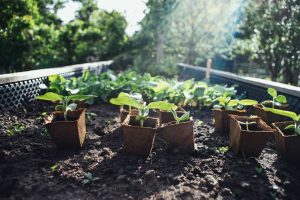
Raised beds are not essential but they have real advantages: they warm faster in spring, drain better in wet conditions, can be filled with improved soil if your native ground is poor, and the defined edges make the plot feel manageable rather than overwhelming. Many new allotmenteers convert their plot to a raised bed system in year one or two, and the investment repays quickly.
Paths matter more than they seem. Whatever surface they are, solid paths between beds mean you can access the plot after heavy rain without compacting your growing soil. Compacted beds drain poorly, warm slowly, and are harder to work. Bark chippings, reclaimed slabs, or a layer of weed-suppressing membrane covered with woodchip all work well. A water butt or two connected to the shed roof makes a significant difference to how easy watering is. Allotment water supplies can fail or queue in hot weather, and a full water butt means you are never stuck. A simple cold frame extends the season at both ends, letting you start seeds earlier in spring and keep salads going through autumn. It does not need to be elaborate; an old wooden frame with salvaged window glass works just as well as anything bought new.
Talk to your neighbours before you build anything. Plot holders who have been there for years know which direction the prevailing wind comes from, whether the water supply is reliable, and what the committee tends to be relaxed or strict about. Ten minutes of conversation can save weeks of misdirected effort.
Managing pests and diseases
Allotments are wilder environments than gardens. Slugs, pigeons, aphids, and cabbage white butterflies are facts of life rather than occasional problems. The approach that works is not fighting them frantically but building resilience into the way you grow. Most pest damage can be reduced significantly with simple, consistent measures that become second nature once you are in the rhythm of the plot.
Keeping records
A simple notebook kept in the shed is worth ten times the effort of keeping it. Record what you sowed, where you put it, when it went in, when you first harvested, and what failed and why. Notes made at the time are honest in a way that memory is not.
Good records let you improve systematically. If you note that your first early potatoes planted on 15 March produced well but your maincrop went in three weeks late and suffered accordingly, you know what to change next year. If the same bed produces patchy crops three years running, your records might tell you that is where the old compost heap used to be, or where water always pools after rain. Many allotmenteers write off record-keeping as too much effort and then spend years repeating the same mistakes. The ones who improve fastest are almost always the ones with the most honest notes.
What realistic expectations look like
Year one on an allotment is not going to look like a television gardening programme by October. Some things will fail. Some things you thought were easy will prove harder than expected. You will have one glut of something you did not plan for and shortfalls in something you really wanted. This is normal and it is part of learning your specific plot.
What you can realistically achieve in year one is clearing and improving part of your plot, establishing one or two productive beds, growing a handful of crops successfully, and building a working understanding of how your ground behaves. That is a genuinely good first year. The second year will be better, and the fifth year better again. Allotment holding is a long game. The people who get the most from their plots are not the ones who arrived with the most ambition in March. They are the ones who still have their plot in October.
Watering and irrigation
The most common watering mistake on a first allotment is light and frequent rather than deep and occasional. A light sprinkling every other day encourages roots to stay near the surface where they are most vulnerable to drying out. Watering deeply and less often trains roots downward into the soil where moisture is more stable and reliable.
Most vegetables need more water than people expect at critical stages. Courgettes and squash need consistent moisture to prevent blossom end rot and to keep fruiting vigorously. Beans need heavy watering when flowering to set pods well. Leafy crops like kale and spinach bolt to seed much faster when stressed by drought. Knowing which crops are most sensitive helps you prioritise on a hot day when you cannot water everything thoroughly. Early morning watering is ideal: plants get a drink before the heat of the day without leaving foliage wet overnight, which can encourage fungal disease.
Feeding your crops
Good soil preparation in year one reduces how much additional feeding you need to do, but most vegetables benefit from some input during the growing season. Hungry crops like brassicas, courgettes, and tomatoes particularly reward regular feeding. A general-purpose balanced fertiliser applied at planting and again halfway through the season covers most crops adequately.
For leafy crops needing nitrogen, a high-nitrogen liquid feed applied every couple of weeks through summer produces noticeably stronger growth. For fruiting crops like courgettes and beans, switch to a high-potassium feed once flowers appear, to support fruit development rather than leaf growth. Green manures are worth considering for beds that will sit empty for a month or more. Sowing phacelia, clover, or mustard on bare ground fixes nitrogen, suppresses weeds, and adds organic matter when dug in. They are cheap to buy and require almost no maintenance.
Share on socials: