At a glance
The material you choose for garden decking determines not just how it looks on day one, but how much time you spend maintaining it, how it weathers the UK’s persistent damp and how it looks in ten years. A softwood deck installed without adequate preparation can look tired within three years. A quality composite deck installed correctly can look virtually identical at year fifteen as it did at installation. The difference in upfront cost is smaller than most people expect; the difference in lifetime cost is often significant.
The UK market has matured considerably over the past decade. Composite decking, once a relatively niche product, is now mainstream and available across a wide price range with meaningfully different quality levels. Porcelain outdoor tiles have moved from a premium specialist product to a competitive alternative for certain applications. Timber remains the classic choice in both its cheap softwood and premium hardwood forms. Understanding each material on its own terms makes the comparison straightforward.
Softwood Decking
Softwood – typically pressure-treated pine or spruce – is the entry-level material and the most widely installed type in the UK. It is cheap, readily available, easy to cut and work, and produces a natural timber appearance that suits most garden styles. The trade-offs are well documented: softwood requires annual maintenance (oiling or staining), is prone to splitting, warping and greening with algae in damp conditions, and has a realistic lifespan of 10-15 years with proper upkeep or as few as five to eight years if neglected.
Pressure treatment extends softwood’s life considerably by forcing preservative deep into the wood fibres, but it does not eliminate the need for surface treatment. UC3 pressure treatment (suitable for above-ground exterior use) is the minimum standard for decking. UC4 (suitable for ground contact) adds extra longevity for posts and bearers that sit close to soil. The characteristic green tint from the copper-based preservative fades to grey over the first season.
Hardwood Decking
Hardwood decking – typically iroko, ipe, balau or European oak – costs significantly more than softwood but offers substantially better durability, density and natural beauty. Hardwoods are naturally resistant to rot and insect damage, and their tight grain means they split and warp far less. A quality hardwood deck with basic annual oiling can realistically last 25-30 years.
The environmental credentials of hardwood decking vary enormously by species and source. Iroko and ipe are tropical hardwoods that should only be sourced with FSC certification. European oak, home-grown larch and locally sourced sweet chestnut are lower-carbon alternatives. Larch in particular is gaining popularity as a sustainable UK-grown hardwood alternative – it is naturally durable, resists moisture better than softwood and develops an attractive silvery patina when left untreated.
Leave hardwood to acclimatise before installation. Allow hardwood boards to acclimatise for 48-72 hours on site in dry conditions before fixing. This allows the timber to reach equilibrium with its environment and reduces movement after fixing.
Composite Decking
Composite decking is made from a mixture of wood fibre and recycled plastic, co-extruded into boards that mimic timber without requiring annual treatment. The quality range within composite decking is substantial – entry-level boards can look plasticky and are vulnerable to fading, while premium solid-core boards from established brands look convincingly timber-like and carry 20-25 year warranties.
The UK climate suits composite well. The damp conditions that cause softwood to green and swell have far less effect on composite boards, and the anti-slip surface textures now available on quality products address the concern that composite becomes slippery when wet. Composite does expand and contract with temperature change, requiring correct gap spacing during installation – a detail that budget installers sometimes skip, causing boards to buckle in summer heat.
PVC and Aluminium Decking
Full PVC decking boards use no wood content at all, making them completely impervious to moisture, rot and insect damage. They are the lowest-maintenance option available – a wash with soap and water annually is typically all that is required. The trade-offs are a less natural appearance, higher upfront cost than entry composite, and a hollow sound when walked on. PVC decking is most commonly used in environments where moisture is unavoidable, such as poolside decking or very shaded areas with persistent damp.
Aluminium decking is a premium option more common in commercial settings but increasingly available for domestic use. It is exceptionally durable, completely rot-proof, and available in a range of finishes including woodgrain embossed textures. For most domestic UK garden projects, composite decking at the premium end achieves similar longevity and aesthetics at substantially lower cost.
Porcelain and Natural Stone Tiles
Outdoor porcelain tiles are not decking in the traditional sense, but they have become a genuine alternative to timber or composite for creating a level outdoor surface. They require a concrete or solid sub-base rather than a timber frame, which increases installation complexity and cost but creates a surface that is genuinely maintenance-free, completely frost-proof, and extremely durable. Many buyers use porcelain tiles for the ground-level section closest to the house and reserve traditional decking for raised areas where a solid base is impractical.
Material cost is only part of the story. Installation costs can equal or exceed material costs, particularly for composite and porcelain tile which require precise fitting. Always get a quote that separates materials, labour, sub-frame and any groundworks – cheap materials with poor installation will perform worse than premium materials fitted correctly.
All Materials Compared
Which Decking Material Is Right for You
The decision comes down to four questions: budget, maintenance tolerance, aesthetic preference and intended use. For a first garden deck where budget is the primary constraint, pressure-treated softwood remains a practical choice provided you are realistic about the annual maintenance commitment. For a deck in a shaded or north-facing position where algae is likely, or one that simply needs to look good without annual attention, composite is the smarter investment over a ten-year horizon.
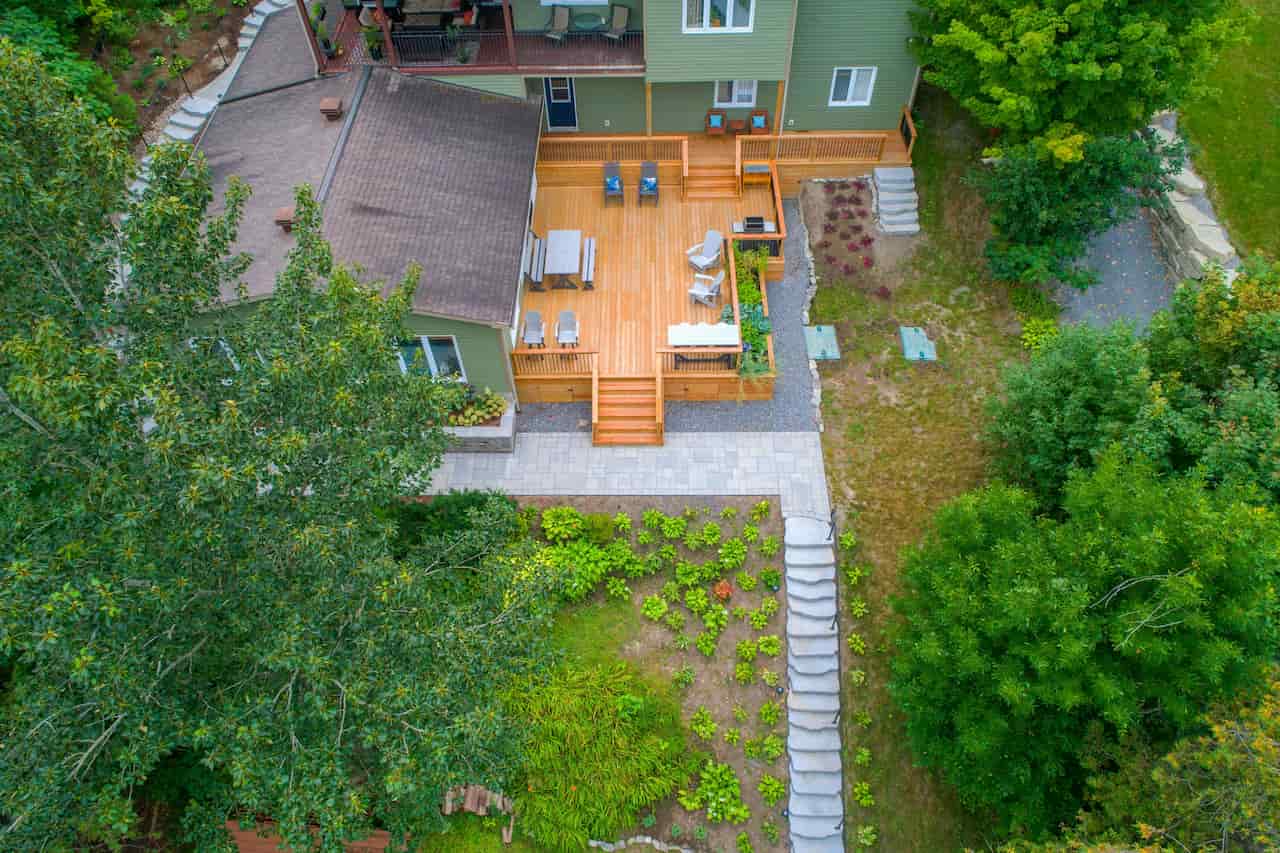
For a deck attached to or immediately adjacent to a garden office or outbuilding where visual quality matters and the deck will be used year-round, hardwood or premium composite both perform well. If the project also involves a paved terrace area, considering outdoor porcelain tiles for the ground-level section and composite or hardwood for any raised or stepped area gives the best of both materials in their respective applications. The combination works because each material is doing the job it is best suited to – stone or porcelain at ground level where drainage and durability matter most, timber or composite on the elevated structure where the warmth underfoot and the visual character of the decking are the priority.
Whatever material you choose, the sub-frame matters as much as the decking boards. A deck built on an inadequate frame – undersized joists, insufficient post spacing, poor drainage provision – will perform badly regardless of the board quality. Composite boards in particular need a frame specification that matches the manufacturer’s guidance precisely, because their thermal expansion is greater than timber and requires specific joist spacing to accommodate it without visible gaps or buckling. For garden rooms and raised platforms where the deck is an integral part of the structure, building regulations may apply if the deck is more than 30cm above ground level – always confirm with your local planning authority before starting an elevated project.
Drainage is the single most overlooked factor in UK deck installation. Boards must be laid with sufficient fall to drain rainwater away from the house and off the deck surface. Composite and PVC boards are forgiving here because they do not absorb moisture. Timber boards that sit in standing water, even briefly, will accelerate algae growth and speed up the natural degradation of the surface treatment. A minimum fall of 1 in 60 across the deck surface is the standard recommendation for any UK installation, regardless of material. Getting this right at the framing stage costs nothing extra; correcting it after the boards are laid can mean a complete rebuild.
Fixing method also affects the finished appearance and long-term performance. Hidden clip fixing systems, available for most composite and some hardwood products, eliminate visible screws from the deck surface and create a cleaner finish. They also allow boards to expand and contract more freely than face-screwing, which is particularly important for composite in the UK’s variable climate. For softwood, face-screwing with stainless steel screws remains the standard – galvanised screws react with tannins in treated timber and can cause staining over time.
Share on socials: