At a glance
Electric heaters are the most straightforward heating option in the UK – no boiler, no gas supply, no installation required beyond plugging in or mounting to a wall. They are widely used as supplemental heating in rooms not connected to central heating, as primary heating in properties off the gas grid, and as emergency backup when a boiler breaks down. The market is also saturated with misleading marketing claims about efficiency, economy and miracle heating technology that genuinely confuses buyers into spending more than they need to.
This guide cuts through the noise. It explains why the widely quoted “100% efficiency” figure applies to all electric heaters without exception, what the real differences between heater types actually are, how to calculate running costs accurately, and which types work best for which situations in UK homes. There are no miracle heaters – but there are genuinely better and worse choices depending on how and where you heat.
The Efficiency Myth – All Electric Heaters Are 100% Efficient
Every electric heater sold in the UK is 100% efficient at converting electrical energy into heat. This is a law of physics, not a marketing claim – electricity entering any resistive heater is converted entirely into heat, because there is nowhere else for the energy to go. When a manufacturer advertises a heater as 99.9% efficient, or as more efficient than conventional electric heaters, they are either describing basic physics that applies to all electric heaters equally, or misleading you. No electric heater converts more than 100% of the electricity it consumes into heat in the room – that would require creating energy from nothing.
The real differences between electric heater types are not about conversion efficiency but about how they heat, how quickly they heat a space, how well they retain and distribute heat, and how appropriate they are for different room types and usage patterns. A cheap convector heater and an expensive infrared panel both convert electricity to heat at 100% efficiency – but they heat a room in very different ways, and that difference matters for comfort and running cost in practical use.
Electric Heater Types Compared
The main types of electric heater available in the UK are convector heaters, oil-filled radiators, infrared panels, storage heaters, fan heaters and ceramic heaters. Each heats a room differently – some heat the air directly, some heat objects and surfaces, and some store heat and release it over time. Understanding the distinction helps match the right type to the right situation rather than buying based on marketing claims.
Convector heaters draw cool air from the bottom, pass it over a heating element, and release warm air from the top. They heat air rapidly and work well in enclosed rooms where the warm air is contained. The downside is that they lose effectiveness in draughty rooms or spaces with high ceilings, because the warm air rises and escapes or is constantly replaced by cool air. They also stop producing warmth immediately when switched off, because they store no heat in their casing.
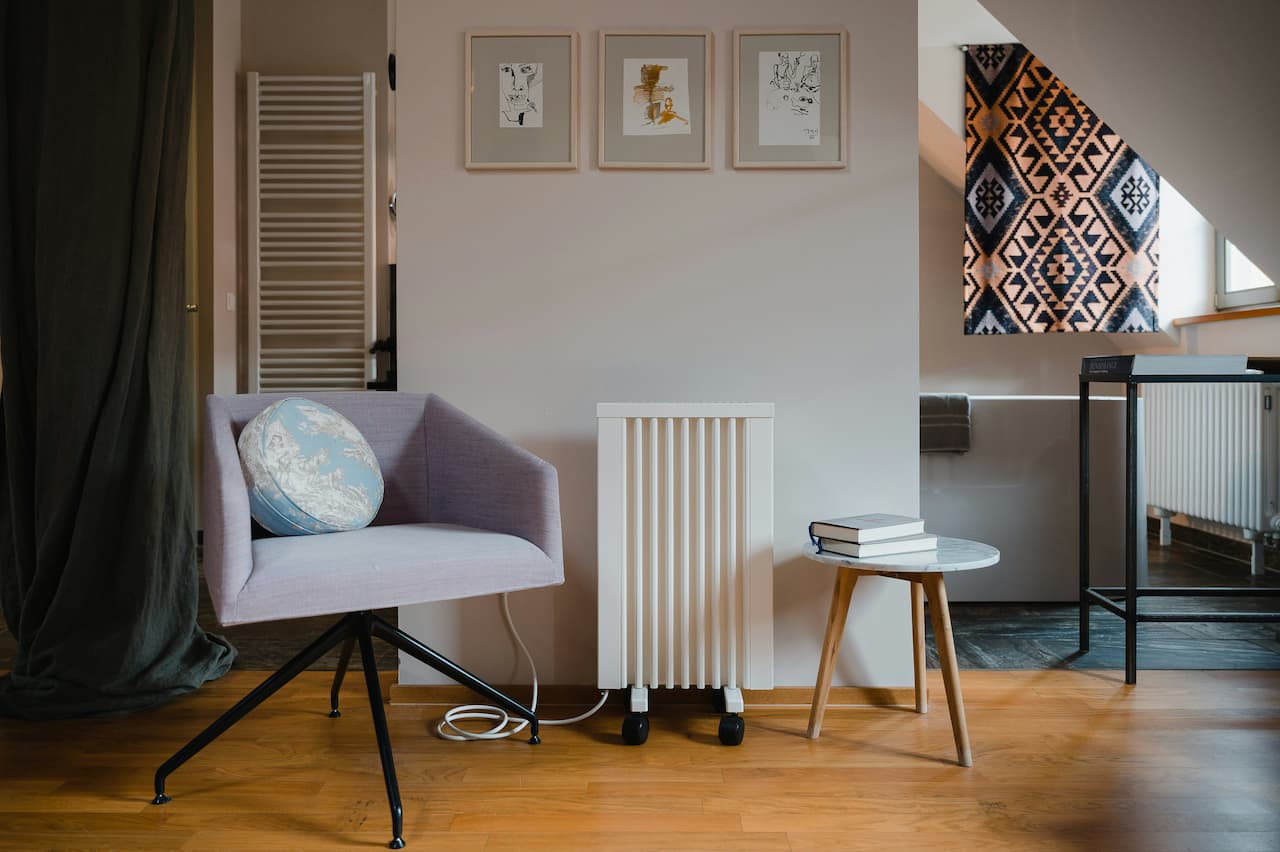
Oil-filled radiators work by heating oil sealed inside the radiator, which then radiates heat from the surfaces of the fins. They take longer to reach operating temperature than convector heaters but continue to radiate warmth for a period after switching off because the oil retains heat. This makes them significantly more cost-effective for long heating sessions – the heater can cycle off at intervals while the retained heat in the oil continues to warm the room. They are also silent, which makes them well-suited to bedrooms and home offices.
Infrared panels emit radiation that heats objects and surfaces directly rather than warming the air. A person sitting in front of an infrared panel feels warm even in a cold room because the radiation heats their body directly, in the same way sunlight feels warm even on a cold day. This makes infrared panels very effective for outdoor spaces, garages and workshops where heating the air is impractical, and for spot-heating a specific area rather than an entire room. They heat instantly on switching on and stop immediately on switching off, making them ideal for intermittent use where you only need warmth for the duration of your time in the space.
Running Costs – What You’ll Actually Pay
Running cost is determined by two factors: the wattage of the heater and the duration of use. A 2kW heater running for one hour costs approximately 48p at the current electricity price cap rate of around 24p per kWh. A 1kW heater running for the same hour costs approximately 24p. The wattage of the heater is the single most controllable variable – a lower-wattage heater running for longer can achieve the same room temperature as a high-wattage heater running briefly, and modern thermostatic controls allow heaters to cycle on and off rather than running continuously, significantly reducing cost.
Heater Types Ranked for Different Uses
The right choice of heater depends entirely on the use case. A heater that is ideal for keeping a home office warm all day is a poor choice for quickly heating a bathroom before a shower. The ratings below reflect practical suitability for each scenario, accounting for heat-up time, heat retention, running cost implications and safety considerations where relevant.
How to Reduce Electric Heating Costs
The most impactful way to reduce the cost of electric heating is to reduce the heat loss from the space being heated. A well-insulated room with draught-proofed doors and windows needs far less energy to maintain a comfortable temperature than a draughty, poorly insulated one – and no heater, however sophisticated, can compensate for a room that loses heat faster than the heater can replace it. Draught-proofing door and window frames is one of the cheapest and most cost-effective home improvements available, with materials costing under £20 and payback times measured in weeks rather than years.
Thermostatic control is the second most important factor. A heater running continuously at full power until the room feels warm, then switched off until it feels cold again, is an inefficient heating pattern that over-heats the room intermittently and under-heats it between cycles. A heater fitted with or controlled by a thermostat that maintains a consistent target temperature by cycling on and off uses significantly less total energy to maintain the same level of comfort. Most modern electric heaters include built-in thermostats, but older or cheaper models can be paired with a plug-in thermostat controller for £15-30 that provides the same function.
Zoned heating – using individual heaters in the rooms you are actually occupying rather than attempting to heat the whole house simultaneously – is particularly well-suited to electric heating. Because each heater operates independently with no central boiler or pipework, you can heat only the bedroom in the evening, only the living room during the day, and leave unoccupied rooms cold. For a household where different family members use different rooms at different times, this approach can reduce electric heating costs substantially compared with central heating systems that heat all zones simultaneously.
Storage heaters deserve particular mention for properties on Economy 7 electricity tariffs, which provide cheaper electricity during off-peak overnight hours. Modern storage heaters with intelligent charge controls can make excellent use of overnight cheap-rate electricity, storing heat through the night and releasing it through the following day. For an all-electric property without access to gas, a storage heater system on an Economy 7 tariff remains one of the most cost-effective electric heating arrangements available in the UK. The key is matching the heater’s charge level to the forecast heating requirement – modern models with automatic charge controllers do this without manual intervention.
The single most effective action for reducing electric heating costs is adding a thermostat. A heater that cycles on and off to maintain a set temperature uses significantly less energy than one that runs continuously. Many electric heaters sold without built-in thermostats can be paired with a plug-in thermostat controller – typically costing £15-30 – that provides the same function and can reduce running time by 30-50% in a well-insulated room.
Share on socials: