At a glance
Cacti have a reputation for being indestructible, which is partly earned and partly misleading. They are genuinely tolerant of neglect in one critical direction – they can go without water far longer than almost any other houseplant without serious harm. But they are not tolerant in the other direction: overwatering, combined with the poorly drained compost that most standard houseplant mixes provide, kills more cacti in UK homes than any other cause. The plant that survived three weeks without water will rot in three days if left sitting in wet compost. Understanding this single asymmetry is the foundation of successful cactus care.
The other significant challenge for UK growers is light. Cacti are sun-loving plants from environments where direct, intense sunlight is the norm, and a UK winter provides a fraction of what they are adapted to. Getting the position right – and understanding how care needs to change between the bright growing season and the dim dormant period – makes the difference between a cactus that grows steadily and eventually flowers, and one that survives but slowly deteriorates.
Types of cactus for UK homes
The cactus family is vast, but a relatively small group of genera are well suited to indoor growing in UK conditions. Choosing the right type matters because the care requirements, particularly around winter temperature and watering frequency, vary between groups.
Mammillaria is the genus most widely available in UK garden centres and the best starting point for anyone new to cacti. It is compact, reliably produces rings of small flowers around the crown even on young plants, and is tolerant of the occasional watering mistake that catches all beginners out. Gymnocalycium is a useful choice for rooms that receive less direct sun – it tolerates brighter indirect light better than most desert cacti, though it will not flower without a reasonable amount of light. The Christmas cactus (Schlumbergera) is something of an outlier – it is a forest cactus from Brazil rather than a desert species, and it needs more water and less direct sun than typical desert cacti. Its care requirements are sufficiently different that it is covered separately elsewhere.
Light and position
Light is where most UK cactus growers encounter the biggest challenge. Desert cacti are adapted to intense, direct sunlight for many hours a day, and the average UK home – particularly in autumn and winter – provides a small fraction of that. The ideal position is a south-facing windowsill that receives direct sun through the glass for as much of the day as possible. An east or west-facing window is acceptable but will produce slower growth and less reliable flowering. A north-facing window is too dim for most desert cacti to thrive – they will survive but not grow or flower well.
One important consideration specific to the UK is the difference between summer and winter light levels. Between October and March, days are short and light intensity is low even on a south-facing sill. During this period the cactus enters natural dormancy and benefits from a cooler, drier environment. Moving it to an unheated but frost-free room or a cool spare bedroom for the winter months replicates the temperature drop it would experience in its natural habitat and significantly improves the likelihood of flowering in spring. A minimum winter temperature of around 5-10°C is tolerable for most common desert cacti, provided the compost is completely dry.
Watering and feeding
The watering rule for cacti is straightforward and non-negotiable: water thoroughly, then wait until the compost is completely dry before watering again. In practice during the UK summer this means watering roughly every two to three weeks, depending on pot size, temperature and how much sun the plant receives. In autumn and winter the interval extends dramatically – once a month is often sufficient, and many experienced growers stop watering desert cacti entirely between October and March.
When watering, soak the compost thoroughly until water drains from the bottom of the pot, then empty the saucer completely. Never leave a cactus standing in water. Between waterings, the compost should dry out fully – not just at the surface but throughout the pot. A useful test is to lift the pot; a pot with dry compost will feel noticeably lighter than one with damp compost, and with practice this weight check becomes an accurate gauge. During the growing season from April to September, feed once a month with a dedicated cactus and succulent fertiliser or a low-nitrogen tomato feed diluted to half strength. Do not feed at all between October and March.
Soil, pots and repotting
Standard multipurpose compost is too moisture-retentive for cacti and is one of the primary causes of root rot in indoor plants. A purpose-made cactus and succulent compost is the correct medium – it contains a higher proportion of grit, sand and perlite that allows water to drain rapidly and the root zone to dry out quickly between waterings. If a cactus compost is not available, mix standard multipurpose compost with an equal volume of horticultural grit or perlite to create a sufficiently free-draining growing medium.
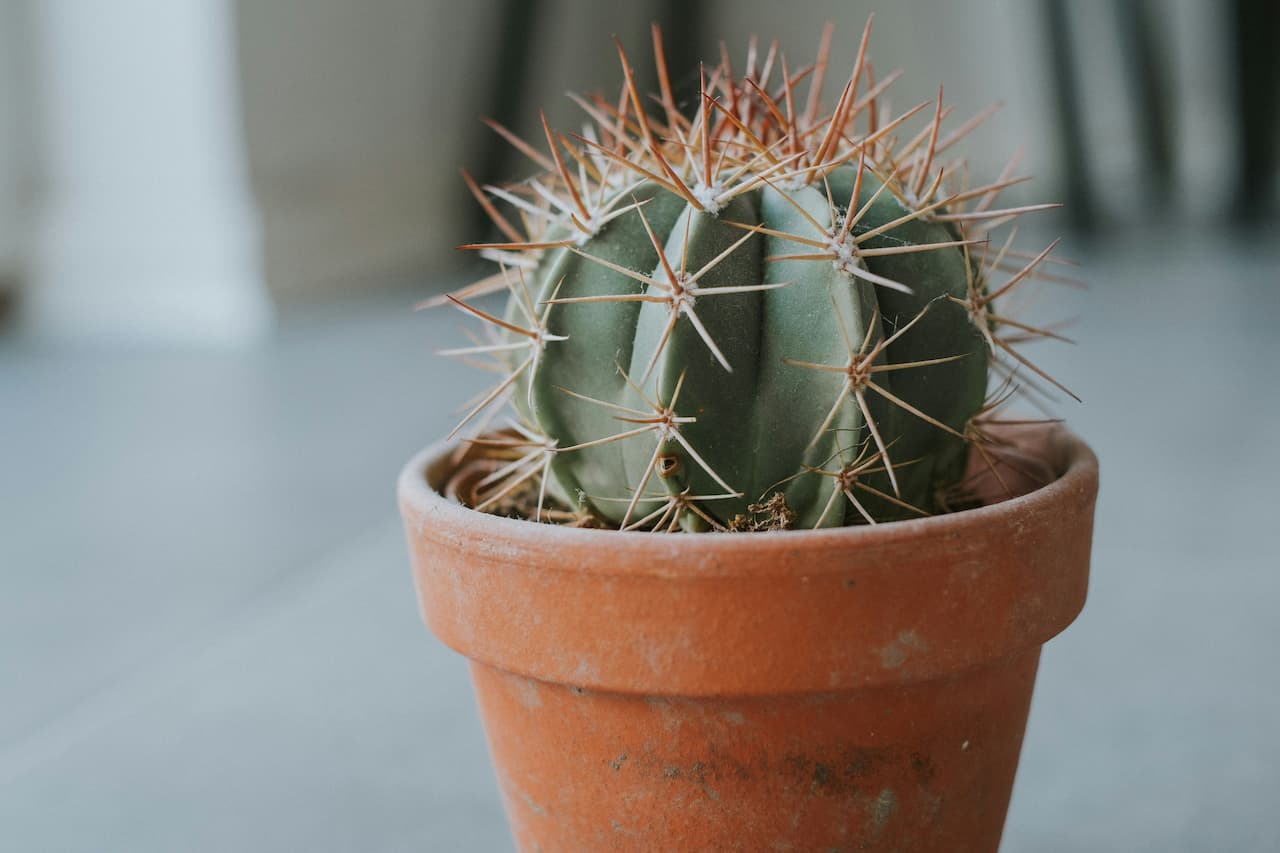
The pot material and size both matter. Terracotta pots are preferable to plastic for cacti because the porous walls allow moisture to evaporate from the sides as well as the top, speeding up the drying cycle that desert plants depend on. The pot should be only slightly larger than the root ball – a cactus in an oversized pot has more compost around the roots than it can dry out quickly, increasing the rot risk. Drainage holes are not optional: a cactus in a pot without drainage will develop root rot regardless of how carefully it is watered.
Repot in spring every two to three years, or when roots are clearly circling the base of the pot. Handle cacti with folded newspaper wrapped around the body rather than bare hands – thick gloves work but the folded newspaper method gives better control and protects against even fine spines that can penetrate most glove materials.
Seasonal care calendar
A cool dry winter is the key to cactus flowers. Many desert cacti will not flower unless they experience a distinct winter dormancy period with cooler temperatures and minimal water. UK homes kept at 20°C year-round with regular watering deny the plant the conditions it needs to set flower buds. Moving the cactus to an unheated room – a spare bedroom, a cool hallway or a frost-free greenhouse – from October to February and withholding water almost entirely is the single most effective step towards getting a cactus to flower.
Common problems and solutions
Share on socials: