At a glance
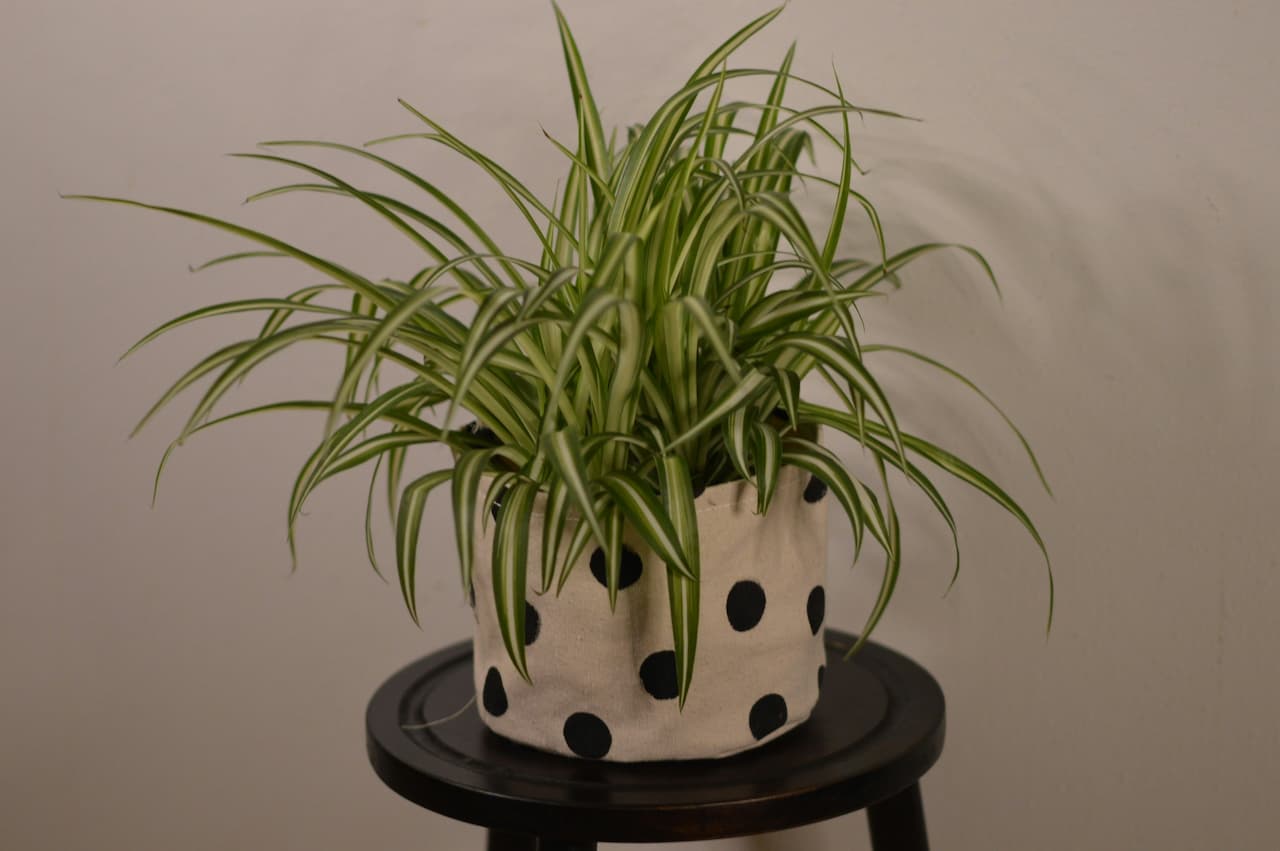
The spider plant (Chlorophytum comosum) is one of the most adaptable and widely grown houseplants in the UK, and for good reason. It tolerates a wide range of light conditions, recovers readily from occasional neglect, is not fussy about humidity, and produces a continuous cascade of plantlets on long arching stems that make propagation effortless. A single plant bought in a 9cm pot can fill a hanging basket, produce dozens of new plants within two seasons, and still be thriving a decade later if given basic care. For anyone new to houseplants, a spider plant is one of the most reliably successful starting points available.
Despite its tolerance, a spider plant in the right conditions is considerably more impressive than one that is merely surviving. Good light, consistent watering through the growing season, and occasional feeding produce a plant with broad, vivid leaves and long, arching stems loaded with plantlets – genuinely ornamental rather than just persistent. The difference between a neglected spider plant and a well-cared-for one is significant enough that understanding the basics is worth the small amount of effort involved. Like the peace lily and tradescantia, the spider plant is one of the great workhorses of the UK indoor plant collection.
Varieties to grow
Vittatum is the variety most commonly sold in UK garden centres and supermarkets – the classic spider plant with a central white stripe on each green leaf. It is the most vigorous of the common types and the fastest to produce plantlets. Variegatum, with white leaf margins and a green centre, is slightly less vigorous but equally popular and particularly striking in a bright position where the white edges catch the light. Bonnie is a compact curly-leaved variety that stays smaller than the standard types, making it a good choice for a shelf or windowsill where the trailing stems of a full-sized plant would be impractical. The solid green form is less widely available but the most tolerant of low-light conditions – useful for positions where variegated types would lose their colouring and become unhealthily pale.
Light, temperature and position
Spider plants are genuinely adaptable to a wide range of light conditions – more so than most houseplants. They perform best in bright, indirect light, where variegated varieties develop their most vivid colouring and plants produce the largest, most ornamental leaves. However, they will grow quite adequately in lower-light positions such as a north-facing windowsill or a corner of a room with indirect natural light. In very low light, growth slows considerably and variegated varieties lose some of their contrast – the leaves becoming a more uniform pale green – but the plant remains healthy rather than declining. Direct summer sunlight through glass should be avoided as it scorches the leaf tips and bleaches the colour from variegated forms.
Temperature range is broad – spider plants are comfortable anywhere between 7°C and 27°C, making them suitable for most UK rooms including slightly cool hallways or conservatories that are unheated in winter. The one condition to avoid is cold draughts from open windows or external doors during winter, which cause the leaf tips to brown and the outer leaves to yellow and collapse. A bathroom or kitchen position works well – spider plants appreciate the slightly higher ambient humidity in these rooms, though they do not require it in the way that Boston ferns do.
Watering and feeding
Allow the top 2-3cm of compost to dry out between waterings during the growing season from spring through early autumn. Spider plants have fleshy, water-storing roots that are significantly more tolerant of underwatering than overwatering – a plant that dries out briefly recovers quickly, while one sitting in persistently wet compost develops root rot that is much harder to reverse. In the UK spring and summer, a typical spider plant in a 13-15cm pot needs watering roughly once a week in normal household temperatures. In autumn and winter, reduce to once every ten to fourteen days as growth slows and the plant’s water requirements drop significantly.
Spider plants are sensitive to the fluoride and chlorine in tap water, which accumulates in the leaves over time and causes the characteristic brown leaf tip problem. Using rainwater collected from a water butt, or leaving tap water to stand overnight in a watering can before use, reduces this significantly. Feed with a balanced liquid houseplant fertiliser at half the recommended strength every two to three weeks from April to September. Do not feed in autumn and winter when the plant is not actively growing – feeding a resting plant encourages soft, weak growth that is more susceptible to disease.
Seasonal care calendar
Propagating from plantlets
Spider plants are one of the easiest houseplants to propagate. The long, arching stems that appear from established plants in the growing season carry miniature plantlets at their tips – small rosettes of leaves that are genetically identical to the parent plant. These plantlets already have rudimentary root initials and will root readily in compost or water. There are two approaches: leaving the plantlet attached to the parent stem while it roots (the more reliable method), or detaching and potting immediately.
To root while attached, simply position a small pot of moist houseplant compost below the hanging stem and press the plantlet into the surface, pinning it in place with a U-shaped piece of bent wire or a small stone. The plantlet will root into the pot within three to four weeks while still drawing nutrients from the parent through the connecting stem. Once the plantlet has visibly grown and is firmly rooted when gently tugged, sever the connecting stem. This method achieves a higher success rate than detaching and potting plantlets that have no roots yet. Like tradescantia cuttings, spider plant plantlets can also be rooted in a glass of water first – place the plantlet in water so just the base touches the surface, and roots typically appear within one to two weeks before potting on into compost.
A spider plant that has never produced plantlets probably needs more light and a slightly tighter pot. Plantlet production is triggered partly by mild root restriction – a plant in a pot that is much too large for its root system concentrates on growing roots rather than producing stems. Moving the plant to a position with brighter indirect light and ensuring the pot is not excessively large relative to the root ball are the two most reliable steps for encouraging a reluctant spider plant to flower and produce its characteristic plantlets.
Common problems and solutions
Share on socials: