At a glance
The UK growing season is shorter than many gardeners realise and shorter than it needs to be. Most unprotected vegetable gardens in Britain run from May to October at best – a window of around five to six months that is determined not by the calendar but by the risk of ground frost at either end. Extend that window by three or four weeks at each end and you gain nearly two additional months of productive growing time across the year. Do it well with a cold frame or polytunnel and you can be harvesting through the winter. The tools for achieving this are neither expensive nor complicated, and the difference they make – in yield, in variety, and in the sheer pleasure of eating something you grew in March – is one of the most worthwhile investments a UK grower can make.
Season extension is also about more than just adding weeks. Protection at the right moments allows you to start crops significantly earlier than outdoor conditions would permit, to harvest crops that would otherwise be killed by autumn frosts, to overwinter young plants that would struggle unprotected, and to grow a category of tender and exotic vegetables that the UK climate would otherwise rule out entirely. Even the simplest and cheapest methods – a sheet of horticultural fleece, a few tunnel cloches – unlock possibilities that change what a UK kitchen garden can produce.
Why extending the season matters in the UK
The UK’s maritime climate is both the blessing and the limitation of British growing. Mild winters mean very few crops die outright, but cool springs and unpredictable autumns compress the window for heat-loving crops considerably. The last frost date in most of England falls between late March and late April, and the first autumn frost arrives from mid-October in the north to November in the southwest. The gap between these dates – the frost-free growing season – is only around 180 to 210 days in most of the country, and within that window the warmest months suitable for tender crops like tomatoes, courgettes, cucumbers and peppers amount to perhaps 90 to 120 days in a good year.
Every week of protection gained at the start of the season allows earlier sowing or planting out. Every week gained at the end allows crops to be harvested longer or allows autumn sowings to establish before winter sets in. When you compound these gains across multiple crops over a full year, the difference between a protected and an unprotected growing space is substantial – not just in weeks but in the range of crops it is possible to grow at all.
Garden fleece and cloches
Garden fleece is the cheapest and most flexible season extension tool available and every UK grower should have a roll of it. Horticultural fleece is a spun polypropylene fabric that allows light, air and rain through while trapping enough heat to raise the temperature beneath it by two to three degrees Celsius – enough to prevent light frost damage on tender plants and to warm the soil before planting. It is sold in different weights: 17gsm (grams per square metre) is the standard weight for most frost protection, while 30gsm and above provides more substantial insulation for harder frosts but admits less light and should not be used for extended periods during the growing season.
Cloches are more rigid protection structures placed over individual plants or short rows. They are more effective than fleece at raising soil and air temperature because they create an enclosed microclimate that warms during the day and holds warmth overnight. Traditional bell cloches are glass and expensive but long-lasting. Plastic tunnel cloches are the modern practical equivalent – flexible polythene tunnels supported by wire hoops that can be erected and removed quickly. Row covers made of perforated film are a halfway house between fleece and cloche, providing some wind and light frost protection while being more robust than fleece fabric.
Place cloches over bare soil two weeks before planting to pre-warm the ground. Cold soil inhibits germination and root development even when air temperatures are adequate. A cloche placed two weeks in advance raises soil temperature by several degrees and gives seedlings a much stronger start. The same principle applies to black polythene mulch – laid in early March over a vegetable bed it can raise soil temperature enough to allow outdoor sowings several weeks ahead of the normal calendar.
Cold frames – the most versatile method
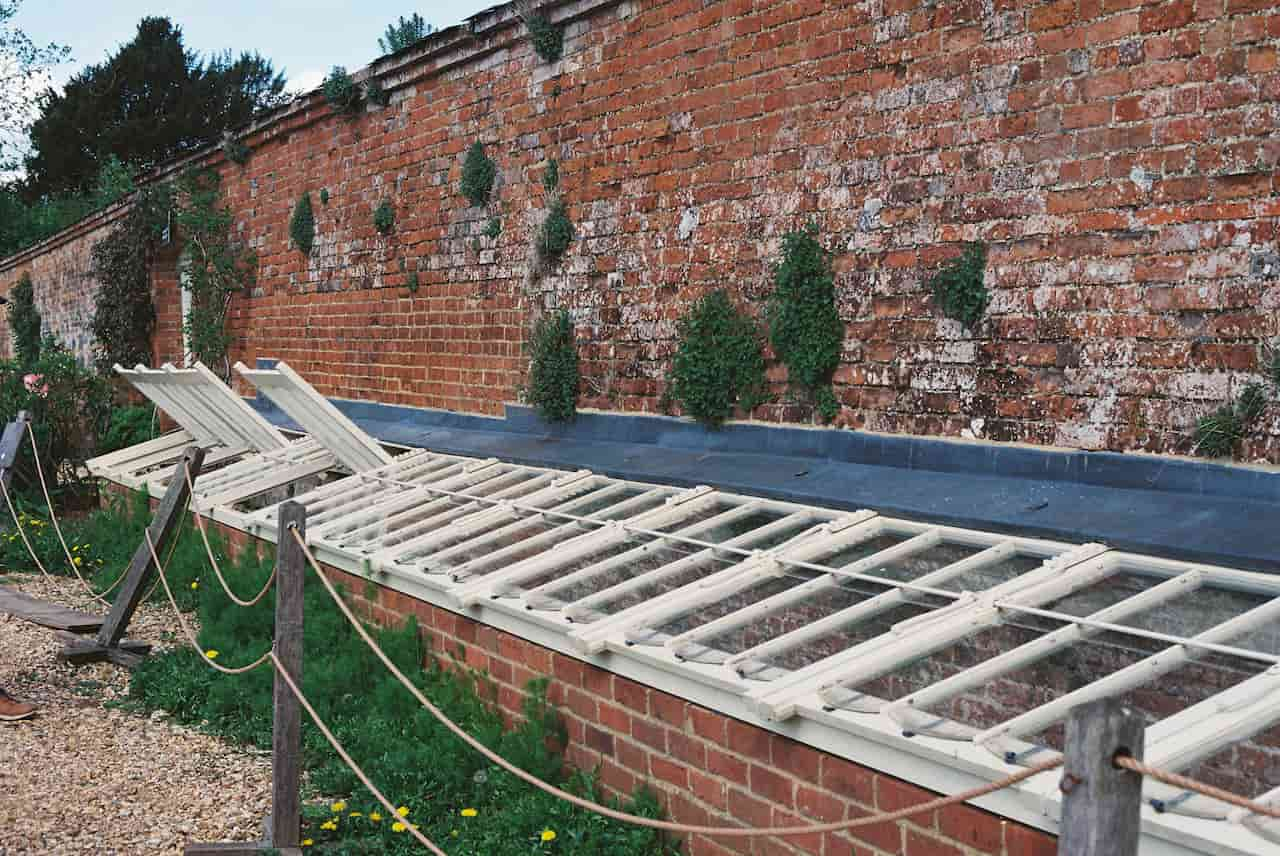
A cold frame is a bottomless box with a transparent lid – traditionally glass, now more usually polycarbonate – that sits on the ground over plants or seedlings. It is the single most versatile piece of season extension equipment a UK grower can own. A well-positioned cold frame will extend the growing season by four to six weeks at each end, allow the overwintering of a surprising range of crops and young plants, provide a halfway house for hardening off plants raised indoors, and serve as a propagating environment for autumn and late winter sowings. It does all of this without electricity, without irrigation and without much attention.
Cold frames work by creating a sheltered microclimate that is warmer than the open air by day and better insulated at night. On a sunny winter day the temperature inside a cold frame can reach 15 degrees Celsius or above even when the outside temperature is around freezing. The key management task is ventilation: on warm days the lid must be propped open to prevent the temperature rising to levels that stress or cook plants. Most gardeners use a brick or a notched stick to hold the lid at different heights. Automated lid openers – a bimetallic coil that opens and closes based on temperature – are available and worth buying if you cannot check the frame daily in spring and summer.
Polytunnels and greenhouses
A polytunnel or greenhouse takes season extension to a different level entirely. Where a cold frame or cloche extends the season at each end by a few weeks, a polytunnel or heated greenhouse effectively removes the upper limit on what a UK grower can produce and when. An unheated polytunnel maintains temperatures several degrees above outside air throughout the winter, allowing crops like salad leaves, spinach, chard, overwintering onions and oriental brassicas to produce through even cold January conditions. Add a small paraffin or electric heater and tender crops like tomatoes, cucumbers, peppers and aubergines become viable from February onwards.
Polytunnels are significantly cheaper than greenhouses of comparable size – a 6 metre by 3 metre polytunnel costs around £200 to £350, compared to £500 and upwards for a glass greenhouse of similar footprint. The trade-off is longevity: polythene covers last eight to twelve years before needing replacement, while a well-maintained aluminium and glass greenhouse is effectively permanent. Polytunnels also admit slightly less light than glass during winter when every lumen counts for plant growth, though modern twin-layer and anti-fog polythene films have improved this considerably. For most allotment and large garden growers, a polytunnel is the more practical investment. For a small kitchen garden where aesthetics matter, a lean-to greenhouse against a south-facing wall makes excellent use of a limited footprint.
What to grow and when to protect it
The most effective approach to season extension is understanding which crops benefit most from which level of protection, and timing the application of that protection to match the crop’s vulnerability. Not all crops need the same degree of protection and applying maximum protection to a crop that only needs light frost cover wastes both effort and money.
The highest-value use of season extension for most UK growers is the autumn extension of tomatoes. Outdoor tomatoes almost always have green fruit still on the vine when the first autumn frosts arrive, and without protection that fruit is lost. A polytunnel or even a temporary covering of fleece on frosty nights in September and October can extend the outdoor tomato season by three to four weeks, converting a mass of green fruit into fully ripened crops that would otherwise go to waste. Similarly, protecting early potato shoots from a late frost in April takes only a sheet of fleece and prevents the setback that stops a crop dead for two weeks while the plant recovers.
Hardening off and avoiding the common mistakes
Hardening off is the process of gradually acclimatising plants raised in warm indoor conditions to outdoor temperatures before they are planted out permanently. It is the step that most first-time growers skip, and it is the step that causes most of the late spring crop failures. A tomato or cucumber seedling raised on a warm windowsill or in a heated propagator and then planted directly outdoors into cool April air will suffer cold shock, growth check and potentially fatal wilting even if the temperature is technically above frost level. The move from indoor to outdoor conditions must be gradual – a week to ten days of increasing exposure to outdoor air, starting with a few hours on mild days and building to overnight in a cold frame or under fleece before the final plant-out.
Ventilate cloches and cold frames on warm days without fail. The most common cause of plant death under season extension protection is not cold – it is heat. On a bright March or April day, temperatures inside an unventilated cloche can reach 40 degrees Celsius or above within an hour of sunrise. Plants that survived a -3°C night perfectly well can be destroyed by 10am if the lid is not lifted or the end panels removed. Check protected plants every morning of any sunny day from February onwards and ventilate before you leave for the day.
Share on socials: