At a glance
Seed sowing is where every garden year begins, and it is also where a surprising number of gardeners consistently lose time and money through avoidable errors. The most common of these is sowing too early – putting heat-loving crops like tomatoes, courgettes and cucumbers on a windowsill in February when the light levels are too low to support healthy growth, producing the leggy, weak seedlings that then struggle for the rest of the season. The second most common is sowing outdoor crops before the soil temperature is warm enough to support germination, then wondering why nothing has appeared after three weeks. Understanding the basic principles behind when and how seeds germinate makes these mistakes easy to avoid.
This guide covers the full picture from January through to September – the active sowing window for UK growers – with a month-by-month calendar, crop-by-crop germination requirements and the practical detail on sowing depth, compost choice and aftercare that determines whether a sowing is successful. Seeds are cheap. The time and space needed to raise plants from them is not. Getting each sowing right from the start is worth the small amount of additional knowledge it requires.
Indoor vs outdoor sowing – which crops need which
The distinction between crops that must be started indoors and crops that do better sown directly outdoors is one of the most important in vegetable growing. It is not simply about temperature tolerance. Many crops that are perfectly hardy as mature plants need the warmth and protection of an indoor start because they germinate slowly and are vulnerable to slug damage, cold soil and erratic weather as young seedlings. Others actively dislike being transplanted and must go directly into their final position from the outset.
The crops that always need an indoor start are the heat-lovers – tomatoes, peppers, aubergines, cucumbers, chillies and basil – which need consistent warmth of 18-24 degrees Celsius to germinate reliably and need to be several weeks old before outdoor conditions in the UK are suitable for them. Courgettes, squash and pumpkins can be direct sown outdoors from late May, but starting them indoors three to four weeks earlier gives a head start that meaningfully extends the cropping season. The crops that must be direct sown and strongly dislike root disturbance include carrots, parsnips, beetroot, radishes, turnips, swede and most salad crops. These can be sown under a cloche for earlier timing but should go directly into their final position.
Sowing depths and spacing
The rule of thumb for sowing depth is to cover the seed to a depth of approximately twice its own diameter. A large seed like a bean or a pea goes in at 3-5 centimetres. A medium seed like a beetroot or a chard goes in at 1-2 centimetres. A fine seed like lettuce or carrot barely needs covering at all – a light raking of compost or soil over the surface is sufficient. Sowing too deeply is the most common single cause of germination failure, because seeds have a finite energy store and if they exhaust it pushing through too much soil before they reach light, they simply die underground with the grower none the wiser.
Spacing is the other dimension that most new gardeners underestimate. Packets often give the final spacing for mature plants, which looks absurd when you are sowing tiny seeds. It is correct nonetheless. Overcrowding does not just reduce individual plant size – it creates the conditions for poor air circulation that encourages disease, and it means that the plants are competing for the same water and nutrients from the start. Thin ruthlessly and at the right time – when seedlings are large enough to handle but before they have begun to compete seriously with each other.
Germination conditions – temperature, moisture and light
Temperature is the primary driver of germination speed and success. Every crop has a minimum soil temperature below which seeds will not germinate at all, and an optimal range at which germination is fastest and most even. Lettuce, peas and spinach will germinate in soil as cold as 5 degrees Celsius, though slowly. Carrots need at least 7 degrees and will be erratic below 10 degrees. Tomatoes, peppers and cucumbers need consistent warmth of 18-24 degrees Celsius and will simply sit dormant in cold compost until conditions improve or the seed rots. This is why sowing these crops on a cold north-facing windowsill in February produces nothing useful – the compost temperature never reaches the threshold needed.
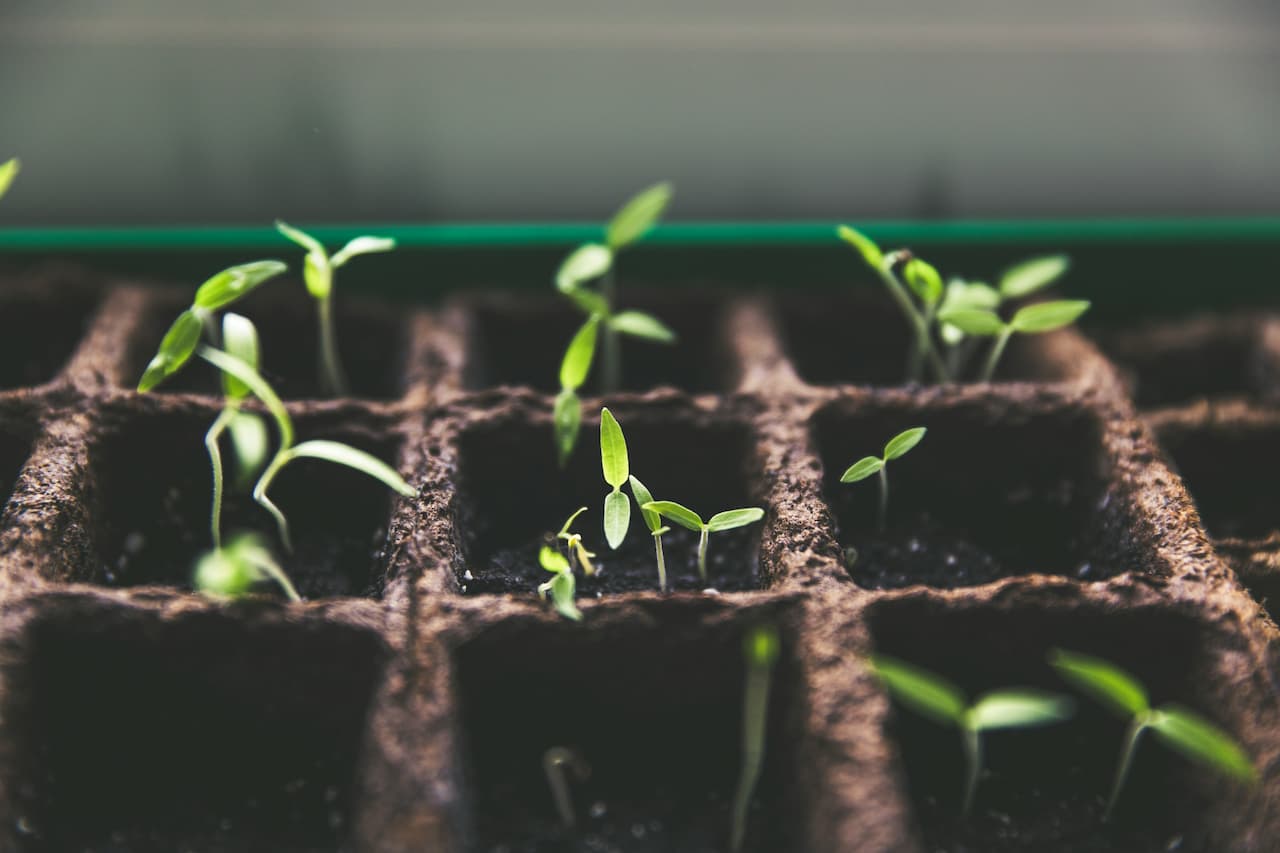
Moisture and light requirements vary more between species than most gardeners realise. Fine seeds like lettuce need light to germinate and must not be buried – covering them with compost blocks the light signal that triggers germination. Large seeds like beans and peas need darkness and can be buried more deeply. All seeds need consistent moisture – the compost must be damp throughout but never waterlogged. A propagator lid or a sheet of clear polythene laid over the tray maintains moisture without watering, which can disturb fine surface sowings. Remove the cover as soon as germination appears to prevent damping off, the fungal condition that collapses seedling stems at compost level and is exacerbated by still, humid air.
A soil thermometer is one of the most useful things you can buy for under £10. Guessing soil temperature based on air temperature is unreliable – soil warms slowly in spring and cools slowly in autumn, so the two can differ by several degrees either way. A thermometer pushed 5cm into the soil gives you the actual germination conditions in seconds and tells you definitively whether it is worth sowing or whether you need to wait another week. Every direct sowing decision becomes much more confident with this information.
Month-by-month sowing calendar
The sowing calendar below represents the UK average. Growers in the north and at higher altitude should add two to three weeks to outdoor sowing dates. Growers in the warmest parts of the south and southwest can subtract a week or two from most outdoor dates. All indoor sowing dates are consistent across the UK because the growing environment is controlled.
Compost, equipment and seed storage
Seed compost is not interchangeable with multi-purpose compost and this distinction matters more than many gardeners realise. Seed compost is formulated to be fine-textured, free-draining and low in nutrients – all of which serve germination and early seedling development. Multi-purpose compost is coarser, denser and higher in nutrients, which can actually impede germination in very fine seeds and cause a phenomenon called “fertiliser burn” in newly germinated seedlings whose root systems are not yet capable of managing the nutrient concentration. Buy a bag of dedicated seed compost for early sowings and switch to a peat-free multi-purpose or John Innes No.2 only when potting seedlings on into their first proper container.
Proper seed storage extends viability significantly. Seeds deteriorate when exposed to warmth, moisture and light – the three conditions of a kitchen or greenhouse. Store leftover seeds in the sealed packet, placed inside an airtight container or tin, kept in a cool, dark, dry place such as a drawer or cupboard. Many vegetable seeds remain viable for three to five years when stored correctly. Parsnip and onion seeds are the notable exceptions – their viability drops sharply after one or two years and it is worth buying fresh every season. Before sowing any seed that has been stored for more than two years, do a germination test: place ten seeds between two damp pieces of kitchen roll in a warm spot and count how many have germinated after seven days. If fewer than five have sprouted, sow more thickly than usual or buy fresh seed.
Labelling is the detail that catches out even experienced growers. An unlabelled tray of seedlings is genuinely difficult to identify once germination has happened, and the consequences of mixing up crops – planting a row of what you believe are leeks only to find they are spring onions several weeks later – are frustrating and wasteful. Label every tray, every pot and every outdoor row at the point of sowing with the crop name and the sowing date. A simple lollipop stick and a permanent marker is sufficient. The date matters as much as the crop name – knowing when something was sown tells you how long until it needs potting on, hardening off or transplanting, and without it you are guessing at every subsequent stage.
Common sowing problems and how to fix them
The most common sowing problems are almost all attributable to one of four causes: wrong temperature, wrong moisture level, wrong depth or wrong timing. Patchy or no germination in direct-sown outdoor crops almost always means the soil is too cold, too dry or both. The fix is to wait for warmer conditions, water the row before sowing and cover with a cloche or fleece for two weeks before the next attempt. Leggy, pale seedlings indoors always mean insufficient light – move them closer to the window, supplement with a grow light, or accept that the sowing was too early for the available light levels in February.
Damping off kills more indoor seedlings than any other single cause. Damping off is a fungal condition that causes seedling stems to collapse and rot at compost level, spreading rapidly through a tray within 24 hours. It is caused by overcrowding, overwatering and poor air circulation. Prevent it by sowing thinly, watering from below (standing the tray in water rather than watering from above), removing propagator lids as soon as germination appears, and ensuring seedlings have adequate air movement around them. There is no cure once damping off takes hold – affected trays should be discarded and equipment sterilised before reuse.
Share on socials: