At a glance
Zinnias look like they ought to be difficult in the UK. They are Mexican plants that want heat, sun, and free-draining soil, and we do not reliably provide any of those things. But there is a reliable way to get good results here, and it comes down to understanding a handful of specific things that most growing guides either gloss over or skip entirely: the root disturbance rule when sowing, the soil temperature rule when planting out, and the difference between the three main species so you choose the right one for your conditions.
I have had good years and bad years with zinnias. The bad years all had the same causes. Too cold at planting time, soil that did not drain properly, or the sort of wet August that destroys the plants with powdery mildew before they finish. Once I understood what was happening and why, the failures became avoidable. They are not beginner plants in the way cosmos is a beginner plant. But they are absolutely worth the extra attention, because nothing else gives you that same range of vivid colour from midsummer into October.
Which zinnia to grow: three species with three different jobs
Most people pick up a packet of zinnia seeds without knowing that there are three meaningfully different species on offer, and they choose on the basis of the picture on the front. That is fine until it is not. Getting the species right matters because each one has a different temperament, a different purpose, and a different level of forgiveness when the British summer does what it always threatens to do.
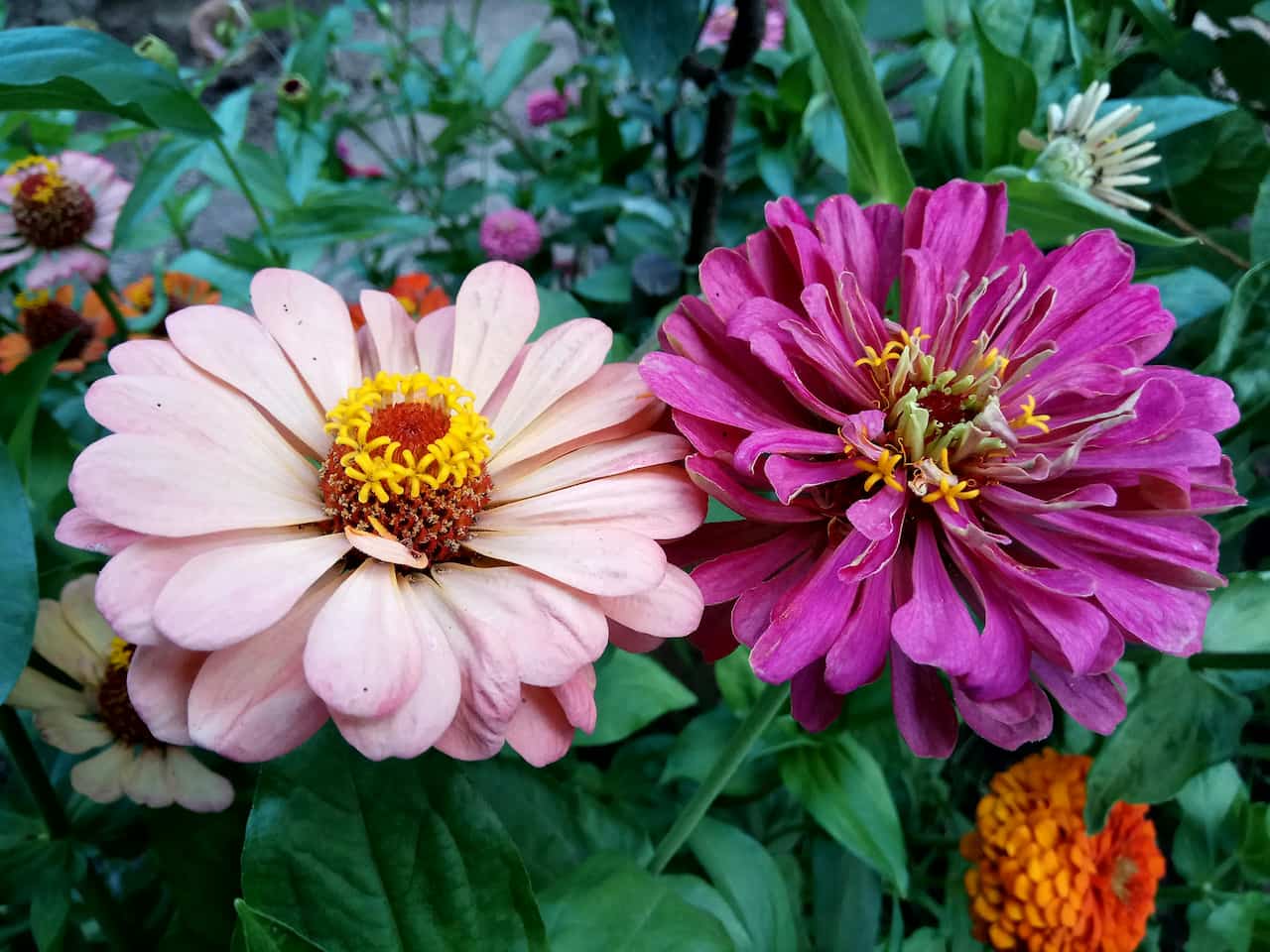
Zinnia elegans is the tall, large-flowered species that produces the stems you see in florists. Plants reach 60 to 90 centimetres and the fully double blooms can be 8 to 12 centimetres across. This is the species available in the widest range of colours and flower forms: dahlia-flowered, cactus-flowered, pompom, and everything in between. If you want a cutting garden that produces armfuls of flowers from July onwards, elegans is the one. The downside is that it is the least forgiving in wet weather. Powdery mildew attacks elegans earlier and harder than the other two species, and a wet August can reduce a healthy-looking bed to something fairly dismal.
Zinnia haageana, the Mexican zinnia, is a compact plant reaching 25 to 40 centimetres with small single or semi-double flowers in bicolour tones of red, gold, and mahogany. The variety ‘Persian Carpet’ is the most widely grown. Haageana handles wind better than elegans, suits the front of borders and containers, and attracts a wider range of beneficial insects because the open flower centres are accessible to short-tongued bees and hoverflies. It does not need pinching. It is a better choice than elegans if you have an exposed garden or want a low-maintenance plant.
Zinnia marylandica is a hybrid between elegans and a smaller wild species. It combines something close to elegans flower size with significantly better disease and weather resistance. The Zahara and Profusion series are marylandica types. Plants reach 25 to 45 centimetres. In a wet August that destroyed 70 percent of the elegans foliage in a Staffordshire trial bed with mildew, the marylandica Zahara plants growing beside them showed no symptoms at all. If you have had bad luck with zinnias in wet summers, this is the species to try. The flowers are slightly smaller than elegans but the reliability is not comparable.
The practical upshot: if you want serious cutting material, grow elegans. If you want a reliable border filler or container plant that does not demand ideal conditions, grow haageana or marylandica. The best approach is to grow all three. They occupy different heights, flower forms, and positions in the garden, and the marylandica plants insure you against the years when the elegans suffer.
The three species compared across the features that matter most in the UK:
How to sow zinnias: the one rule that determines whether you lose plants
Zinnias hate root disturbance. That sentence determines everything about how you sow them. Never sow into trays with the intention of pricking out. Never sow in a way that requires handling the roots before the plant goes into the ground. Always sow one seed per module or one seed per 9cm pot, so that by the time the plant goes outside it slides out undisturbed with its full root ball intact. Disturb the roots of a zinnia seedling and you set it back badly; do it when the seedling is small and you may lose it altogether.
The sowing window I aim for is mid-March to mid-April indoors at 20 to 24 degrees. Fill modules with a multipurpose compost mixed with around 20 percent perlite for drainage. Push one seed per cell about 6 to 8 millimetres deep. Water from below by standing the tray in a couple of centimetres of water for ten minutes rather than watering from above. Cover with a clear lid and place in a heated propagator or warm spot. Germination is fast: five to seven days in proper warmth.
The moment seedlings emerge, move them to the brightest spot you have. This is where most indoor sowings go wrong. Zinnias ideally want 14 to 16 hours of light a day during the seedling stage. A south-facing windowsill gives you six to eight hours in March. That shortfall produces the leggy, thin seedlings that flop over and never catch up. If you are serious about getting good stocky plants, grow lights positioned 10 to 15 centimetres above the seedlings make a significant difference. Reduce temperature to 18 to 20 degrees once the true leaves appear and begin liquid feeding at quarter strength on a weekly basis.
Do not direct sow outdoors before late May. The soil needs to be above 15 degrees and the risk of frost needs to have genuinely passed. In northern England and Scotland, direct sowing is only realistic from mid-June. Even so, an indoor-raised plant will always be ahead of one sown straight into the ground.
The zinnia growing season in the UK, mapped by task:
Planting out: why soil temperature matters more than the calendar date
Zinnias planted into cold soil sit. They do not grow, they do not establish, and they often rot at the base from the inside out. The plant needs soil above 15 degrees to start developing its root system, and below 10 degrees it essentially stops functioning. Most people plant out by the calendar, consulting a last-frost date and deciding that means they are done. The calendar tells you about air temperature. The soil is a different matter entirely, and in a cool spring on heavy clay it can be a fortnight behind the air.
The fix is straightforward. Lay black polythene over the planting area two weeks before you plan to plant. The polythene absorbs heat and stops the surface from cooling at night. In Staffordshire trial conditions, this raised soil temperature by 3 to 5 degrees and the plants in warmed soil grew 40 percent faster in the first three weeks and flowered a full 10 days earlier than those planted into unwarmed clay alongside them. That is not a marginal difference. On heavy ground in a slow spring, soil warming is the single biggest thing you can do.
On heavy clay specifically: consider growing zinnias in containers rather than in the ground. Clay does not drain freely and stays cold late into spring, and even in summer the combination of wet roots and poor airflow creates exactly the conditions that produce fungal problems. John Innes No. 3 mixed with added horticultural grit gives zinnias the drainage they actually want. A 30 centimetre pot is the minimum size for elegans; 25 centimetres works for haageana and marylandica.
If you are planting into a bed rather than a pot, dig horticultural grit into heavy soil at 5 to 10 litres per square metre. Space elegans varieties 30 to 40 centimetres apart, haageana and marylandica 25 to 30 centimetres. Mulch 5 centimetres deep around plants but keep mulch clear of the stem to prevent collar rot. Harden off plants for 10 to 14 days before planting: two hours outdoors on day one, increasing by an hour or two each day, brought in every night for the first week.
The hardening off process, step by step:
Never plant into cold soil. A zinnia planted into soil below 15 degrees will sit dormant, not establish, and frequently rot at the stem base within days. The frost-free date tells you about air temperature only. Check soil temperature with a thermometer before planting. If in doubt, wait a fortnight and warm the ground with black polythene first.
Pinching and deadheading: the techniques that determine how many flowers you get
Pinching is the most effective single technique for increasing zinnia yield and most people either skip it or do it too late. An unpinched zinnia elegans produces one dominant central stem that flowers at the top with a handful of weaker side shoots. Pinch the growing tip at 15 to 20 centimetres tall and the plant branches at every leaf node below the cut. Two or more side shoots develop within five to seven days. Each produces its own terminal flower. A properly pinched and well-managed plant produces 30 to 50 cut stems over the season. An unpinched plant produces 15 to 20.
The trade-off is clear: pinching delays the first flower by 7 to 10 days because you are removing the bud that would have opened first. If you want the earliest possible blooms, leave one or two plants unpinched and pinch the rest. Pinch cleanly with fingernails or sharp scissors just above a leaf pair. Haageana does not need pinching because it branches naturally from the base.
The frequency that actually keeps zinnias in flower is deadheading every three to four days throughout the season, not once a week. Zinnias are programmed to set seed, and once a flower head starts forming seed the plant diverts energy away from new buds. Remove spent heads before seed sets and the plant keeps flowering until the first frost. The correct cut is not to snap off the dead head at its base. Follow the stem down to the first pair of strong leaves and cut just above them. New shoots push out from these leaf nodes within a week. Use clean, sharp secateurs. A ragged cut made by hand is an invitation to >botrytis.
For cutting for the vase, the timing is when the first row of petals has fully opened and the centre of the flower still feels firm. Stems cut at this stage last 7 to 10 days in a vase. Strip all foliage below the waterline and change the water every two days. Feed with a high-potash liquid fertiliser every week from first bud to end of season to sustain production. Never use high-nitrogen feeds: the result is lush foliage and far fewer flowers.
Pinch once, benefit all season. Pinching at 15 to 20 centimetres costs you the first flower by about a week. In return, you get double or triple the flowering stems for the rest of the season. It takes ten seconds per plant. The only reason not to do it is if you genuinely need the earliest possible single bloom from that particular plant.
Varieties worth growing: cut flowers, borders, and containers
There are far more named zinnia varieties available than any article can usefully cover. These are the ones that have earned their place after proper testing in British conditions.
For cutting, ‘Benary’s Giant’ is the benchmark. This is the elegans variety grown commercially for floristry: 90 centimetres tall, blooms up to 12 centimetres across, available in eight colours including lime green, salmon, and wine. It produced 45 stems per plant in the Staffordshire trial. Stems reach 40 to 50 centimetres, which is what you want for arranging. It needs staking in exposed positions. ‘Oklahoma’ is a more compact alternative at 75 centimetres: fully double, better rain resistance than Benary’s because the petals overlap tightly and shed water rather than holding it, and it flowered five days earlier in the same trial. ‘Queen Lime Red’ produces an unusual lime green to red gradient that florists want specifically for its strangeness. Yield is lower at around 30 stems but every one is worth cutting.
For borders, ‘Zowie! Yellow Flame’ earns its place year after year. It holds an Award of Garden Merit and deserves it. Bicolour red and yellow petals at 60 centimetres, and outstanding mildew resistance compared to most elegans types. If you only grow one elegans variety and you garden in a wet part of the country, this is the one. ‘Lilliput’ is worth growing if you want something at the front of the border rather than the back: compact at 45 centimetres with small pompom flowers in mixed colours, dense and branchy without needing staking.
For containers, ‘Persian Carpet’ haageana is the most useful: 30 centimetres, single bicolour flowers in red, gold, and mahogany, self-branching with no pinching needed, and it works in pots from 25 centimetres diameter upwards. ‘Zahara Double Fire’ marylandica is the right choice if you want something taller at 25 to 45 centimetres with the best possible weather and mildew resistance. Cherry red semi-double flowers that continue performing in conditions that would have most elegans looking ragged.
If you want to save seed from your own plants, stop deadheading three to five of the best flower heads in September and let them dry fully on the plant. The heads are ready when the petals have crisped up and the base of the flower feels papery. Cut the whole head off, hang it upside down in a dry room for two weeks, then rub the arrow-shaped seeds out over paper. Store in a labelled paper envelope in a cool dry place. Properly stored zinnia seed stays viable for three to five years. F1 hybrid varieties such as ‘Benary’s Giant’ will not come true from saved seed. Open-pollinated varieties such as ‘Persian Carpet’ and ‘Lilliput’ will.
Key varieties grouped by purpose and size:
What goes wrong and what to do about it
Powdery mildew is the biggest problem UK growers face with zinnias, and prevention is the only reliable answer because by the time you can see the white coating on the leaves the infection is already established. Space plants properly at 25 to 30 centimetres so air can move between them. Water at the base only, never overhead. Wet foliage in still, humid conditions is exactly where the fungus thrives. If you have had bad mildew in previous years, switch to marylandica types. The Zahara series specifically was developed for disease resistance and the difference in a wet summer is not subtle. Remove and bin affected leaves immediately rather than composting them.
Slugs and snails are most dangerous in the first two weeks after planting out. Young zinnia transplants are vulnerable at the stem. Ferric phosphate pellets, copper tape around containers, or biological nematode control (Nemaslug applied when soil temperature is above 5 degrees) all work. Once plants are established and woody at the base, slug damage becomes much less of a concern.
Grey mould is the problem that follows a wet August, showing up as fuzzy grey growth on stems and around dead flower heads. Remove all dead material promptly. Improve airflow by spacing plants properly and removing overcrowded growth. Avoid watering in the evening because plants sitting wet overnight in cool conditions are vulnerable.
If you see dark brown spots with concentric rings working their way up from the lower leaves, that is Alternaria leaf spot. It travels by rain splash: mulch around the base of plants to stop soil hitting the lower leaves. Remove affected foliage and bin it. Rotating where you grow zinnias year to year helps prevent build-up in the soil.
Cold-soil stunting is the problem nobody mentions because it does not look like disease. Plants planted into soil below 15 degrees sit dormant, sometimes for weeks, then often develop root rot from the base. They never catch up with plants that went into warm soil. The symptom is a yellow, stunted plant that is not visibly diseased but is not growing. The cause is always the same: planted too early, into ground that had not yet warmed. The fix is the black polythene method described above, or waiting another fortnight.
The five most common zinnia problems, with what to look for and what to do:
Share on socials: