At a glance
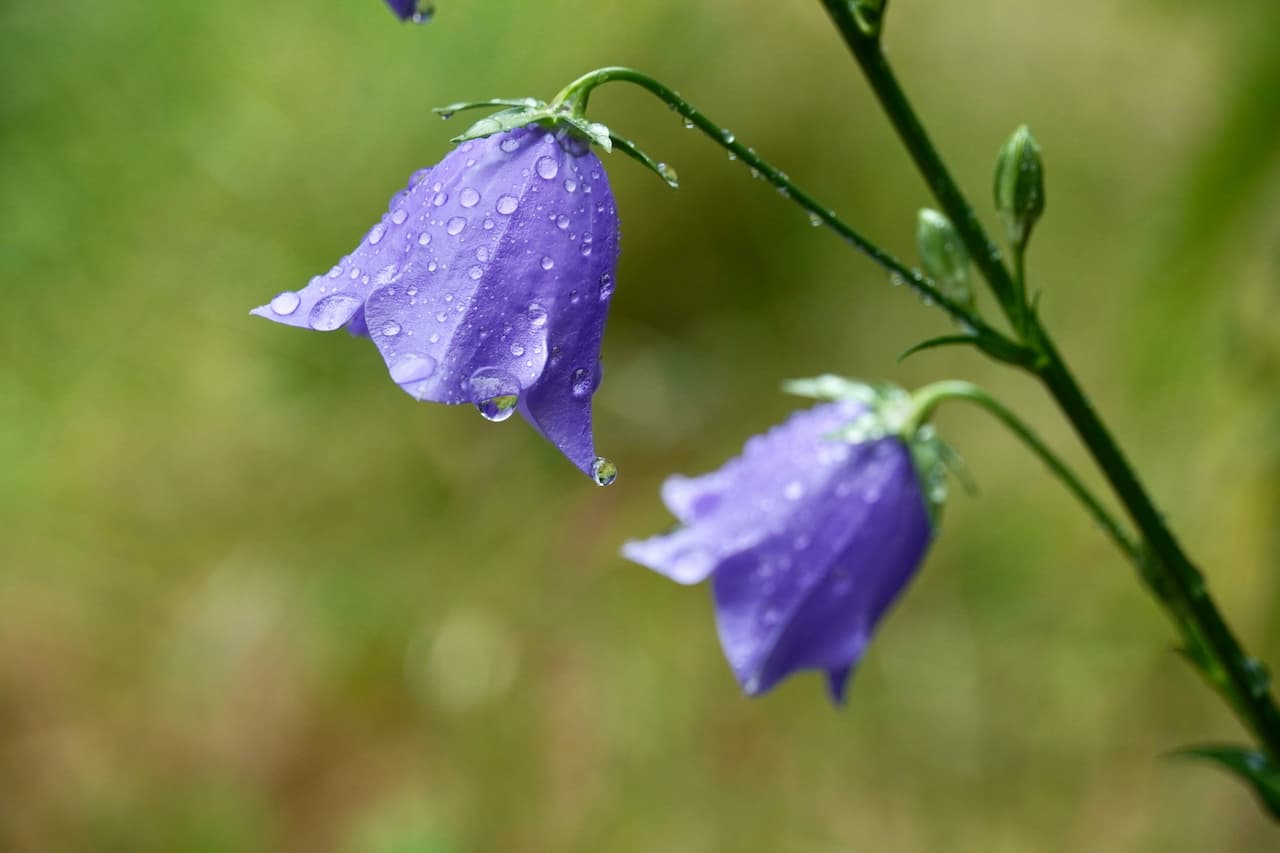
Campanula – bellflower – is one of the most generous and low-maintenance groups of flowering plants available to UK gardeners. The genus contains hundreds of species ranging from tiny alpine rockery plants under 10cm tall to the stately 1.5-metre spires of Campanula lactiflora, and between those extremes lies a range of varieties suited to borders, containers, cottage gardens, shade gardens and dry walls. What they share is the characteristic bell-shaped flower in shades of purple, blue, lilac, pink and white, and a tendency to flower for many weeks – often from May through to September with regular deadheading – that few other genera can match across such a range of conditions.
The practical advantages of growing Campanula are as significant as its ornamental ones. Most varieties self-seed freely once established, meaning that a single packet of seed or a handful of plug plants will establish a self-renewing population in the border within two to three seasons without any intervention. They are generally unfussy about soil, tolerant of partial shade, and rarely troubled by the pest and disease problems that make some other cottage garden plants labour-intensive. The main management task is deadheading to prolong flowering and thinning out the self-seeded seedlings that appear each spring – tasks that take an hour or two across the whole season rather than the regular commitment that some summer perennials demand.
Best Campanula Varieties for UK Gardens
The variety choice within Campanula is wide enough to be confusing without some guidance. The table below covers the most useful species for UK garden conditions – those that perform reliably across the range of UK climates, are widely available from UK seed suppliers and garden centres, and cover the main use cases from tall border back planting through to rockery and container use.
Campanula lactiflora is the most architecturally impressive of the tall species and the one most suited to a naturalistic planting style. It produces large panicles of lilac-blue, pink or white bells on upright stems from June through August and self-seeds vigorously enough to establish itself permanently in a well-drained border. The cultivar ‘Prichard’s Variety’ is the most commonly grown selection with reliable deep lavender-blue colouring and good stem strength. C. persicifolia – the peach-leaved bellflower – is a better choice for slightly shadier positions and makes excellent cut flowers, with its open, nodding bells on slender stems lasting well in water.
Canterbury Bells (C. medium) are biennials that require a two-year cycle – sown in summer of year one, overwintered as rosettes, then flowering in May and June of year two before dying. This rhythm suits cottage gardens well and the large, showy, single or double bells in deep blue, pink, white and bicolour are some of the most distinctive flowers available in early summer. C. poscharskyana is the opposite of architectural – a trailing, tumbling perennial that fills walls, colonises crevices and spills enthusiastically over pot edges, producing masses of small star-shaped flowers in lavender-blue from late spring onward.
Sowing and Growing Stages
Campanula seed is very fine – finer than most commonly grown flowers – and should be sown on the surface of a tray of fine seed compost without covering. Press the surface gently to ensure contact between seed and compost, then place in a propagator or cover with a clear propagator lid to maintain moisture. Germination is erratic and can take anywhere from one to three weeks depending on temperature; a soil temperature of 15-18°C gives the fastest and most even germination. Once seedlings show their second set of true leaves, prick out into small individual cells or modules before potting on into 9cm pots.
Perennial campanulas can also be divided from established clumps in spring or autumn – this is the fastest route to a large number of plants and the new divisions flower in the same season. Dig the clump, separate into sections with at least 3-4 shoots each, and replant at the original depth. Canterbury Bells and other biennials cannot be divided and must be grown from seed each season, though established plants in good soil will often self-seed in sufficient quantities to maintain the planting without deliberate re-sowing.
Soil preparation for Campanula is minimal. Most species perform well in any reasonable, well-drained garden soil and do not require enriching before planting. The exceptions are the tall border species like C. lactiflora, which benefit from a base of well-rotted compost or garden manure incorporated before planting to support their substantial root systems and help them through the first summer before they are fully established. All campanulas resent waterlogged or consistently wet conditions – a raised bed or any position with free-draining soil is preferable to heavy clay. Position in full sun to light shade; most species prefer more sun but C. poscharskyana and C. lactiflora are among the most shade-tolerant perennials available and will perform in north-facing borders where few other flowering plants succeed. Both have been observed flowering well in positions that receive no direct sun for more than two or three hours per day – a quality that makes them particularly useful in the shaded town gardens and north-facing terraces that are common across UK urban properties.
Seasonal Care Calendar
Pests, Problems and Fixes
Campanula is generally robust and free from serious disease problems in UK conditions. The most common issues are slug and snail damage on emerging spring growth, vine weevil damage on container plants, and powdery mildew on plants grown in dry soils. None of these is life-threatening to an established plant, and most can be managed with straightforward intervention.
Slug damage is most damaging in April and May when new growth is emerging from the crown and the slugs are most active in the warm wet conditions of a British spring. A ring of sharp grit or crushed eggshell around the crown of recently planted campanulas gives useful early protection; established clumps with multiple stems are less vulnerable because they can lose a proportion of growth without significant impact on the overall plant. Biological nematode treatment applied to the soil in spring when the soil is above 5°C reduces slug populations in a specific area over the following weeks and is the most effective long-term control for gardeners who prefer to avoid slug pellets.
Powdery mildew in campanulas is almost always a sign of dry soil conditions rather than a direct fungal attack. Plants growing in well-mulched, consistently moist soil rarely develop mildew even in humid conditions. The practical fixes are to improve soil moisture retention with a mulch of garden compost or bark chips in late spring, and to ensure the plants are not competing with tree roots or wall foundations that draw moisture from the surrounding soil. Removing badly affected stems promptly and disposing of them rather than composting them reduces the spread of spores to adjacent plants.
Allow at least a few seed heads to ripen before deadheading all spent flowers. Campanula self-seeds so freely that a deliberately managed approach to deadheading – removing most spent flowers promptly but leaving a handful to set seed – gives you the best of both worlds: extended flowering from the deadheaded stems and a new generation of seedlings for the following season without the need to buy or sow fresh seed.
Share on socials: