At a glance
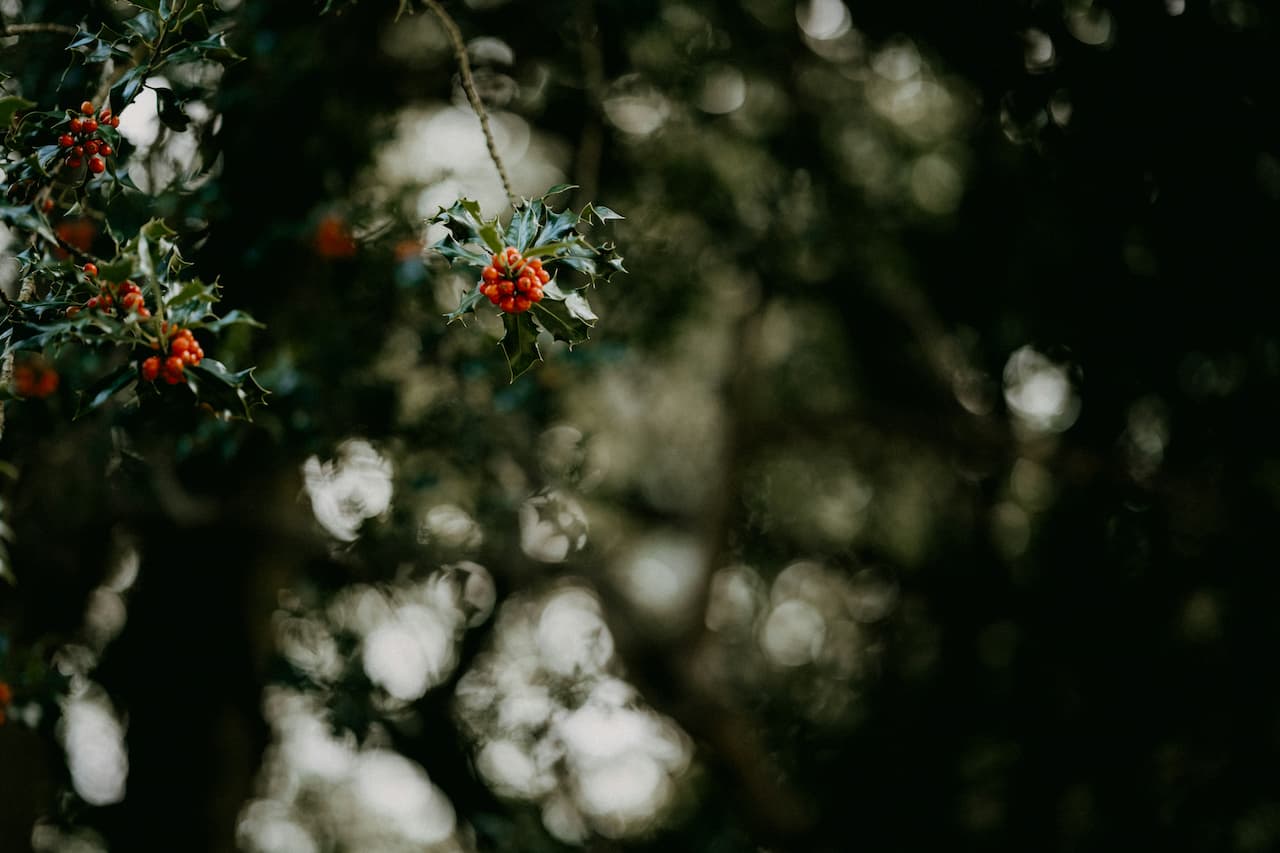
Holly is one of the most genuinely multi-purpose evergreen plants available to UK gardeners. It can be grown as a specimen tree, a dense security hedge, a formal clipped topiary or a backdrop shrub, and it performs all of these roles reliably across virtually every soil type and most exposures including coastal gardens and cold northern positions. The red berries that most people associate with the plant are a valuable winter food source for birds, particularly thrushes and fieldfares, and the dense spiny growth provides some of the best nesting and roosting cover in a domestic garden, and holly is one of the most valuable plants in a wildlife hedge. It is also almost entirely pest and disease resistant once established, making it one of the lowest-maintenance permanent plants in the UK growing calendar.
The plant most people picture is Ilex aquifolium – the common European holly – but there are hundreds of named holly varieties, from dwarf compact forms to broad-leaved non-spiny cultivars to variegated varieties with cream or yellow edging. Understanding the differences between them, and in particular the critical male/female distinction that determines which plants produce berries, is the most important knowledge for getting the best from holly in the garden.
Best holly varieties for UK gardens
The most important thing to understand before buying holly is the sex of the plant. Ilex aquifolium produces male and female flowers on separate plants, and only female plants bear berries. For berries to form, a male holly must be growing within pollination range – typically within 50-100 metres, relying on bees to transfer pollen. Gardeners with only one holly and no neighbours with established holly plants should choose a self-fertile variety like ‘J.C. van Tol’, which produces both male and female flowers and berries reliably without a pollinator. Many sold hollies are incorrectly sexed – if a plant labelled female produces no berries after several years with a male nearby, it may have been wrongly identified at point of sale.
Ilex crenata deserves separate mention as an increasingly popular garden plant. Japanese holly has small, spineless, box-like leaves and makes excellent formal hedging and topiary shapes. Unlike common holly it does not develop the glossy spined leaves that most people associate with the genus, making it more practical in high-traffic areas. It is completely box-blight resistant, which makes it valuable as a box substitute for formal garden schemes.
How and when to plant holly
Dig a planting hole twice the width of the root ball and the same depth. Position the plant so the root flare sits at or just above the surrounding soil level – planting too deep is the most common cause of holly failure in the first year. Backfill with the excavated soil mixed with a modest amount of garden compost, firm gently and water in thoroughly. If planting in a position exposed to strong wind, stake the plant for the first two seasons while the root system establishes. Holly is a slow-moving plant and will appear to do very little in its first year – this is normal while root establishment takes priority over top growth.
Holly berries are toxic to humans and dogs if eaten in quantity. The berries contain theobromine and saponins and should be treated with the same caution as yew berries. They are, however, entirely safe and valuable for birds. If you have young children or dogs with access to the garden, plant holly out of reach or choose a variety that produces fewer berries, such as a male plant.
Ongoing care – feeding, watering and mulching
Established holly is one of the most self-sufficient garden plants available. Once the root system is settled after the first two years, it needs almost no intervention to perform well. The care that matters most is concentrated in the first year after planting, when consistent watering through dry periods is essential to prevent transplant stress.
Pruning and shaping holly
Holly responds well to pruning and can be kept to almost any size and shape with regular attention. The timing of pruning matters more than the technique: the best window is late summer, specifically August, after the flowers have set berries but before new growth begins. Pruning in late summer minimises the loss of berry-bearing growth while also avoiding the spring nesting season when disturbing dense evergreen shrubs can impact nesting birds. Hard renovation pruning can be done in late winter if size reduction is the priority and berry sacrifice is acceptable for one season.
Always wear thick leather gloves when pruning spined holly varieties. The leaf spines are sharp enough to penetrate thin gardening gloves and cuts from holly leaves can become infected. Long sleeves are advisable for dense hedge work. Collect and compost all prunings promptly – spiny holly material left on paths or lawns is a hazard.
Berries, wildlife and common problems
Holly berries are one of the most important winter food sources for thrushes, fieldfares and redwings – Scandinavian visiting species that rely heavily on berry-bearing shrubs to survive UK winters. A well-berried holly in December and January is one of the most productive wildlife features a garden can contain. The berries are not stripped immediately on ripening but persist through the winter, providing a reliable food source during the hardest weeks when other food is scarce.
Holly is genuinely one of the toughest native shrubs the UK climate produces, and serious problems are rare on established plants in suitable conditions. The most reliable approach is to choose the right variety for the position, plant correctly, water through the first year and then largely leave it alone. Holly rewards patience – a neglected-looking plant in year two can become a spectacular specimen or productive hedge by year five with no further intervention beyond the annual August trim.
Share on socials: