At a glance
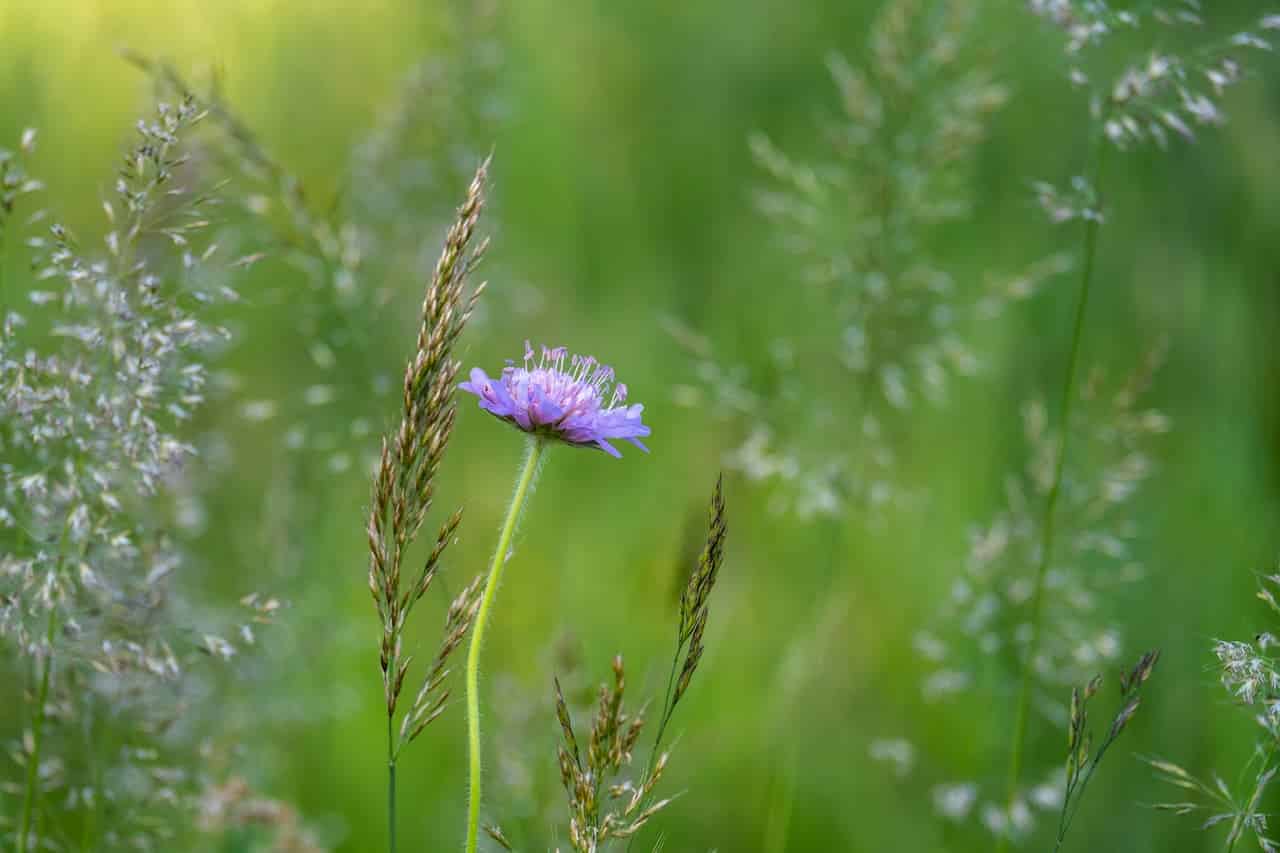
Knautia macedonica is one of those plants that earns its place in the garden three or four different ways at once. The deep crimson pincushion flowers open in July and keep coming until the first frost with almost no input from you. Bumblebees, solitary bees, and butterflies work the flowers continuously from the moment they open. The long wiry stems cut well and last in a vase. And the whole plant does all of this in ground where nothing else performs well: dry, lean, slightly alkaline, the kind of soil most people apologise for. It is not a plant for a well-fed border. It is a plant for the spots you have given up on.
There is a catch, which is that knautia is short-lived. Individual plants typically last two to five years and then die off. Most people discover this the hard way when a plant they have had for three seasons suddenly fails to come back in spring. What compensates for this is that knautia self-seeds freely and generously, so unless you deadhead everything without exception, you will always have plants coming through. The ant population in your garden also helps: knautia seeds are coated in a fatty layer that ants actively collect and carry to new locations. Lose one plant and three more appear somewhere else.
Why knautia earns the pollinator label rather than just claiming it
Most plants described as pollinator-friendly mean that bees and butterflies will visit if they happen to be passing. Knautia is different in a way that is immediately visible on a warm July morning. The flower heads are not just attractive to insects: they are the right size, shape, and depth for a wide range of species to access, from large bumblebees to small solitary bees and short-tongued hoverflies. The season runs from July to October, bridging the gap when other summer flowers have finished and autumn plants are not yet at full production. In twenty-five years of growing things I have not found another border perennial that keeps insects active on it for four months straight with so little effort.
The flowers also attract butterflies and moths, and the seed heads that develop through autumn provide food for finches and sparrows through winter if you leave them standing. The relationship with ants is a genuine ecological one: the elaiosome coating on the seeds is specifically evolved to recruit ants to disperse them. Leaving a few plants to set seed fully is worth doing, both for the wildlife benefit and because the resulting seedlings are free plants for next year. Unlike a lot of claimed pollinator plants, knautia does not require any particular soil treatment or feeding programme to keep up this performance. Lean conditions are actually what produce the longest flowering season.
The UK native relative, K. arvensis (field scabious), has lighter lavender-pink flowers and is the better choice for naturalistic meadow plantings and wildflower schemes. For borders and cutting gardens, K. macedonica with its deeper crimson colour is the standard choice.
Lean soil and full sun: the two conditions that determine everything
Knautia grows in the Balkan mountains and Aegean limestone grasslands in the wild, which tells you most of what you need to know about what it wants from a UK garden. Dry, well-drained, slightly alkaline soil and full sun. Give it those conditions and it flowers from July to October for years, self-seeds reliably, and rarely has problems. Give it a well-fed border with plenty of moisture and it produces tall, leggy growth, weak stems that flop, and flowers that are sparse compared to what the plant is capable of.
Poor to moderately fertile soil is the target. Chalk, sandy loam, and thin stony ground are all good. Heavy clay is the main challenge: it holds water in a way that knautia genuinely cannot cope with. Amend clay with horticultural grit before planting, or grow in raised beds where drainage can be controlled. Neutral to slightly alkaline pH suits it best, though it tolerates a broader range. Waterlogged ground at any time of year causes root problems and plant death.
Full sun means six or more hours of direct sun daily. A south or west-facing position delivers the best results and the most flowers. Partial shade reduces flowering noticeably and makes the stems more likely to flop. If you have only a partially shaded spot and want to try knautia, expect a more modest performance and stake the plants in advance.
Shelter from wind matters more than most growing guides acknowledge. The stems are slender and wiry, which looks graceful in still conditions but means the plants can be battered and broken in exposed gardens. A position backed by a hedge, wall, or other shrubs, or in the body of a mixed border rather than its windward edge, makes a practical difference to how the plants perform over a long season.
The conditions knautia needs in summary:
Rich soil produces fewer flowers, not more. Freshly composted beds, heavily fed borders, or containers with slow-release fertiliser built in all push knautia into producing leafy, floppy growth at the expense of flowers. Grow it in the worst ground you have.
Species and cultivars: what to grow and where each one fits
The species form of K. macedonica is deep crimson, 75 centimetres to 1 metre tall, and the most reliable in UK conditions. It produces the most flowers, self-seeds the most freely, and is the easiest to find as seed or plants. If you grow nothing else, grow this.
The cultivars offer variation but come with trade-offs worth knowing about before you buy. Melton Pastels is the most widely grown alternative: soft shades of mauve, pink, and cream that soften the intense red of the species and work better in borders with a pastel palette. It grows to around 90 centimetres and flowers as freely as the species. Thunder and Lightning is the striking one: variegated cream-margined foliage that looks good from the moment it emerges, before a flower appears. It is dwarf at 30 to 45 centimetres and suited to containers and smaller borders. Mars Midget is also dwarf at 30 to 45 centimetres, with rich ruby-red flowers, compact and tidy. Red Knight is taller at 90 to 120 centimetres with bright red blooms on upright stems.
For a wildflower or meadow area, K. arvensis is the option. Its pinkish-purple flowers on tall stems bloom July to September, and it is better adapted to the shorter, less improved grassland conditions of a naturalistic planting. Plant it with other UK native meadow species and allow it to self-sow freely.
Whichever type you choose, planting in groups rather than singles is the difference between knautia disappearing into a border and knautia being noticed. Five plants placed in a loose drift produces a flowering mass that moves in the wind and is genuinely striking from across a garden. A single plant does not achieve the same effect, and in a mixed border it can look like it drifted in by accident.
The main options compared:
Planting, propagation, and getting plants established
Pot-grown plants can go in any time of year, but autumn and spring are the best times. Autumn planting works well across most of the UK and allows the roots to establish over winter before the plant puts energy into flowering. In northern England and Scotland where winters are colder, spring planting is safer. Summer planting requires consistent watering for the first six to eight weeks until the plant is established, which is manageable but adds to the work.
Prepare the planting hole and the surrounding area by improving drainage in clay soils with grit, and avoid adding any enriching material. Knautia planted into a freshly composted bed will typically produce less impressive flowering than one planted into neglected, slightly hungry ground. Space plants 30 to 40 centimetres apart. Set the crown at soil level and water in thoroughly, then leave the soil to drain well. Mulching is optional: it helps with moisture retention but should not be applied thickly around the crown in ways that impede drainage.
From seed is the cheapest and most satisfying route, and the one that builds a genuinely sustainable population of self-seeding plants. Seed requires cold stratification to germinate reliably: place seed in a damp paper towel, seal in a plastic bag, and store in the fridge for three to four weeks. After stratification, sow in trays of seed compost at about 1.5mm deep. Germination takes 10 to 30 days at 21 to 24 degrees. Prick out into 7.5 centimetre pots and grow on until large enough to plant out, spacing 30 to 40 centimetres apart in the final position. Alternatively, sow direct outside in autumn and let the winter provide natural stratification: thin seedlings to 30 centimetres when large enough to handle.
Basal cuttings in spring are a fast way to propagate named varieties that may not come true from seed. In spring, cut downward through non-flowering side shoots that emerge from the crown at soil level, ensuring each cutting has a small amount of root attached. Trim to about 10 centimetres of foliage. Plant immediately in gritty compost in small pots or directly into a nursery bed. Maintain even moisture without waterlogging and they will root and establish within a few weeks.
Division every three to four years in spring improves air circulation around the base, reduces competition, and gives you additional plants. Lift and separate crowded clumps into sections, each with roots and growth points, and replant at the same depth.
The three propagation methods at a glance:
Deadheading, cutting back, and the decisions that determine next year
Deadheading is the main ongoing task and the decision about when to stop is the one that matters most. Deadheading through the season prolongs flowering by directing the plant’s energy away from seed production and back into producing new flower stems. Cut each spent stem back to where it meets the main central stalk. Do this regularly through July, August, and September and the plant produces waves of new flowers across a four-month season.
In late September or October, stop deadheading and let the last flowers set seed. The seed heads that develop through autumn look attractive in their own right, and the seeds they carry feed finches and sparrows through winter if you leave the stems standing rather than cutting back in autumn. The choice between cutting back in autumn and leaving for winter is a practical one depending on your garden: both approaches work, but leaving the structure over winter and cutting back in early spring before new growth emerges is the approach that combines wildlife benefit with the best start for next season’s growth.
Knautia produces excellent cut flowers. The slender wiry stems and pincushion heads last well in a vase, and cutting regularly throughout the season functions as deadheading. Cut to a point where you want new side shoots to develop, and the plant responds with more branching and more flowers. This is one of those plants where heavy cutting and garden use produce a better result than leaving it alone.
Feeding is almost never necessary in garden soil. A light top dressing of compost at the start of the season is enough to maintain the plant without making the soil rich enough to promote leggy growth. High-nitrogen fertiliser should not be used: it produces exactly the floppy, leafy, poorly flowering result you are trying to avoid.
The seasonal care calendar:
Cut for the vase and you are also deadheading. Knautia is one of the few border perennials where taking flowers for cutting actually improves the plant rather than depleting it. Cut stems regularly through July and August and the plant branches and flowers more heavily than one you leave alone.
What goes wrong, what to do about it, and how to manage self-seeding
The most common problem is not a pest or disease: it is the plant dying after two to five years, which is simply what short-lived perennials do. The answer is not to intervene when an established plant starts to look exhausted but to manage the self-seeding population so there are always younger plants coming through. Allow some seed to set each year, and thin or transplant self-sown seedlings rather than treating them as weeds. A well-managed knautia planting maintains itself indefinitely without needing to buy new plants after the first year.
Floppy stems are the main growing problem caused by the wrong conditions. Overly rich soil or too much shade produces tall, weak stems that fall over rather than the stiff wiry stems the plant produces in good conditions. The fix is to move the plants to a leaner, sunnier spot and stop feeding. There is no way to stake knautia convincingly: the slender stems are not suited to canes and ties and the result looks wrong. If your plants consistently flop, the growing conditions are the problem.
Aphids appear occasionally, particularly in dry weather. A jet of water from the hose removes them. In heavier infestations, neem oil works without harming the beneficial insects that the flowers attract. Powdery mildew can develop in humid conditions where air circulation is poor: good spacing and avoiding overhead watering prevents it. Both problems are sporadic and rarely serious.
Self-seeding is the behaviour that divides opinion. In a managed border it requires attention: knautia seeds itself liberally and the seedlings appear in gaps that may or may not be where you want them. Left alone, self-sown plants can colonise surrounding beds and paths. The antidote is to stop deadheading only once per year, in late autumn, and to remove any seedlings that appear where they are not wanted while they are still small enough to lift easily. In a naturalistic garden or wildlife area, the self-seeding is genuinely useful and produces a spreading colony of flowering plants without any further intervention. In that context it is not a problem at all.
Problems, causes and what to do:
Share on socials: