Most staking problems come down to timing and angle. You notice a plant leaning on a wet Tuesday in June, grab whatever is to hand, shove a cane in and tie the stem tight. Job done. Except it isn’t. A stake driven in after a plant has started to lean is fighting a battle the plant has already half-lost. The stem has been under stress, possibly kinked, the roots on one side have been pulling against the weight, and the fix applied is fighting the lean rather than supporting the plant as it grows.
Staking is about working with how a plant grows, not correcting it after it’s gone wrong. The support goes in before the plant needs it, or at least before it has visibly started to struggle. Done that way, plants grow into their support rather than being pinned back into position, and the whole setup is more effective and looks far more natural through the season.
Why staking goes wrong
The most common failure is leaving it too late. By the time a stem is leaning, the vascular tissue within it has already been stressed and in some cases kinked, which affects how water and nutrients move through the plant. A kinked stem in a dahlia rarely recovers fully. The instinct to wait until support is obviously needed is exactly the instinct that produces bad results.
The second failure is choosing the wrong method for the plant. A single bamboo cane is the right tool for a delphinium and the wrong tool for a peony. Pushing canes around a multi-stemmed perennial that is already at sixty centimetres and flopping gives a messy, caged look. Putting in the right support at the right stage gives a plant that holds itself together invisibly.
The third is tying too tight. A tie that seems secure in April often turns into a tourniquet by June. Stems swell as they grow, and a tie that was loose in spring is sometimes biting in by midsummer. Check ties monthly during the growing season and loosen any that look as though they’re leaving a mark. You can run your finger between the tie and the stem to feel whether there’s still give.
⚠️Never use wire or cable ties directly on plant stems. They don’t stretch and will cut through a stem as it thickens. If you use a plastic or wire tie for any reason, run it in a figure of eight with the crossing point between the cane and the stem, so the tension is on the cane rather than the plant.
Which plants actually need staking
Not everything needs support. Plenty of plants that look as though they might need staking are perfectly capable of holding themselves up in the right conditions. The instinct to stake everything over knee height is mostly misplaced. These are the categories that genuinely benefit.
Plants that need support and why
Tall perennials
Delphiniums, dahlias, tall rudbeckias, peonies, alliums and most taller grasses have stems that aren’t proportionally strong enough to carry heavy flower heads in wet or windy conditions. Peonies are notorious for flopping flat at the first rain because the flower heads are heavy and the stems grow fast without enough time to strengthen.
Climbers
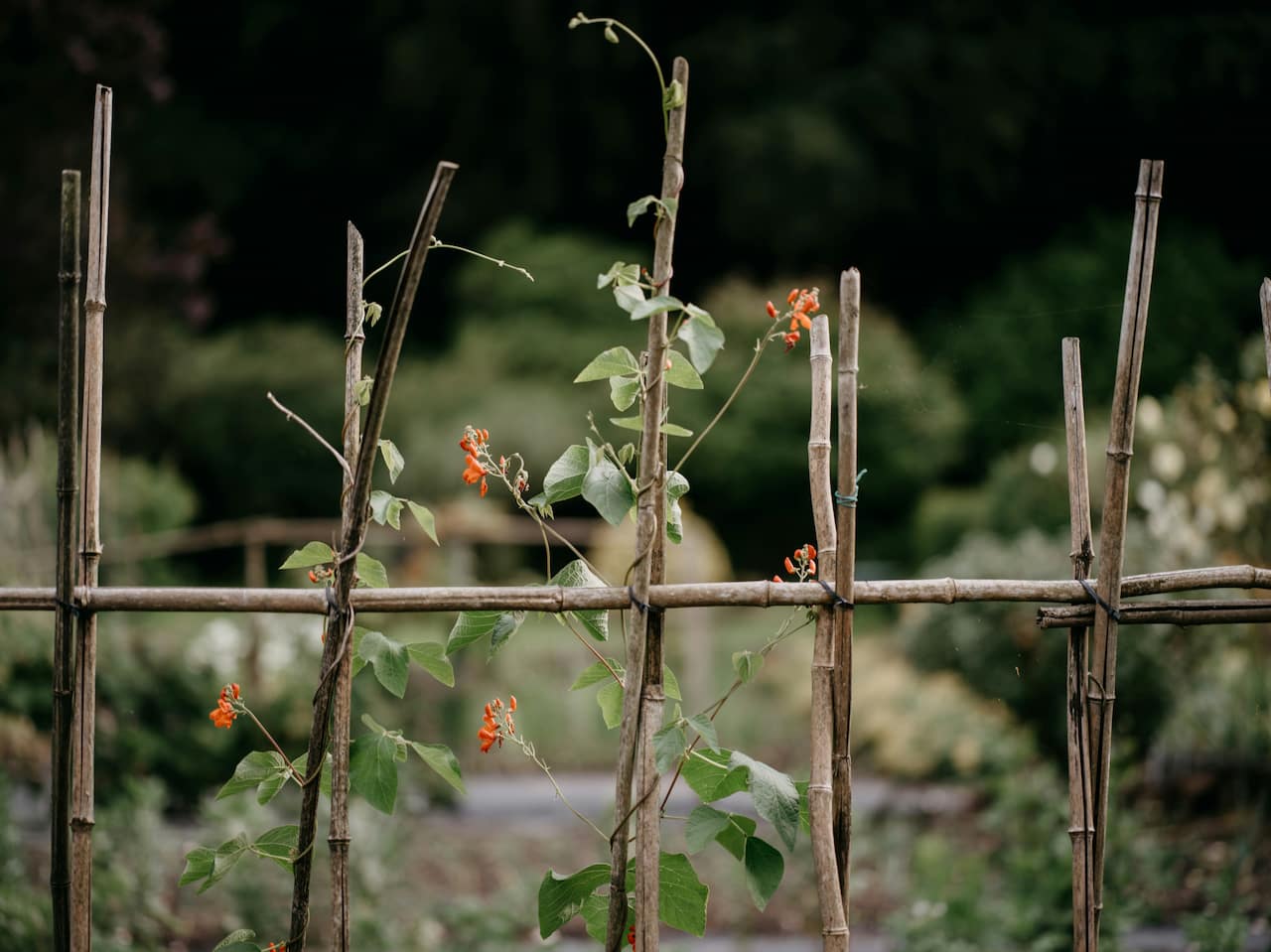
Clematis, sweet peas, climbing roses and most annual climbers will not climb on their own. They need something to grab, tie onto or weave through from day one. Roses in particular need their new growth tied in regularly throughout the growing season.
New trees
A newly planted tree has had its root system disrupted and cannot anchor itself properly until new roots have grown out and gripped the soil. Temporary staking for the first one to two years gives the stability it needs while that happens. The movement caused by wind is part of what tells the tree to strengthen itself, so the stake should allow the upper tree to move freely.
Vegetables
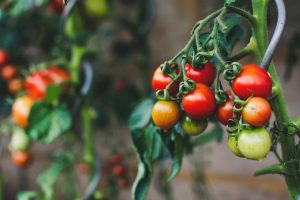
Climbing beans and peas need something to climb. Tomatoes need tying to a cane or training up a string. Fruit-heavy plants like raspberries or tomatoes with multiple trusses can be pulled sideways by the weight of the crop and need regular tying in as they develop.
Containers
Compost in a pot doesn’t give roots the same grip as garden soil, and tall plants in exposed spots can rock and eventually topple. Container plants on roof terraces or balconies are particularly vulnerable.
When to stake
The timing question is one of the things that separates good staking from bad. The answer is earlier than feels necessary. For perennials, put the support in when the plant is roughly a third of its final height. This sounds absurdly early the first time you do it, but it gives the plant space to grow up through the support naturally, which produces a much better result than trying to contain a full-grown plant that’s heading sideways.
Putting a peony hoop in when the shoots are twenty centimetres tall, before you can really see why it’s needed, results in a plant that holds itself together beautifully by the time it’s in full flower. Pushing canes around a peony that is already at sixty centimetres and flopping gives a messy, caged look. The principle is the same for every multi-stemmed perennial.
For trees, stake at planting time, not after. Container-grown trees planted in spring and bare-root trees planted in autumn or winter should both be staked on the day they go in. Never plant a tree and come back to stake it a few weeks later. For dahlias and other tender perennials that die back each year, put the support in when the emerging shoots are at knee height. The plants grow fast and can gain thirty centimetres in a week under good conditions. For annual climbers like sweet peas, have the support structure in place before planting out. Building a wigwam of canes after plants are established risks damaging roots and disturbing plants you’ve just settled in.
💡Mark problem areas in summer for action the following spring. When perennials flop or dahlias get battered in August, photograph or mark the plants that struggled. That is your staking list for next year, and you’ll be glad of it when the plants are barely showing in April and it’s tempting to leave the supports until later.
How to stake different plants
The type of support matters as much as the timing. Using the wrong method for the plant produces either a strangled specimen that looks caged or one that has pulled free and ended up at an angle anyway. Each plant type has a method that suits it.
Support methods by plant type
Single-stemmed plants (dahlias, delphiniums)
Single cane
Push a cane in roughly ten centimetres from the main stem, going in straight and deep enough to be stable. Use figure-of-eight ties so the cane takes the tension rather than the stem. Match the cane height to the plant’s eventual height.
Clump-forming perennials (peonies, asters)
Hoop or ring
A metal hoop pushed into the soil when shoots are just emerging lets the plant grow up through the centre naturally. Stems weave through the frame as they grow and the whole clump holds together. Wire peony cages work on the same principle.
Border drifts of mixed perennials
Linking stakes
Individual upright stakes with hook fittings that link together around a clump or group. They allow natural movement and can be expanded to cover a larger area, which makes them more flexible than solid hoops for long border drifts.
Sweet peas and medium perennials
Pea sticks
Birch twigs pushed into the soil among emerging growth in early spring. Plants grow up through the branching network of twigs. Looks fussy when installed, completely invisible by summer, and remarkably effective in high winds.
Newly planted trees
Short angled stake
A single stake driven in at 45 degrees with the top facing into the prevailing wind. Tie low, roughly 30 to 40 centimetres above soil level. This stabilises the rootball while allowing the canopy to respond to wind, which promotes root development and trunk strengthening.
Climbers on walls and fences
Horizontal wires or trellis
Horizontal wires stretched between vine eyes, spaced roughly thirty to forty centimetres apart and tensioned firmly. Roses and clematis can be trained along these and tied in with soft garden twine. A trellis panel works for plants that need to weave through a structure.
Amazon
Plant staking essentials – UK picks
As an Amazon Associate I earn from qualifying purchases.
The right materials
The material used matters for both the plant and how long the setup lasts. The choice of stake and tie affects whether a plant comes through a wet, windy season looking good or ends up half-strangled and propped at an angle.
Staking materials – what works and when
Material
When to use it / notes
Bamboo canes
Standard choice for single stems. Green-dyed canes are less visible. Last several seasons if stored dry over winter. Replace any that feel soft or show cracks.
Metal canes and stakes
Worth using for plants that need staking every year. Won’t snap or rot and are more stable. Higher initial cost, but the better long-term choice for dahlias and annual repeat staking.
Peony hoops and ring supports
Galvanised or powder-coated steel lasts for years. Look for hoops with legs long enough to push well into the soil. A hoop that sits on the surface will tip over in wind.
Soft garden twine
The standard for attaching stems to canes. Strong enough to hold, stretchy enough to give a little, and will eventually rot so it won’t constrict stems indefinitely. I use this for almost everything.
Tree ties with spacer
Rubber or adjustable buckle ties for tree trunks. The spacer sits between stake and trunk to prevent rubbing. Never use plain twine or wire directly on tree bark.
Common staking mistakes
The same errors come up repeatedly. Most of them are easy to avoid once you know what to watch for, and catching them early saves a lot of remediation.
Common mistakes and what they cost you
Staking too late
By the time a stem is leaning, the vascular tissue has already been stressed. A kinked stem in a dahlia rarely recovers fully. Support goes in when the plant is a third of its final height, not when it is falling over.
High
Tying too tight
A tie that feels secure in April is often biting into the stem by June. Check every tie monthly during the growing season and loosen anything that is leaving a mark.
High
Cane too short for the plant
Dahlias can reach two metres or more in a good season. A cane that runs out at head height while the plant has another sixty centimetres to go provides no support where the weight actually is. Better a cane that looks ridiculous in May than one that fails in August.
Medium
Leaving stakes in over winter
The stake and tie system can harbour pests and disease. Old ties left on woody plants through winter often constrict new growth in spring. Remove stakes and ties from perennials once plants have died back.
Medium
Staking trees too long
A tree that is permanently supported never develops the root system and trunk strength it needs to stand on its own. Remove tree stakes after one to two years once the tree has established. The stake is temporary, not permanent.
Low
Problems and fixes
Even with good technique, things go wrong. Most staking problems follow recognisable patterns and have clear solutions once you know what you’re looking at.
Problem diagnosis
Plant pulled out of stake by wind
Tie is looped around both cane and stem instead of in a figure of eight, or cane is not deep enough
Reposition with figure-of-eight tie, drive cane deeper
Constriction marks where a tie was too tight
Mild damage often heals. Severe constriction where the stem has almost been severed means the section above the tie is unlikely to recover
Remove tie. Cut back above healthy bud if severe. Check all remaining ties
Plant still flopping despite having a stake
Cane is too short, placed too far from the stem, or the plant needed a hoop rather than a single cane
Assess which is the problem. Add a taller cane or switch to a hoop for multi-stemmed plants
Tree ties cutting into bark
Most serious common problem. Can provide an entry point for disease if left
Remove immediately. Replace with a proper buckle-and-spacer tree tie. Monitor for disease
Newly planted tree rocking badly
Stake not deep enough, or placed in loose or waterlogged soil
Drive stake deeper into firm soil. Consider two stakes if ground is genuinely unstable
Bamboo canes snapping at soil level
Canes left in over winter with the base sitting in soil have rotted at the base
Replace affected canes. Store canes dry in future or switch to metal for plants needing annual staking
Amazon
Plant staking essentials – UK picks
As an Amazon Associate I earn from qualifying purchases.