At a glance
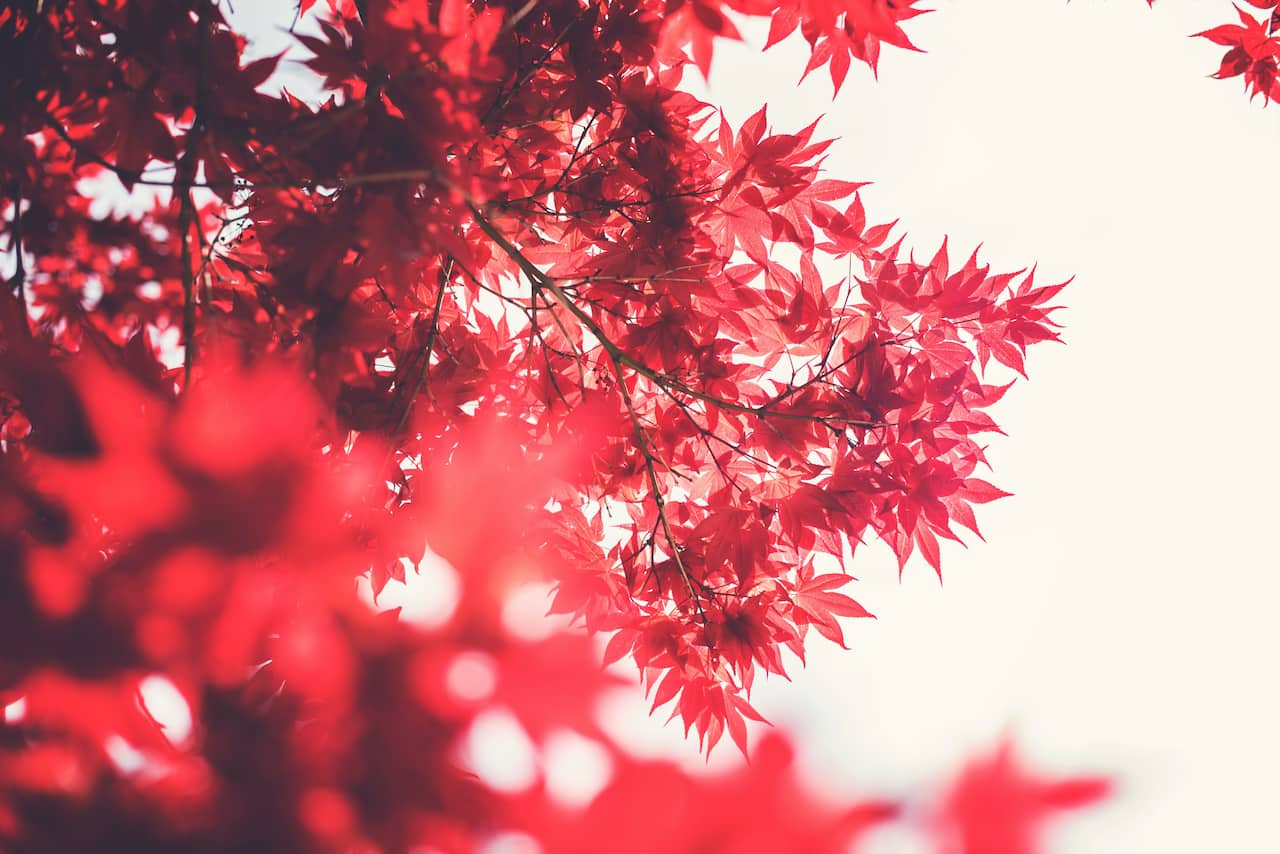
Acers are deciduous trees and shrubs in the maple family, grown primarily for their foliage rather than their flowers. The species most commonly grown in UK gardens is Acer palmatum, the Japanese maple, along with its cultivars and the closely related Acer japonicum. These are compact ornamental plants rather than large forest trees, making them well suited to garden borders, containers and courtyard plantings. Their appeal is almost entirely visual: finely cut, often deeply lobed leaves in an exceptional range of colours, from fresh spring greens through burning autumn reds, oranges and purples.
The UK climate is generally well suited to growing Japanese maples. They tolerate the cool, moist conditions of a British summer far better than the continental heat that can scorch their leaves, and their autumn colour is typically outstanding in the UK because the gradual cooling of September and October triggers a long, slow colour change rather than the sudden drop that harsher climates produce.
What acers are and why they work in UK gardens
Japanese maples are native to Japan, Korea and China, where they grow as understory trees in woodland. This origin explains much of their care: they evolved in dappled shade, sheltered from strong winds, in moist acidic forest soils with good drainage. Understanding this makes the basic growing requirements easy to remember. The plants are not demanding, but they are particular. Get the site right and they look after themselves for decades. Get it wrong and no amount of remedial care will fully compensate.
Most Japanese maples sold in UK garden centres are grafted onto rootstocks, which is why cultivar names matter. A plant labelled simply as Acer palmatum may be a seedling with no guaranteed characteristics, while a named grafted cultivar will reliably produce the foliage colour, leaf shape and habit that it was selected for. The investment in a named cultivar is worthwhile every time.
Choosing the right acer
The choice of cultivar matters enormously because the range is vast and the differences between cultivars are significant. Growth rate, mature size, leaf shape and colour all vary widely. The two main groups to understand are Dissectum types, with their finely divided lace-like leaves and weeping or mounding habit, and Palmatum types, which have the classic hand-shaped maple leaf and a more upright, spreading form.
Dissectum types are slow-growing and generally smaller, rarely exceeding two metres. Palmatum types tend to be more upright and grow more vigorously. For containers, compact cultivars are essential. For borders, the larger palmatum cultivars have more presence and grow into genuinely impressive specimens over time.
Site and soil
Site selection is the single most important decision when growing acers. The main enemies are strong winds and late spring frosts, not cold itself. Acers are generally hardy to approximately minus twenty-five degrees Celsius once established, but the delicate new growth that emerges in spring is highly vulnerable to frost damage and wind scorch. A site with shelter from cold north and east winds, and some protection from late frosts, will produce far better results than an exposed position.
Light requirements depend on the cultivar. Most Japanese maples prefer dappled or partial shade, particularly afternoon shade during hot summers. Green-leaved cultivars tolerate more shade. Red and purple-leaved cultivars need more light to develop their colour fully, but they are also more susceptible to leaf scorch in full sun on hot days. Dappled shade under high tree canopy is ideal for most cultivars.
Soil should be moist, well-drained and slightly acidic, with a pH between 5.5 and 6.5. Acers dislike waterlogged conditions and will struggle and eventually die if their roots sit in standing water. They also dislike chalky or very alkaline soils, which can cause yellowing of the leaves through lime-induced chlorosis. On alkaline soils, container growing with ericaceous compost is a much better option than attempting to grow in the ground.
Planting
Container-grown acers can be planted at any time of year, though autumn and spring are ideal. Autumn planting gives the roots time to establish before the stress of summer heat, while spring planting means the plant can establish during the growing season with regular moisture available.
Prepare the planting hole to roughly twice the width of the root ball and to the same depth. Incorporate plenty of organic matter such as leaf mould, garden compost or bark chips to improve moisture retention and soil structure. Avoid adding large quantities of fresh manure, which can scorch roots and cause excessive leafy growth at the expense of good structure. Set the plant at the same depth it was growing in its container, with the root flare at or just above soil level. Planting too deep encourages collar rot and poor establishment. Water in thoroughly after planting, then apply a thick mulch of bark or leaf mould around the base, keeping it away from the trunk to avoid rot.
Staking is rarely needed. Shrubby Japanese maples develop their own structure without support. Only stake if the plant is large and the site is exposed, and remove the stake after twelve months to avoid constriction.
Watering
Established acers in the ground are reasonably drought-tolerant and need little supplementary watering except during extended dry spells in summer. New plantings need consistent moisture for the first two to three years to establish a strong root system. Water deeply once or twice per week during dry periods rather than little and often, which encourages shallow root development.
Container-grown acers need far more attention to watering. The compost should never be allowed to dry out completely, as leaf drop and die-back can result very quickly. During summer, daily watering may be needed. The compost should be moist but not waterlogged. In winter, reduce watering but do not allow the compost to dry out entirely, particularly if the pot is under a sheltered roof.
Feeding
Acers growing in the ground in good garden soil need very little feeding. An annual mulch of garden compost or leaf mould in autumn is usually sufficient to maintain soil fertility. Avoid high-nitrogen feeds, which produce lush, soft growth that is more susceptible to wind and frost damage and can cause the plant to grow faster than its natural habit allows.
Container-grown acers need regular feeding during the growing season because nutrients are leached out of the compost with every watering. Use a balanced slow-release fertiliser in spring, then supplement with a liquid feed at half strength every few weeks through summer. Stop feeding by late August to allow the plant to harden off before autumn. Signs of iron deficiency in containers include yellowing leaves with green veins, usually caused by pH rising too high. Treat with ericaceous fertiliser or water with dilute sequestered iron.
Pruning
Japanese maples need very little pruning. They develop a naturally beautiful structure and form on their own, and unnecessary pruning disrupts this. The main reasons to prune are to remove dead, damaged or crossing branches, to maintain the desired shape, or to control size.
The timing of pruning matters considerably. The best time is midsummer, when the sap is fully flowing and any cuts seal quickly. Avoid pruning in late winter or early spring, when acers bleed sap heavily from cuts, which weakens the plant. Avoid late autumn and early winter pruning as this exposes cuts to frost damage before they have healed. When pruning, cut cleanly back to a branch junction or outward-facing bud and do not leave stubs.
Grafted cultivars sometimes produce vigorous shoots from below the graft union. These rootstock suckers should be removed as soon as they appear by cutting or pulling them away at the point of origin. If left, they can outgrow and eventually replace the cultivar on top. Look for shoots that emerge from below the lowest visible graft scar and that have distinctly different, often simpler leaves from the cultivar above.
Never prune in late winter or early spring. Acers bleed sap profusely from cuts at this time of year. The loss of sap weakens the plant significantly and can introduce disease. Midsummer is the correct pruning window.
Container growing
Container growing is a very effective way to grow Japanese maples, particularly in gardens with alkaline soil or limited space. It also gives complete control over the growing medium and makes it easier to move the plant to a protected position during harsh winters.
Use a pot with good drainage holes and a layer of crocks at the base. A mixture of ericaceous compost and grit in roughly a three-to-one ratio provides the right balance of moisture retention and drainage. Repot every two to three years in early spring, moving up one pot size each time. Once the plant reaches the desired size, topdress annually with fresh compost instead of repotting.
The biggest risk with container-grown acers is root death during freezing winters. The roots are much more vulnerable in pots than in the ground because the thin walls of the container offer no insulation. In severe cold spells, wrap the pot in hessian or bubble wrap, or move it to an unheated greenhouse or sheltered porch. Do not bring it into a heated room as this will trigger premature bud break. Using a saucer under the pot in summer can help maintain moisture levels but remove it in autumn to prevent waterlogging over winter.
Autumn colour and seasonality
The autumn colour display of Japanese maples is one of the finest in the garden calendar. The intensity of colour depends on cultivar, soil conditions, watering regime and the season’s weather pattern. Cool nights and warm days in September and October produce the most vivid reds and oranges. Dry summers followed by a normal autumn produce better colour than very wet seasons.
Green-leaved cultivars typically produce the most dramatic colour change in autumn, often turning brilliant scarlet or orange. Red and purple-leaved cultivars may produce less dramatic autumn colour because they are already deeply pigmented, but they often develop interesting secondary tones of crimson, bronze or gold. After leaf fall, the bare branch structure of many Japanese maples is also attractive, particularly weeping dissectum types which form elegant domes.
Wind scorch and frost damage
Wind scorch causes the leaf margins to turn brown and crispy, making the plant look burned. It is caused by the leaves losing water faster than the roots can supply it, particularly in hot, dry, windy conditions. The solution is siting the plant with better shelter or, for container plants, moving them to a more protected spot during hot spells. Once a leaf is scorched, it will not recover, but the plant will produce new growth if conditions improve.
Late spring frosts are the other major threat. The young leaves that emerge in April and May are highly vulnerable and can be turned black overnight by a sharp frost. This is rarely fatal but it is disfiguring and it sets the plant back significantly, forcing it to produce a second flush of leaves. The damage can be prevented by covering the plant with fleece on nights when frost is forecast during the leaf emergence period, or by choosing a site with better frost drainage. If frost damage occurs, do not remove the damaged leaves immediately. Wait until new growth is clearly emerging from the buds, then cut back to living wood. The branch will often have survived even if the leaves were blackened.
Pests and diseases
Acers are generally trouble-free but a handful of problems can occur. Understanding which conditions favour each problem helps in both prevention and treatment.
Common problems
Most acer problems have straightforward causes once you know what to look for. The table below covers the symptoms most commonly reported by UK gardeners.
Propagation
Most Japanese maple cultivars are grafted rather than grown from seed, because seed-raised plants do not come true to type and the resulting plants are highly variable. Grafting produces reliable cultivars but requires skill. For home propagation, the most practical options are semi-ripe cuttings in summer or seed from the species.
Long-term care
A well-sited acer in good soil requires very little intervention once established. Annual mulching, occasional watering in dry spells, and the removal of dead or damaged wood is all that is needed. Japanese maples are long-lived plants and a well-chosen, well-placed specimen can remain a garden feature for decades. Avoid moving established plants as they resent root disturbance and the transplanting of a large specimen rarely succeeds well.
For container plants, regular repotting every few years and attention to watering and feeding are essential for long-term health. A container acer kept in ericaceous compost with good drainage, adequate moisture, and protection from the worst winter cold can thrive for many years. Toxicity is not a concern with Acer palmatum, which is not harmful to humans, dogs or cats.
The most important thing to carry forward from any first year with a Japanese maple is this: nearly every problem that affects them comes from a poor site choice. Wind scorch, spring frost damage, lime-induced chlorosis, waterlogging and even increased susceptibility to disease all trace back to an unsuitable location. Choose the site carefully before planting and the plant itself will do the rest.
Share on socials: