At a glance
Chervil is one of the most overlooked herbs in UK kitchen gardens, consistently passed over in favour of parsley, chives and mint despite being genuinely easier to grow than any of them in certain conditions. The reason for this neglect is probably simple unfamiliarity – it is a French herb in a British market, and most UK gardeners have never cooked with it or seen it for sale, so it never makes it onto the planting list. That is worth changing. Chervil (Anthriscus cerefolium) produces delicate, fern-like leaves with a mild, warm anise flavour that is subtle enough not to overpower other ingredients and complex enough to make a real difference in eggs, fish, salads and light sauces. It is the herb that gives the classic French fines herbes mixture its character, and the one ingredient in that combination that is genuinely difficult to substitute.
The practical case for growing chervil is equally strong. It fills a niche in the kitchen garden that almost nothing else occupies: a culinary herb that genuinely prefers partial shade and cool, moist conditions. Every other herb on the standard list – basil, thyme, rosemary, sage, oregano – demands full sun. Chervil does not. It thrives in the spots where those herbs fail: the north-facing bed, the base of a wall, the shaded edge of a vegetable plot. It grows fast, it self-sows freely if allowed to flower, and a single packet of seed sown in succession from March through September will produce fresh leaves almost year-round. The one skill required is understanding and managing its tendency to bolt in heat, which is not difficult once you know what you are dealing with.
What chervil is – and why it earns a place in the kitchen garden
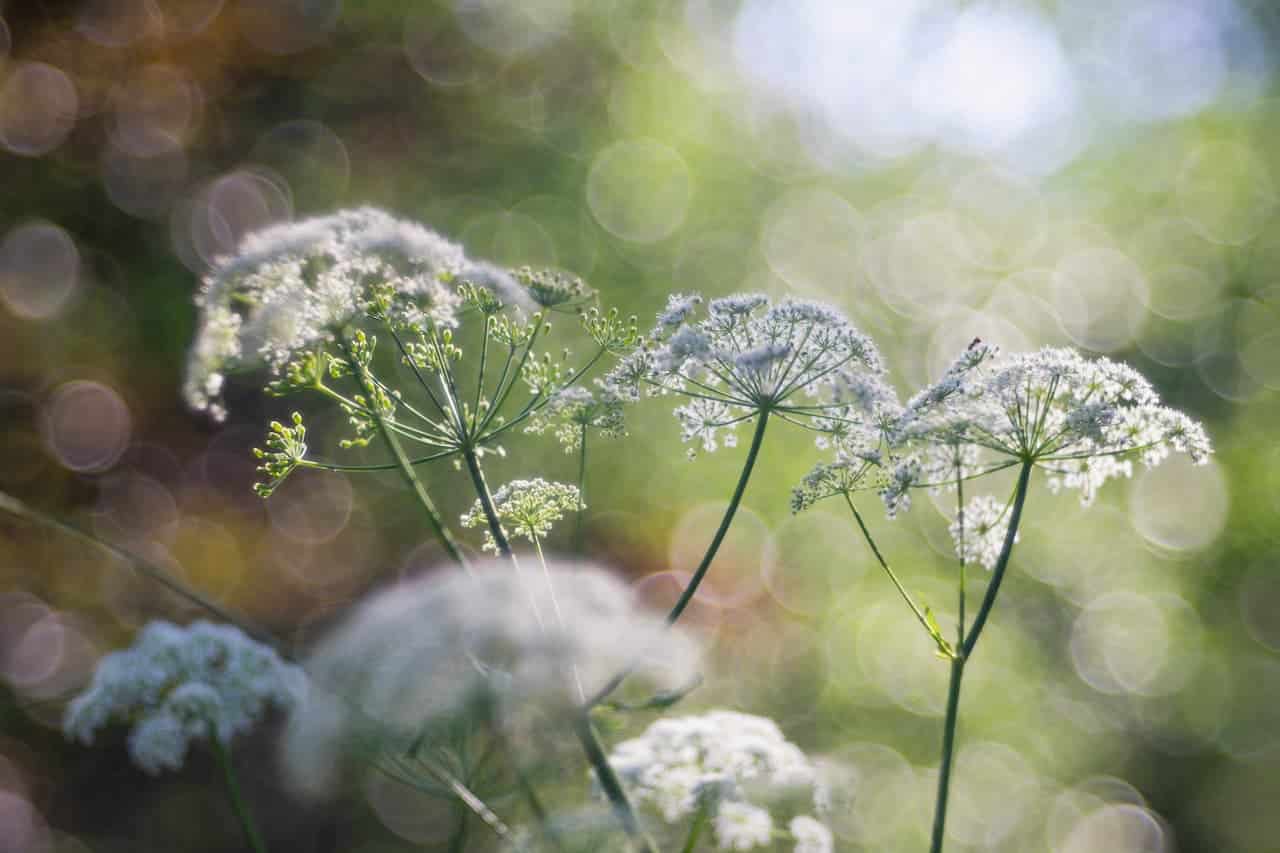
Chervil belongs to the Apiaceae family – the same family as parsley, carrot, coriander and fennel – which explains the deeply divided, fern-like leaves it shares with all of them. The leaves are pale to bright green, very finely cut, and more delicate in appearance than flat-leaf parsley. The plant is a hardy annual: it germinates, grows, flowers and sets seed within four to six months, then dies. New growth does not return from the roots the following year. This annual habit means chervil is always grown from fresh seed, but it also means the plant can be grown in any season where the conditions are right, which gives it unusual flexibility compared to perennial herbs that only grow in their fixed season.
The bolt trigger is the most important thing to understand about chervil. When temperatures consistently exceed about 20 degrees C, the plant short-circuits its leaf-production phase and rushes directly to flowering and seed. The leaves become sparse and more bitter, the stems elongate rapidly, and within days the harvest window is over. This is not a failure or a disease – it is a built-in survival mechanism the plant uses in response to heat stress. The same mechanism is triggered by drought: a plant that cannot drink cannot grow leaves, so it switches to reproduction instead. Understanding this explains the entire growing strategy for chervil: keep it cool, keep it moist, keep it shaded in summer, and it produces excellent leaves for weeks. Let it overheat or dry out, and it is gone within days.
The flip side of this heat sensitivity is that chervil is exceptionally well suited to UK autumn and winter growing. September sowings under cover – in a cold frame, unheated greenhouse or even a cloche – grow slowly through the cooler months and produce fresh leaves from November through to March. This winter supply is chervil’s most underappreciated quality as a kitchen garden herb. The period from November to February is when fresh soft-leafed herbs are most scarce and most valued, and chervil is one of very few that will produce through it with no artificial heat required.
Varieties
The variety choice for chervil is limited but the distinctions are worth knowing, particularly around bolt resistance and culinary versus ornamental use.
For culinary use, the plain species is the right choice. It has the cleanest flavour and the best essential oil retention – chervil’s delicate anise character comes from volatile oils in the leaves, and the flat-leaved form holds those oils better than curled. The curled form has decorative appeal and identical flavour, but is considered marginally inferior for cooking and better suited as a garnish or border edging plant. ‘Vertissimo’ is the variety to seek out specifically for summer sowings, where its improved bolt resistance gives a noticeably longer productive window than the standard species under warm conditions. All three are grown from seed in the same way.
One critical note on seed viability: chervil seed loses germinating power within about one year of harvest. Old seed from last season’s packet often germinates poorly or not at all. This is the single most common reason chervil sowing appears to fail. Always start with fresh seed from the current season, and if germination is sparse after three weeks in reasonable conditions, old seed is the most likely explanation. Do not be tempted to buy large packets – a small fresh packet each year outperforms a large old one every time.
Sowing, succession and the bolt problem
The most important principle for growing chervil productively is succession sowing – starting a fresh batch every three to four weeks rather than making a single large sowing and expecting it to last. Each sowing provides a productive leaf harvest of around four to eight weeks before bolting ends it. Without succession sowings behind it, a gap appears in supply that can last weeks. With a regular succession from March through September, plus autumn under-cover sowings, fresh chervil is available almost continuously throughout the year.
Chervil must be sown direct in its final growing position. The plant develops a long taproot quickly after germination, and transplanting causes root disturbance that severely checks growth and very often triggers immediate bolting – the opposite of what you want. Sow seeds at 0.5-1cm depth in shallow drills, space rows 20-30cm apart, and thin to 15-20cm between plants once seedlings are large enough to handle. The thinnings are fully edible and at their most delicate at this stage – use them whole in salads. Germination takes 10-21 days depending on temperature. If starting indoors is necessary for very early spring sowings, use deep biodegradable pots that can be planted out intact, but direct sowing is always more reliable.
The sparklines above show the practical pattern. Outdoor sowing peaks in spring (March to May) and again in late summer (August to September), with a gap during the hottest weeks of June and July when bolt risk is highest. Under-cover sowing fills winter: September and October sowings in a cold frame or unheated greenhouse produce the winter supply. The harvest window runs effectively year-round when succession sowing is maintained – the apparent dip in summer reflects the challenge of getting leaves through peak heat, not an absence of plants. Bolt risk peaks from June to August, which is why summer sowings need shade positioning to extend the productive window.
The winter harvest deserves particular emphasis because it surprises most gardeners who try it. September-sown chervil under a simple cold frame grows slowly through autumn, remains harvestable through moderate frosts, and provides fresh leaves from November through to March. This is the period when almost no other soft-leafed herb is producing outdoors. Chervil is rated H3 for hardiness – it tolerates moderate frost but not severe cold without protection – and even a basic cold frame is enough to maintain useful production through a typical UK winter. A small cold frame dedicated to autumn and winter chervil is one of the most productive pieces of kitchen garden infrastructure you can have.
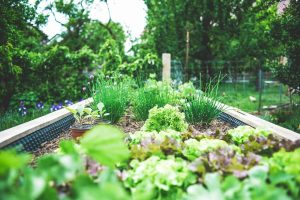
Use taller crops for summer shade. The most practical way to provide shade for summer chervil in a raised bed is to sow it directly behind taller crops – beans, courgettes, sweetcorn or tomatoes – where the plants cast afternoon shade. This costs nothing, uses otherwise underutilised ground, and reliably adds two to four weeks to the productive season before bolting. The chervil is harvested and gone by the time the taller crops need the space.
Growing conditions and ongoing care
Chervil’s requirements run counter to almost every other culinary herb in common UK use, and this inversion is the source of both its value and its growing challenges. The herbs that dominate most kitchen gardens – thyme, rosemary, sage, basil, oregano – all want maximum sun, free-draining soil and relatively low moisture. Chervil wants the opposite of most of these. Understanding its actual requirements means you can grow it well without fighting its nature.
The shade requirement changes with the season, which is the key nuance to understand. In spring and autumn, chervil grows comfortably in full sun to partial shade and produces excellent leaves without any shade management. In summer, full sun is a problem – the same planting that thrived in April will bolt within a week or two in July without shade. This seasonal shift in requirements is why positioning matters so much. A permanent partly shaded spot – the north side of a fence, the dappled ground under deciduous shrubs – provides the right conditions year-round. In a sunnier raised bed or vegetable plot, the taller-crop shade strategy described above is the practical solution.
Watering discipline matters more for chervil than for most herbs. Dry soil in warm weather is a bolt trigger that operates independently of temperature – even a well-shaded plant in a dry summer will bolt prematurely if the soil dries out between waterings. Mulching the soil around plants with a thin layer of garden compost helps retain moisture, keeps the root zone cool, and reduces watering frequency. In a raised bed with good, moisture-retentive growing medium, chervil often performs better than in open ground because the compost-rich growing medium holds water well. Container-grown plants dry out faster and need more frequent watering, particularly in warm weather.
Cut flower stems as soon as they appear. The moment a chervil plant begins to flower, the leaf quality starts declining – the remaining leaves become sparser, the anise flavour dulls, and the plant’s energy goes into seed production rather than fresh foliage. Removing the flowers promptly delays this decline by several weeks. Allow the final sowing of the season to set seed if you want self-sown plants the following year. Chervil self-seeds freely in suitable conditions – sheltered, partially shaded spots with undisturbed ground – and may establish a small self-perpetuating colony that provides early leaves each spring without any intervention.
Harvesting and storage
Begin harvesting from around six to eight weeks after sowing, once the plant has developed several sets of mature leaves. Always cut from the outside of the plant first, taking outer leaves and leaving the central growing point intact. This cut-and-come-again approach keeps the plant productive for as long as possible. Removing all the foliage or cutting through the crown ends the harvest immediately.
Morning harvest gives the most aromatic leaves. The essential oils that carry chervil’s flavour are most concentrated in the morning before heat and sunlight begin to degrade them. In summer this is particularly important – plants under heat stress produce less aromatic leaves overall, and the best of what they offer is at its peak early in the day. Pick into a clean container, not a plastic bag, and use promptly.
Chervil is one of the worst herbs for storage. Cut leaves in a glass of water in the refrigerator keep for two to three days at best, but the volatile oils that define the flavour begin degrading immediately after cutting. Drying destroys them almost completely – dried chervil is a different product, essentially tasteless by comparison with fresh. Freezing destroys cell structure and produces waterlogged, flavourless mush on thawing. The practical conclusion is that chervil must be grown in succession and used fresh – there is no reliable way to build up a stored supply. This is not a limitation once the succession sowing habit is established: you simply cut what you need, when you need it, from whichever batch is currently at its best.
Chervil in the kitchen
The first and most important rule for using chervil in cooking is that heat destroys it. The volatile oils that give chervil its delicate anise character evaporate rapidly at cooking temperatures. A tablespoon of fresh chervil added to a hot omelette at the last moment before folding and serving retains almost all its flavour. The same amount added five minutes before the end of cooking will taste of very little. This is not a flaw – it is a defining characteristic that places chervil in a specific culinary role. It is a finishing herb, not a cooking herb, and understanding this unlocks its value.
The fines herbes combination deserves a paragraph of its own because it is chervil’s most important culinary application and the one that shows what it contributes most clearly. The classic blend uses equal quantities of finely chopped fresh chervil, parsley, chives and tarragon, all added at the last moment to omelettes and light herb sauces. Parsley gives bulk and freshness; chives add mild allium sharpness; tarragon brings a strong anise depth; chervil provides the delicacy and the herbal complexity that prevents the combination from being dominated by any single element. Remove the chervil and the blend loses its balance – tarragon and chives without chervil is too assertive, parsley without chervil is too plain. This is the herb combination where chervil’s gentle flavour is most clearly indispensable rather than optional.
The Venn above captures the practical distinction. Chervil and parsley share family membership, a role in fines herbes and an affinity for egg dishes – but they are not interchangeable. Chervil has flavour where parsley has freshness, prefers shade where parsley handles sun, and degrades faster with heat where parsley holds. Gardeners who grow both have access to a culinary distinction that is genuinely useful. Those who grow only parsley can substitute it in most recipes, but the substitution is noticeable.
Common problems
Chervil’s problem list is short. It is not a disease-prone herb and has few serious pest pressures. The vast majority of difficulties that arise are management-related rather than caused by external factors.
Bolting is the dominant problem and deserves a direct statement: once a chervil plant has bolted, there is nothing to be gained by trying to rescue it. Harvest whatever leaves remain immediately – they will be sparser and slightly less aromatic than pre-bolt leaves but still usable – then remove the plant. If you want self-sown plants, let it flower and set seed before composting. The replacement comes from the next batch in your succession sequence, which is the real protection against gaps in supply. A gardener with a well-managed succession of chervil batches treats each bolted plant as a minor inconvenience rather than a crisis, because the next batch is always a few weeks behind it.
Share on socials: