At a glance
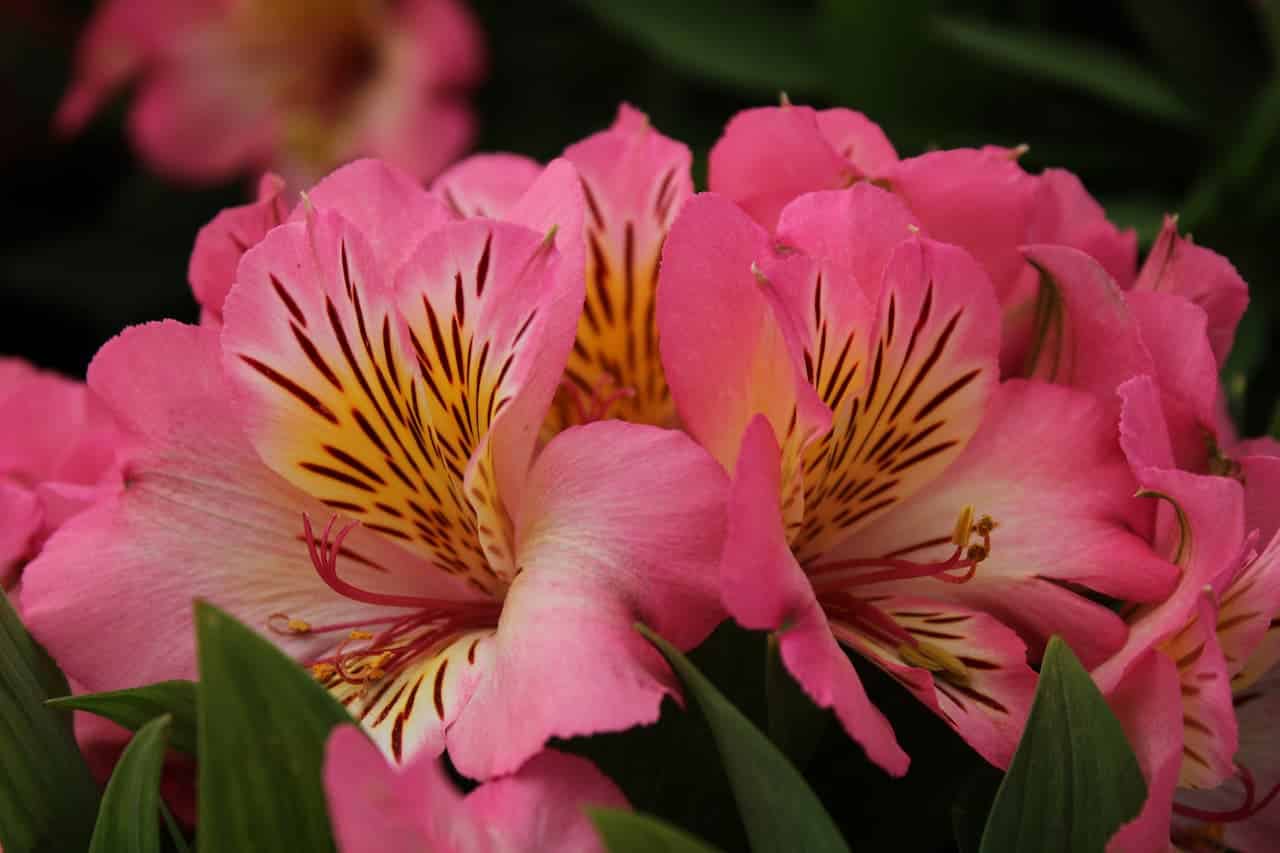
Alstroemeria – the Peruvian lily or lily of the Incas – is one of the longest-flowering perennials available to UK gardeners, producing its distinctive funnel-shaped blooms from June through to October in a continuous and reliable succession that very few other hardy border plants can genuinely match for duration. The flowers come in a spectacular range of colours: rich scarlet, flame orange, candy pink, white, yellow and every combination in between, with the upper petals typically streaked with darker markings that give each flower an intricate, almost orchid-like quality. They are also exceptional cut flowers, lasting two to three weeks in water if the stems are pulled rather than cut.
Modern hardy varieties have transformed alstroemeria from a plant that previously required regular winter protection into one that survives UK winters reliably in all but the coldest and most exposed gardens, provided it is planted at the correct depth and the crowns are given a protective mulch through the critical first winter after planting. The key to success is understanding two things: that alstroemeria roots are brittle and easily damaged, requiring careful handling at every stage, and that planting depth is critical – rhizomes planted too shallowly are vulnerable to frost heave and produce fewer stems than those planted at the recommended 20-25cm depth.
About alstroemeria
Alstroemeria belongs to the family Alstroemeriaceae and the genus contains around 50-60 species native to South America, primarily Chile and Brazil. Most garden varieties available in the UK are hybrids developed from a handful of species, bred for flower colour range, hardiness and compact habit. The plant grows from fleshy rhizomes that form dense clumps over time, sending up erect stems of 45-90cm carrying clusters of 5-10 flowers at the tip. The foliage is distinctive – the leaves are twisted at their base so the upper surface faces downward, a characteristic unique to the genus called resupination. This quirk is easily spotted once pointed out and makes alstroemeria foliage immediately recognisable on the nursery bench. Once established in a suitable position, alstroemeria clumps expand steadily year on year and can produce dozens of flowering stems from a single original planting. The genus also has the practical advantage of producing no berries or seed heads that require clearing – the plant simply continues flowering until hard frost brings the season to a close.
Best varieties for UK gardens
The hardiest alstroemeria varieties for UK outdoor cultivation are the Princess series and the Summer series, along with older named hybrids like ‘Indian Summer’, ‘Friendship’ and ‘Tara’. These have been selected specifically for hardiness and perform reliably in borders across most of England and Wales, and in sheltered spots in Scotland and Northern Ireland. The Inticancha series is a newer development offering similar hardiness in a more compact form that is well suited to smaller borders. Container varieties bred for compact habit – such as the Inca series – are also widely available but are less hardy and better suited to container growing where they can be moved under cover in winter. When buying for outdoor border use, always check the hardiness rating on the label – the difference between RHS H3 and RHS H5 is significant in UK conditions.
Planting and depth
Planting depth is the single most important factor in growing alstroemeria successfully as a UK hardy perennial, and it is the area where most gardeners who struggle with the plant have gone wrong. The rhizomes must be planted 20-25cm deep – deeper than most gardeners expect for a summer-flowering perennial – for two reasons. At this depth the roots are insulated from ground frost through winter, significantly improving winter survival in all but the most exposed UK gardens. Deeper planting also produces more and stronger flowering stems, as the rhizomes develop best when surrounded by moist, insulating soil rather than sitting close to the surface where temperature fluctuates more widely.
Handle the rhizomes with care when planting – they are brittle and break easily, and a broken rhizome planted in damaged condition establishes slowly or fails entirely. Dig a wide, deep hole rather than a narrow one, work in plenty of garden compost, set the rhizome horizontally at the correct depth and cover carefully. Water in well and mark the position clearly, as the shoots can take 6-8 weeks to appear after spring planting and it is easy to accidentally dig into the rhizome. Newly planted alstroemeria may flower sparingly in their first season – the plant prioritises establishing its root system and full flowering performance typically develops from the second summer onwards. Patience at this stage is well rewarded: a three or four year old established clump can produce 30-50 flowering stems across a single season from a planting that started as a single small pot.
Do not disturb established alstroemeria clumps unnecessarily. The roots are fragile and highly sensitive to disturbance. Once a clump is established and flowering well, leave it in place. Transplanting causes severe setback and the plant may take two to three years to recover full flowering. If division is necessary, do it in early spring before growth starts and handle the divided sections as gently as possible.
Care and cutting
Established alstroemeria in their second season and beyond are relatively easy to maintain. They benefit from a balanced slow-release fertiliser applied in spring as shoots emerge, and from consistent moisture through the growing season – they are not drought tolerant and will stop flowering in prolonged dry periods. Irregular watering that allows the soil to dry out significantly between waterings is particularly damaging during the active growing period from May to September. A mulch of compost or bark applied in spring retains moisture and reduces the need for supplementary watering considerably through summer. Unlike many perennials, alstroemeria do not need deadheading to continue flowering – the plant produces new stems continuously through the summer regardless of whether spent flowers are removed. This means that cutting generously for the house actually improves the garden display by stimulating more stems, rather than reducing it.
The single most important care technique unique to alstroemeria – and one that most gardeners do not know until told – is how stems are harvested or removed. Whether cutting for a vase or tidying the plant after flowering, stems should be pulled from the base with a sharp tug rather than cut with scissors or secateurs. Pulling removes the entire stem including the base and triggers the plant to produce a replacement shoot; cutting leaves a stub that rots and can introduce disease. This pulling technique, which feels counterintuitive at first, is the reason alstroemeria is such a productive cut flower – it actively stimulates further flowering rather than merely removing spent growth. For the best vase life, harvest stems when the first one or two buds are just opening and remove any foliage below the waterline.
Frost protection and winter care
Hardy alstroemeria varieties survive UK winters in the ground provided they are planted at sufficient depth and the crowns receive some insulation through severe cold snaps. The correct planting depth of 20-25cm provides the primary protection – rhizomes sitting at this depth are insulated by the thermal mass of the soil above them and rarely freeze even in a hard winter. A mulch of straw, dry bark or bracken applied over the planting area in November – 10-15cm deep – provides additional insulation through the coldest months and is particularly important in the first winter after planting, when the rhizomes have not yet established deeply enough to benefit fully from soil insulation alone. Remove the mulch gradually in March as temperatures rise, allowing the emerging shoots to push through without being smothered.
In colder regions or exposed gardens, growing alstroemeria in large containers that can be moved to a frost-free greenhouse or garage through the worst winter months is the most reliable approach. Frost protection is also worth applying to newly planted crowns in their first winter regardless of region, as the rhizomes have not yet established at the full 20-25cm depth. The companion choice around alstroemeria should be guided by the sunny, sheltered conditions they need – agapanthus shares the same preference for a warm, well-drained position and the two flower in sequence through summer and autumn. Crocosmia provides bold, arching foliage and flame-coloured late-summer flowers that complement alstroemeria’s palette without competing for the same border space. Where lily beetles are present in the garden they should be monitored on alstroemeria as well as on true lilies, as the pest occasionally transfers between the two genera.
Share on socials: