At a glance
A close-boarded fence provides privacy and a boundary. A native mixed hedge provides all of that and additionally: nesting habitat for at least 21 UK bird species, food in the form of berries and insects for dozens more, overwintering cover for hedgehogs, bats, dormice and a huge range of invertebrates, a flight line for bats, a foraging corridor for hedgehogs, and a pollen and nectar source from early spring through late summer. Studies by the British Trust for Ornithology have shown that gardens and field boundaries with native hedges support significantly more bird species and higher invertebrate diversity than those without.
The difference between a wildlife hedge and an ornamental one lies entirely in species choice. Leylandii, laurel and privet – the most commonly planted garden hedges in the UK – support minimal invertebrate life because native insects have not co-evolved with them. A mixed native hedge of hawthorn, blackthorn, field maple, hazel, dog rose, spindle and holly supports hundreds of invertebrate species, directly feeding the insect-eating birds and bats that depend on them. A wildlife hedge will also attract a wider range of garden birds than any feeding station alone, because it provides nesting sites and insect food that supplementary feeding cannot replicate.
Why native hedges outperform fences for wildlife
The case for a native hedge over a fence or wall comes down to one thing: ecological function. A fence has none. A native mixed hedge, even a young one in its second or third year, is already providing foraging habitat for insects, roosting cover for birds and a physical corridor that allows small mammals to move between gardens and feeding areas. By year five or six, a well-managed native hedge of hawthorn, blackthorn and hazel is one of the most wildlife-rich structures in any garden, outperforming formal borders, wildflower patches and even ponds in terms of the sheer number of species it supports year-round.
The reason native species are so much more valuable than non-native ornamentals comes down to co-evolution. UK invertebrates – the insects, beetles, moths and caterpillars that form the base of the garden food chain – have evolved over thousands of years to feed on specific native plant families. A hawthorn bush supports over 300 invertebrate species. An equal-sized laurel supports fewer than ten. Every bird species that feeds its chicks on caterpillars – blue tit, great tit, dunnock, wren, robin – depends on this invertebrate base. Choosing native species for a hedge is not just a wildlife gesture, it is the structural decision that determines whether the hedge functions ecologically at all.
Best species for a UK wildlife hedge
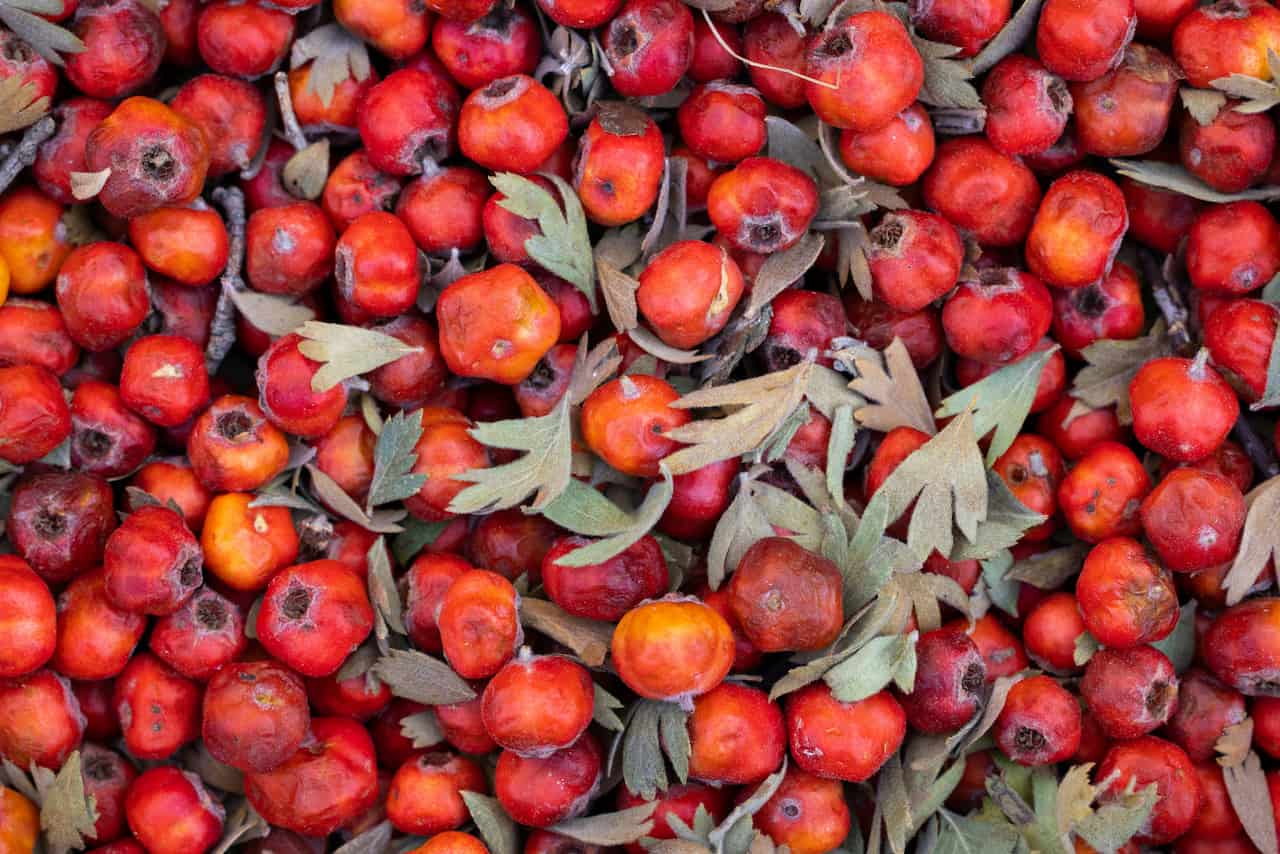
Hawthorn should form the backbone of any UK wildlife hedge, ideally 40-50% of the total planting. It is dense, thorny, fast-establishing, extremely wildlife-rich, produces early blossom valued by bees and other pollinators in May, and provides heavy crops of red berries that feed fieldfares, redwings, blackbirds and thrushes from September onwards. It is also cheap as bare root whips – the most economical way to plant any hedge. Blackthorn provides earlier blossom in March and April when insect food sources are scarce, sloe berries in autumn, and impenetrably thorny structure that creates secure nesting sites for birds like whitethroat, dunnock and blackbird.
Ivy deserves a special mention. It is not a hedge plant in itself, but grown along the base and through the established hedge it adds enormous value – late-season nectar in October when almost nothing else is flowering, berries that persist through winter feeding blackbirds and robins, and dense evergreen cover that provides shelter for roosting birds and overwintering insects even when the deciduous hedge species are bare. Allow ivy to establish at the base of the hedge from year two or three onwards and do not cut it back as part of the hedge trimming routine.
Planting method and aftercare
Bare root whips planted between November and March are the most economical and effective way to establish a wildlife hedge. Bare root plants are significantly cheaper than pot-grown equivalents and establish faster because they are not disturbed by transplanting from a pot. Plant at a density of 3 plants per metre in a single staggered row, or 5 per metre in a double staggered row for a denser result more quickly. Dig out a trench rather than individual holes to make spacing easier – a spade-width trench, 30cm deep, keeps the work efficient across a longer run.
Soil preparation makes a significant difference to establishment speed. On heavy clay soils, break up the base of the trench thoroughly and incorporate grit to improve drainage – hawthorn and blackthorn are both clay-tolerant but establish faster with decent drainage. On light sandy soils, work in plenty of garden compost or well-rotted organic matter to improve moisture retention through the first dry summer. Backfill with the removed soil, firm in well and water thoroughly. Apply a 10cm mulch of bark or wood chip along the full length of the hedge to suppress competing weeds during the critical first two years.
Cut hard in the first two years to build bushy structure. New hedge plants grow leggy if left to their own devices. Cut all new growth back by one third in the first winter after planting, and by one third again in the second winter. This looks brutal but forces dense branching from low down – which is where the wildlife value is. A hedge that is thick and impenetrable from ground level provides far better nesting cover than one that is open and sparse at the base.
Managing the hedge for wildlife
The single most important rule for managing a wildlife hedge is not to cut it during the nesting season. In the UK, birds can be nesting in hedges from March through to August, and cutting during this period is both illegal under the Wildlife and Countryside Act and directly harmful to breeding birds. The legal and wildlife-friendly cutting window is September through to the end of February. Within this window, cut every other year if possible rather than annually – biennial cutting allows berries to form on one year’s growth and be eaten by birds before the next cut removes them.
The base of the hedge is as important as the hedge itself for wildlife. Leave a strip of rough grass, leaf litter and undisturbed ground along the hedge base rather than mowing or tidying right up to the stems. This base strip provides foraging habitat for hedgehogs, nesting material for birds, and overwintering cover for invertebrates. A gap left in the base of the boundary at each end – the same 13cm square required for a hedgehog highway – allows hedgehogs to pass through even when the hedge itself is fully established and the base is impenetrable. Combining the hedge with a butterfly-friendly planting scheme in the border in front of it creates a multi-layered habitat that maximises the range of species supported.
Hedgehog corridors and hedge bases
A well-established native hedge is among the most important hedgehog habitats remaining in the UK landscape. Traditional agricultural hedgerows provided the interconnected network of routes and foraging habitat that hedgehog populations depended on – and the suburban garden hedge can replicate this on a small scale. An established hawthorn and blackthorn hedge base, left uncut and with leaf litter accumulating beneath, provides exactly the combination of shelter, invertebrate foraging and safe passage that hedgehogs require throughout their active season from April to October.
The hedge base management is straightforward in practice. Stop mowing at least 30cm from the base of the hedge stems and allow rough grass, nettles and leaf litter to accumulate naturally. This strip does not need managing – its value comes from being left alone. In autumn, rake any fallen leaves towards the hedge base rather than removing them entirely. This builds the deep, moist litter layer that invertebrates overwinter in and that hedgehogs will use as both foraging ground and, in some cases, hibernation material. A wildlife hedge with a well-managed base is one of the single most effective things a UK gardener can do for local wildlife, combining nesting habitat, food, shelter and connectivity in one linear structure that requires relatively little ongoing effort once established.
Share on socials: