At a glance
The most effective wildlife gardens are not created by adding a few token native plants or putting up a bird feeder – they are created by understanding what different species actually need and selecting plants that deliver those needs across every season of the year. The difference between a garden that genuinely supports wildlife and one that merely looks as though it might is almost entirely determined by plant selection. A border full of double-flowered roses, clipped topiary and bedding plants can look beautiful and support almost nothing. A thoughtfully planted border of the same size with the right species can feed hundreds of insect species, support breeding butterflies, provide winter berries for migratory birds and shelter for hedgehogs and frogs throughout the year.
The guiding principles are simple even if the plant list is long: extend the season so that food is available from February through to November, layer the planting from groundcover through shrubs to small trees, and prioritise natives for structural value while using well-chosen ornamentals to fill seasonal gaps. This guide works through the best plants for each major wildlife group, explains why they work and why some popular alternatives deliver very little.
Planting principles for wildlife gardens
The most effective wildlife garden plant selection follows two core principles: extend the flowering and fruiting season across as many months as possible, and layer the planting from ground level through to canopy height. A garden that flowers from February through to November provides continuous food for pollinators and other insects that would otherwise face critical gaps in provision. A garden with groundcover, herbaceous plants, shrubs and at minimum one or two small trees provides nesting, foraging and cover habitat at every level – replicating the structural diversity of the woodland edge and hedgerow habitats that most UK garden wildlife species evolved in.
Native plants are consistently more valuable than ornamental cultivars for most wildlife purposes, because native insects have co-evolved with native plants over thousands of years. A single native hawthorn supports over 300 insect species. A clipped ornamental photinia supports almost none. That said, many garden-worthy ornamental plants – lavender, verbena, single-flowered dahlias, alliums, catmint – provide excellent pollen and nectar for bees and butterflies even though they are not native. The ideal wildlife border combines native species for structural and invertebrate value with carefully chosen ornamentals that extend the season and add visual variety. A wildlife hedge of mixed native species along the boundary provides more ecological value than almost any other single planting decision in a UK garden.
Avoid double-flowered cultivars entirely for wildlife planting. Double flowers – bred for their dense, showy appearance – have had their reproductive structures replaced by extra petals. They contain little or no pollen or nectar and are largely useless to pollinators. When choosing cultivars, always select single-flowered forms. The RHS Plants for Pollinators label on plant tags is a reliable guide to varieties that have been assessed and confirmed as genuinely useful to bees and other pollinators.
Best plants for bees
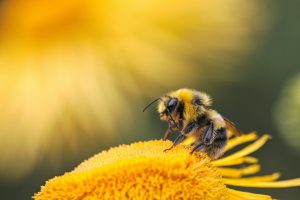
Lavender (Lavandula angustifolia) is the most reliably bee-visited plant in the UK garden. On a warm summer day a well-established lavender hedge humming with bumblebees and honeybees is one of the most satisfying sights in any garden – and it requires almost no maintenance beyond a light trim after flowering. Lavender ‘Hidcote’ and ‘Munstead’ are the most compact and reliably hardy forms for most UK gardens. Plant in full sun and well-drained soil – lavender performs poorly in shade or wet clay. Other outstanding bee plants include catmint (Nepeta), alliums, borage, phacelia, single-flowered salvias, foxgloves and the whole Apiaceae family – fennel, angelica, cow parsley and their garden relatives whose flat-topped flowers are particularly valuable for solitary bees and hoverflies.
For a long bee season, aim for at least three distinct flowering periods: early spring (pulmonaria, hellebores, flowering currant, crocus), summer peak (lavender, catmint, alliums, borage, knapweed) and late season (ivy, sedums, asters, Verbena bonariensis). Ivy flowering in October provides nectar at a time when almost nothing else is available and is critically important for late-flying bumblebee queens building fat reserves before winter. The same planting approach that benefits bees is the foundation of a garden designed to attract bees more broadly – combining the right plants with bee nesting habitat creates a complete resource.
Best plants for butterflies
Buddleja davidii (butterfly bush) is the most dramatically effective single butterfly plant available to UK gardeners. In full flower in July and August it can host dozens of butterflies simultaneously – peacocks, red admirals, small tortoiseshells, commas and painted ladies all feed enthusiastically on the dense nectar-rich flower spikes. Buddleja is a vigorous shrub that needs hard pruning in March to prevent it becoming unmanageably large and to produce the strongest flowering shoots. Despite its common name it has no caterpillar food plant value – butterflies visit purely for nectar and cannot breed on it.
For a complete butterfly garden, caterpillar food plants are as important as nectar plants. Without them, butterflies may visit to feed but cannot breed in the garden. Native nettles (Urtica dioica) are the caterpillar food plant for peacock, red admiral, small tortoiseshell and comma – a small patch of nettles in a sunny, sheltered corner is the highest-value single butterfly addition after nectar plants. Bird’s foot trefoil hosts common blue and dingy skipper caterpillars. Garlic mustard hosts orange tip and green-veined white. Buckthorn hosts brimstone. A garden designed to genuinely attract butterflies needs both nectar sources and at least one or two caterpillar food plants to be complete.
Best plants for birds
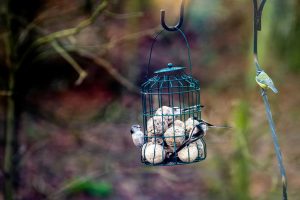
Berry-producing native trees and shrubs are the most valuable bird plants in a UK garden. Hawthorn (Crataegus monogyna) produces heavy crops of red berries from September that feed fieldfares, redwings, blackbirds, thrushes, starlings and waxwings through autumn and winter. Rowan (Sorbus aucuparia) is one of the best small garden trees for wildlife – its berry clusters are stripped rapidly by blackbirds and thrushes in early autumn, often before October. Elder (Sambucus nigra) fruits in August and September and is taken eagerly by many species. Holly berries persist well into winter and provide food for mistle thrushes and fieldfares when other berry sources are exhausted.
Seed-bearing herbaceous plants provide a different food source valued by finches and buntings. Teasel, sunflowers, knapweed, verbascum and any plant left to set seed rather than being deadheaded provides seedheads that goldfinches, greenfinches and sparrows work through from September onwards. The deliberate choice to leave seedheads standing through winter – rather than cutting everything back in autumn – is one of the simplest and most effective changes a bird-friendly gardener can make. Seedheads also provide structural insect habitat, and in frost they produce some of the most beautiful effects a winter garden offers.
Plants for other garden wildlife
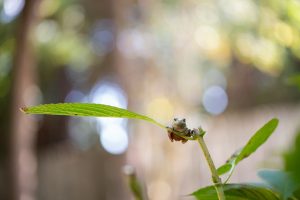
For hedgehogs and other ground-dwelling wildlife, dense low-growing plants that create undisturbed groundcover are more useful than any specific species. Ivy as a groundcover under hedges and at the base of walls provides year-round cover, autumn nectar, winter berries and nesting material – it is one of the most consistently valuable wildlife plants available in any UK garden regardless of size or aspect. Ferns, lungworts and other shade-tolerant ground plants under shrubs create the cool, damp microhabitat favoured by the invertebrates that hedgehogs, frogs and toads feed on. A wildlife pond planted with marginal aquatics – water forget-me-not, marsh marigold, water mint, purple loosestrife – extends the range of invertebrates the planting supports and creates habitat for damselflies, dragonflies and water beetles that appear nowhere else in a typical garden.
Leaving areas of the garden deliberately untidy is as important as what you plant. A pile of logs in a shaded corner provides habitat for stag beetles and wood-boring beetles. A patch of unmown grass left to grow long hosts grasshoppers, slow worms and the ground beetles that are themselves prey for hedgehogs. The wildlife garden requires not just the right plants but the willingness to let parts of it exist for nature rather than for appearance alone.
The highest-value single decision in any UK wildlife garden remains the planting of at least one native tree or a run of mixed native hedging. A mature hawthorn or field maple provides more ecological value than any combination of herbaceous plants – supporting hundreds of insect species, providing nesting sites for birds, offering cover for small mammals and producing blossom and berries across the seasons. Even a small garden has room for one well-chosen native tree, and the ecological return on that investment grows substantially every year as the plant matures.
Buddleja davidii is considered an invasive non-native species in the UK. It spreads freely by seed onto railway embankments, walls and disturbed ground where it outcompetes native vegetation. Deadhead religiously after flowering to prevent seed set, or choose sterile cultivars such as ‘Buzz’ or ‘Miss Molly’ which produce little viable seed. The wildlife value as a nectar plant is genuine and significant, but responsible management of seed dispersal is important particularly in gardens near railways, rivers or open ground.
Share on socials: