At a glance
Winter is the season when garden birds are under the greatest pressure. Natural food sources – insects, berries, seeds in the wild – are at their lowest point, temperatures drain energy reserves rapidly, and the shorter days leave less time for foraging. A well-stocked garden can make a genuine difference to local bird populations through the hardest months, and the birds that find your garden reliable will return year after year and bring others with them. The relationship between a well-managed feeding station and a rich winter bird population builds over seasons, not days.
The most important thing to understand about winter bird feeding is consistency. A garden that offers food unpredictably – stocked for a few weeks then neglected – is less useful to birds than one that offers a modest but reliable supply throughout the season. Birds that have learned to include your garden in their daily foraging route are depending on it being there. The second most important thing is variety: different species eat different foods and feed at different levels, and a garden with two or three feeder types positioned at different heights will attract far more species than one with a single peanut feeder stuck to a fence post.
The best foods for winter birds
Not all bird food is equal, and the cheapest seed mixes sold in supermarkets often contain high proportions of wheat, milo and other fillers that most garden birds will ignore, scattering them to the ground where they rot and attract rodents. The foods below are high-energy, widely consumed and represent the best investment per kilogram for winter bird feeding.
Sunflower hearts are the single most effective bird food available. Stripped of their husks, they are immediately accessible to almost every garden bird species without the mess of discarded shells, and their high fat and protein content provides exactly the energy birds need in cold weather. Suet fat balls are equally valuable – pure animal fat studded with seeds and other foods, they deliver dense calories that birds can convert directly into heat and energy. Both should be the backbone of any winter feeding programme.
Nyjer seed is small, black and oil-rich, and is the key to attracting goldfinches and siskins – two of the most visually striking winter visitors to UK gardens. It requires a dedicated feeder with small ports because the seed is too fine for standard tube feeders. Dried mealworms are essential for robins and blackbirds, which are primarily insectivorous and will not readily use seed feeders – scatter them on a flat surface or on the ground where these ground-feeding species can find them easily. Live mealworms are even more attractive to robins but require refrigeration and are not practical for most gardeners through an entire winter season.
Never offer desiccated coconut, dry bread, or salted foods to birds. Desiccated coconut swells in a bird’s stomach and can be fatal. Bread has almost no nutritional value and fills birds up without providing energy. Salted peanuts, bacon rind and other salty foods cause kidney damage. Stick to purpose-made bird foods and the list above.
Feeders and positioning
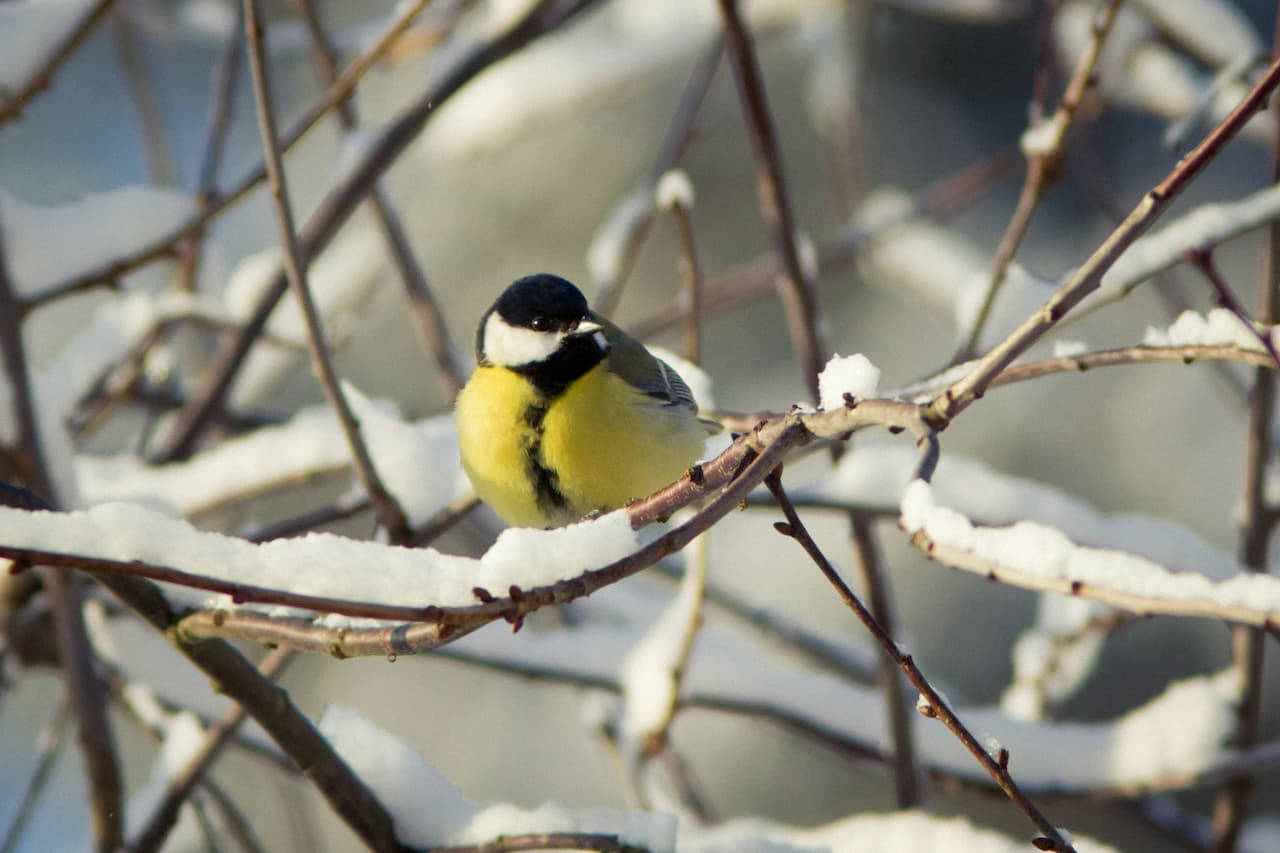
A feeding station with several feeder types at different heights will consistently outperform a single feeder. The reason is that different species are adapted to feed at different levels: blue tits and great tits are agile acrobats that happily use hanging tube feeders; robins and dunnocks are ground feeders that rarely use hanging feeders at all; blackbirds and thrushes feed almost exclusively from the ground or a low flat surface. Trying to serve all these species from a single hanging feeder is not possible.
Feeder placement matters as much as feeder type. Hanging feeders should be positioned where birds have a clear view of approaching cats and other predators – within 2m of a shrub or hedge provides an escape route but far enough from dense cover that a cat cannot spring directly from it onto a feeding bird. Feeders placed directly against a fence or wall produce significantly more window strikes when birds startle – a gap of at least 1m from reflective surfaces reduces this risk. Position feeders where you can see them from inside the house – the enjoyment of watching winter birds is part of the point, and if you cannot see your feeders you are less likely to keep them well stocked.
Water – the overlooked essential
Fresh water is consistently the most overlooked element of winter bird care, and arguably more important than food in cold weather. Birds need water for drinking and bathing regardless of temperature – bathing keeps feathers in condition for insulation, and poorly maintained feathers are a serious risk to a bird’s survival in winter cold. A frozen bird bath is useless. Checking and refreshing the water in a bird bath or shallow dish every morning throughout winter is one of the highest-value actions a gardener can take for local birds.
In hard frost, pour warm (not boiling) water over a frozen bath to thaw it rather than cracking the ice with force, which risks damaging ceramic or stone baths. A tennis ball floating in the water slows freezing slightly on mild frost nights. Some gardeners place a small nightlight candle in a waterproof container beneath a metal bird bath – the minimal heat from the candle keeps water ice-free overnight in all but the most extreme conditions. Glycerine added to the water at a ratio of one tablespoon per two litres is a widely used method – it lowers the freezing point slightly and is harmless to birds, though its effectiveness is limited in very cold conditions.
Position a bird bath in partial shade in winter. A bath in full sun heats up rapidly in summer but in winter the same position means the water stays warmer longer and freezes more slowly on cold nights than one in permanent deep shade. A sheltered spot out of the wind also reduces evaporation and helps birds feel secure while bathing – they are vulnerable at that moment.
Species to expect and what they eat
Understanding which species visit UK gardens in winter and what they need makes it much easier to cater for them effectively. Some species are year-round residents that simply become more dependent on supplementary feeding as natural food dwindles; others are winter visitors from further north and east that arrive in the UK specifically because our relatively mild winters make survival more viable than staying put.
Plants and shelter for winter birds
Feeders and water are the fastest route to attracting winter birds, but the gardens that hold the most species through winter are those that also provide natural food sources and shelter. Berry-bearing shrubs are the most valuable plant group for winter birds – their fruit persists through the coldest months and provides exactly the sugar and energy that thrushes, waxwings and blackbirds need. Leaving seedheads standing through winter rather than cutting everything back in autumn provides finches and sparrows with natural food sources that supplement the feeders.
Dense shrubs and evergreen hedging provide crucial overnight roost sites and daytime shelter from predators. A garden with a section of dense mixed hedging – even a short run of hawthorn, blackthorn and holly – provides far better habitat for overwintering birds than one that is entirely open. Ivy on walls and fences is particularly valuable as a roosting plant: its dense evergreen growth creates a warm, wind-protected microclimate that small birds use heavily through cold nights. Leaving a patch of rough ground or an uncut area of grass over winter provides leaf litter for robins and blackbirds to forage through for invertebrates.
Share on socials: