At a glance
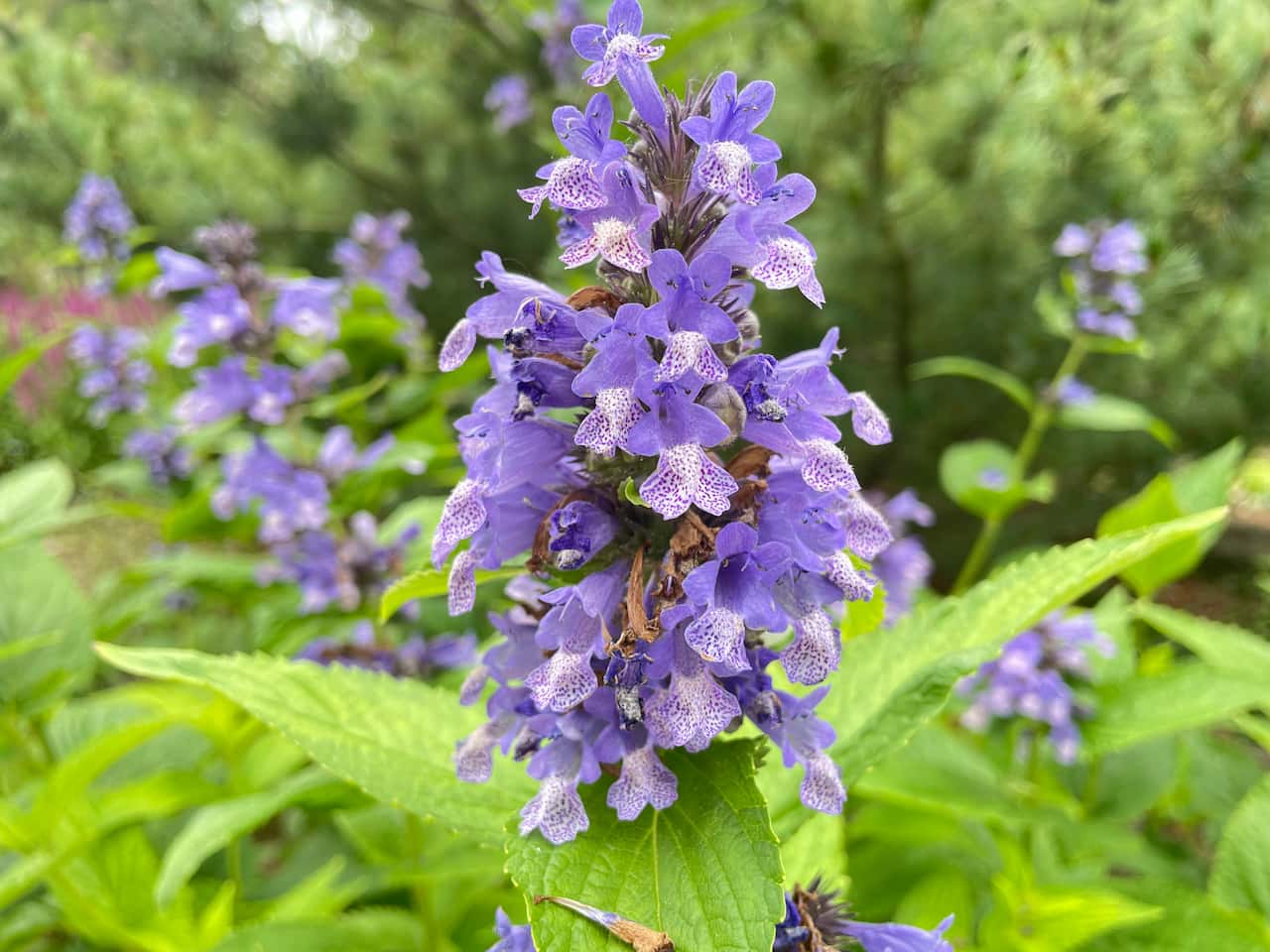
Nepeta – catmint – is one of the most consistently reliable border perennials available to UK gardeners and one that is frequently underused outside of formal rose gardens, where it has traditionally served as the classic edging plant beneath repeat-flowering shrub roses. Its lavender-blue flower spikes appear from May and, with a cut-back after the first flush, continue into October. It tolerates dry, poor soils where more demanding plants fail, it is fully hardy across all UK climates, and it attracts bees in quantities that make it genuinely one of the most wildlife-valuable plants available for the summer garden. For gardeners who want long-season, low-maintenance colour with significant ecological value, Nepeta is one of the best choices in its class.
The word catmint is sometimes used interchangeably with catnip, but these are distinct plants. Catnip (Nepeta cataria) is the species that contains the nepetalactone compound that cats respond to – it is a taller, coarser plant with white flowers and limited ornamental value. The garden catmints used in borders are primarily Nepeta x faassenii and its cultivars, along with the taller Nepeta ‘Six Hills Giant’, Nepeta racemosa and a number of other species hybrids. None of these produces the same intensity of response in cats as N. cataria, though some cats will still roll on them enthusiastically. For gardeners concerned about cat damage, protecting newly planted specimens with wire mesh for the first season until the plants establish is sufficient in most cases.
Best Nepeta Varieties for UK Gardens
The variety choice within Nepeta has expanded considerably in recent years as breeders have developed more compact, more floriferous and more weather-resistant forms. The table below covers the strongest performers for UK garden conditions across the range from compact front-of-border forms to large structural plants.
‘Walker’s Low’ is the cultivar that most gardeners reach for first and with good reason – the name is misleading (it was named after a garden in Northern Ireland, not because of its height) since it grows to a substantial 50cm, but it is the most floriferous and longest-flowering catmint widely available in the UK. From May onwards it produces wave after wave of small lavender-blue flowers on arching stems that form a rounded, sprawling mound. Cut the whole plant back hard to 10cm after the first main flush in late June and it rebounds within three weeks to flower again continuously until the first hard frosts. Its scented grey-green foliage is attractive even when not in flower.
‘Six Hills Giant’ is the choice when scale and impact are the priority. At up to 90cm tall and spreading to 1.2 metres wide in good conditions, it is a substantial border plant rather than an edging plant – it works best in a mid-border position where it can be allowed to billow outward without overpowering smaller neighbours. The deeper lavender colour of ‘Six Hills Giant’ is slightly richer than ‘Walker’s Low’ and the plant produces impressive quantities of flower from June. It tends to need one hard cut-back per season rather than two, and takes slightly longer to rebound after cutting than the smaller cultivars.
Growing Conditions
Nepeta is one of the most undemanding perennials in terms of soil requirements. It performs best in free-draining, poor to moderately fertile soils in full sun – conditions that describe many UK garden borders, particularly those facing south or west. Rich, damp soils produce lush leafy growth with proportionally fewer flowers and a looser, more sprawling habit that may need staking. If your border soil is heavy clay or consistently wet, it is worth improving drainage before planting by incorporating grit and organic matter, or considering growing Nepeta in a raised bed or large container where drainage can be controlled.
The single most important cultural requirement for Nepeta is the hard cut-back after the first flowering flush. This is where most gardeners go wrong – they either skip the cut-back entirely, allowing the plant to look straggly and half-dead through midsummer, or they trim lightly rather than cutting down hard. The correct approach is to cut the entire plant back to approximately 10cm from the ground using shears or a hedging knife, leaving just the basal woody growth. This looks drastic and the plant will appear dead for a week or two, but it then rebounds rapidly and produces a second, often larger flush of flowers from August onwards. Without this cut-back, the plant produces far fewer flowers in the second half of the season.
Seasonal Care Calendar
Plant Nepeta in groups of at least three. A single catmint plant produces flowers but the visual and wildlife impact is small. A group of three ‘Walker’s Low’ planted at 45cm centres creates a substantial cloud of lavender-blue from May and attracts far more bees than any single specimen. The plants will merge to form a continuous mass within two seasons and the combined visual effect is far more impressive than isolated specimens dotted around the border.
Common Problems and Fixes
Nepeta is genuinely disease-free under UK conditions – it is not affected by the powdery mildew, blackspot or rust that trouble some border perennials, and slug and snail damage, while it occurs on young spring growth, is rarely serious enough to threaten established plants. The grey-green aromatic foliage appears to deter some common garden pests, which makes it a useful companion plant near vegetables and soft fruit where aphid and flea beetle pressure can be problematic. Its long flowering season, low maintenance requirements and exceptional value for bees and other pollinators make it one of the most useful plants available to UK gardeners who want a garden that works hard for wildlife without requiring intensive management.
In terms of garden design, Nepeta is one of the most versatile perennials available. It functions equally well as a formal path edging plant – the traditional use along the front of a rose border – and as an informal sprawling component in naturalistic or cottage-style planting. It pairs naturally with grasses, the airy stems weaving through Stipa and Deschampsia to create the layered, movement-filled effect that defines contemporary naturalistic planting. In more formal contexts, three or five ‘Walker’s Low’ planted in a row create a consistent low edge to a border that is far more interesting and wildlife-friendly than box hedging while requiring a fraction of the maintenance. Nepeta also tolerates light shade better than many Mediterranean-origin plants, making it usable in borders that receive sun for only half the day – though flowering will be less dense than in full sun, and the cut-back timing needs to be adjusted to align with when the specific plants in that position have finished their first flush rather than following a calendar date. It combines particularly well with salvias in the mid-border, where the two genera together provide continuous blue-purple colour from May through October.
Share on socials: