At a glance
Aubergines are one of the more ambitious crops for a UK kitchen garden, but the challenge is mostly one of timing and heat management rather than difficulty of cultivation. The plant itself is straightforward to grow – it is a close relative of the tomato and chilli, with similar requirements for warmth, consistent watering and high-potash feeding once it comes into fruit. What distinguishes aubergine from those crops is the length of season it needs. Sown in February or early March into a heated propagator, grown on in a warm greenhouse or polytunnel, and given a long warm summer, an aubergine plant can produce six to twelve fruits before the season ends. Attempted without sufficient heat or started too late, the results are disappointing – small, bitter or simply absent fruit on a plant that never had time to develop.
The crop rewards planning and a little infrastructure investment. A heated propagator for germination and a greenhouse or very sheltered south-facing outdoor position for the growing season are the two things that make the difference between success and failure in most UK gardens. For those without a greenhouse, compact varieties grown in large pots on a sunny, protected patio work well in a good summer – similar in approach to growing tomatoes in containers, but with even more emphasis on warmth.
Choosing a variety
Moneymaker is the most widely recommended variety for UK greenhouse growing – reliable, high-yielding and producing the large, classic purple-black fruits familiar from supermarket shelves. Bonica F1 is an excellent choice for outdoor growing on a warm patio or in a sheltered raised bed, as it is slightly more compact and sets fruit reliably in lower temperatures than many varieties. Fairy Tale F1, with its small, striped fruits produced in large numbers on a compact plant, is the best option for container growing where space is limited. Listada de Gandia is a heritage variety grown as much for its attractive striped purple-and-white skin as its eating quality – the flavour is excellent and the plant ornamental enough to earn its place in a kitchen garden on appearance alone.
Sowing and raising seedlings
Aubergines have the longest growing season of any common UK vegetable crop and must be started earlier than tomatoes or chillies. Sow in February or at the latest early March into individual 7-9cm pots or deep modules filled with a fine seed compost. Sow two seeds per pot and remove the weaker seedling once both have germinated. Aubergine seed needs consistent warmth to germinate – soil temperature of 25-30°C is ideal, making a heated propagator essential for reliable germination in February. Without bottom heat, germination is slow, erratic and often fails entirely in the cool temperatures of a UK home in winter.
Once germinated, grow the seedlings on at a minimum of 18°C – a warm windowsill or heated greenhouse bench. Pot on into 13cm pots once the first true leaves are fully developed, and again into 25-30cm final pots or into greenhouse border soil when the plants are 15-20cm tall. The root system of an aubergine is extensive and the plant needs a large volume of compost to sustain heavy cropping – a plant restricted to a small pot will produce significantly fewer fruits than one given adequate root space.
Growing on – greenhouse vs outdoors
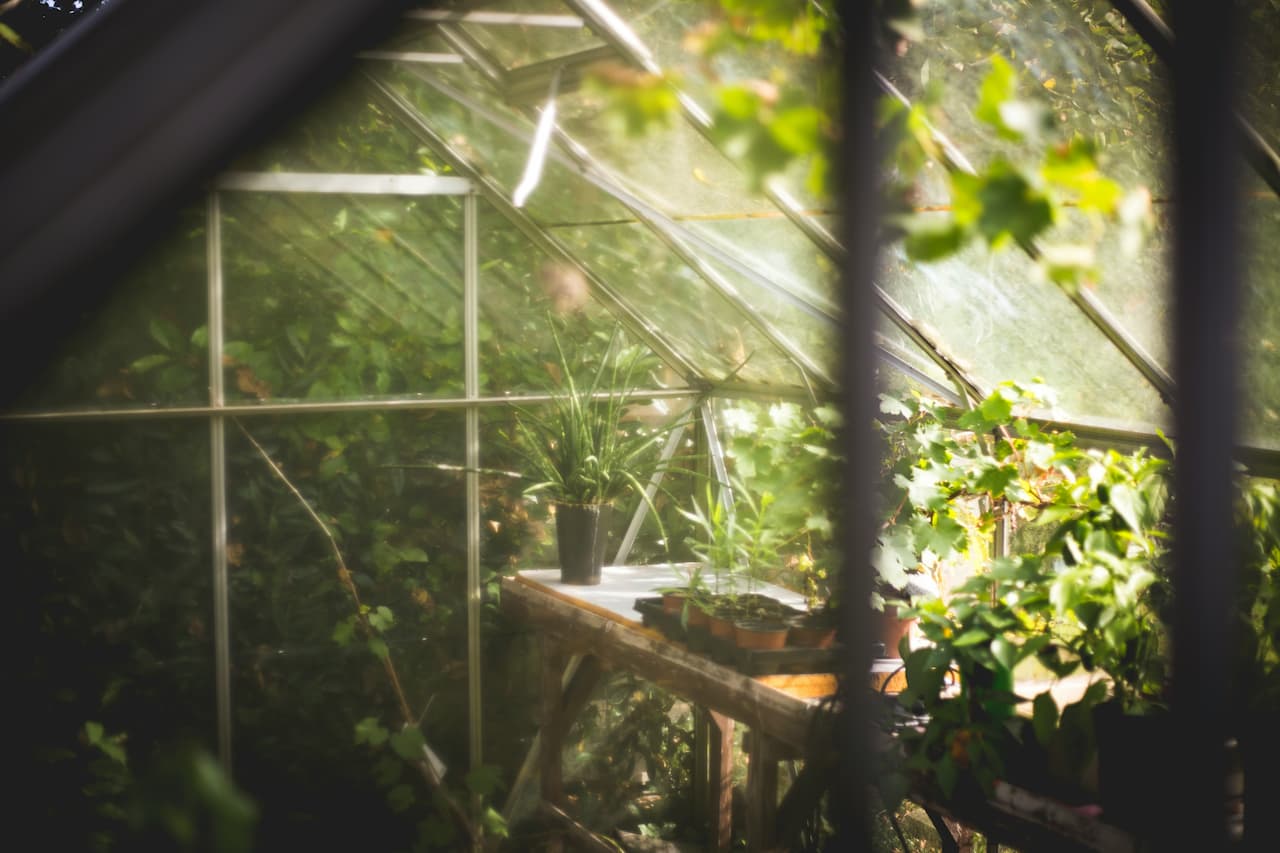
A greenhouse or polytunnel is the most reliable environment for UK aubergines. The consistent warmth, shelter from wind and ability to maintain high temperatures through cool summer periods gives plants the conditions they need to set and develop fruit reliably. Plants grown under glass regularly crop from August through to October and often produce eight to twelve fruits per plant in a good season. Plant at 60cm spacing in the greenhouse border or in large individual containers. Stake each plant with a sturdy cane from the time of planting – the fruiting branches become heavy and will snap without support.
Outdoor growing is achievable in southern England in a warm summer but requires careful site selection. A south-facing raised bed or patio position sheltered from north and east winds, with a dark-coloured container or raised bed wall to absorb and radiate heat, gives the best results. Cloches or fleece over the plants in cool periods help maintain the temperature needed for fruit set. In a typical UK summer, outdoor aubergines produce a more modest crop than greenhouse-grown plants and are significantly more susceptible to a poor season – but a warm July and August can yield a very respectable harvest from a compact variety like Bonica or Fairy Tale. Companion planting with cucumbers in the same sheltered bed uses the space efficiently and creates a microclimate of warmth and humidity that suits both crops.
Seasonal care calendar
Feeding, watering and harvesting
Consistent watering is critical throughout the fruiting period. Aubergines that experience drought stress drop their flowers before they can set fruit, which is the most common cause of poor yields in a UK summer. Water deeply at the roots every two to three days in warm weather, and every day for plants in small containers in hot conditions. A thick mulch of compost around the base of outdoor plants reduces moisture evaporation significantly. For plants in pots, pushing a finger into the compost daily and watering whenever the top 2-3cm feels dry is the most reliable approach.
Feed weekly with a high-potash liquid tomato fertiliser from the time the first flower buds appear. Before flowering, a balanced general fertiliser is more appropriate to support vegetative growth. Remove any fruits that form beyond the target of five or six per plant – limiting the crop in this way ensures the plant can ripen those fruits fully rather than producing many undersized ones. Harvest fruits when the skin is glossy and the fruit feels firm but gives very slightly to gentle thumb pressure. A sharp knife or secateurs cut cleanly through the woody stem – do not pull the fruit. Harvesting regularly encourages the plant to continue setting new flowers.
Mist the flowers in the morning to improve pollination under glass. In a closed greenhouse, pollinators have limited access and aubergine flowers can fail to set fruit without assistance. A light misting of the open flowers with water from a hand sprayer in the morning, or gently shaking the flowering stems to distribute pollen, significantly improves fruit set. This is also useful for outdoor plants during periods of very hot, dry weather when pollinating insects are less active in the heat of the day.
Common problems and solutions
Share on socials: