At a glance
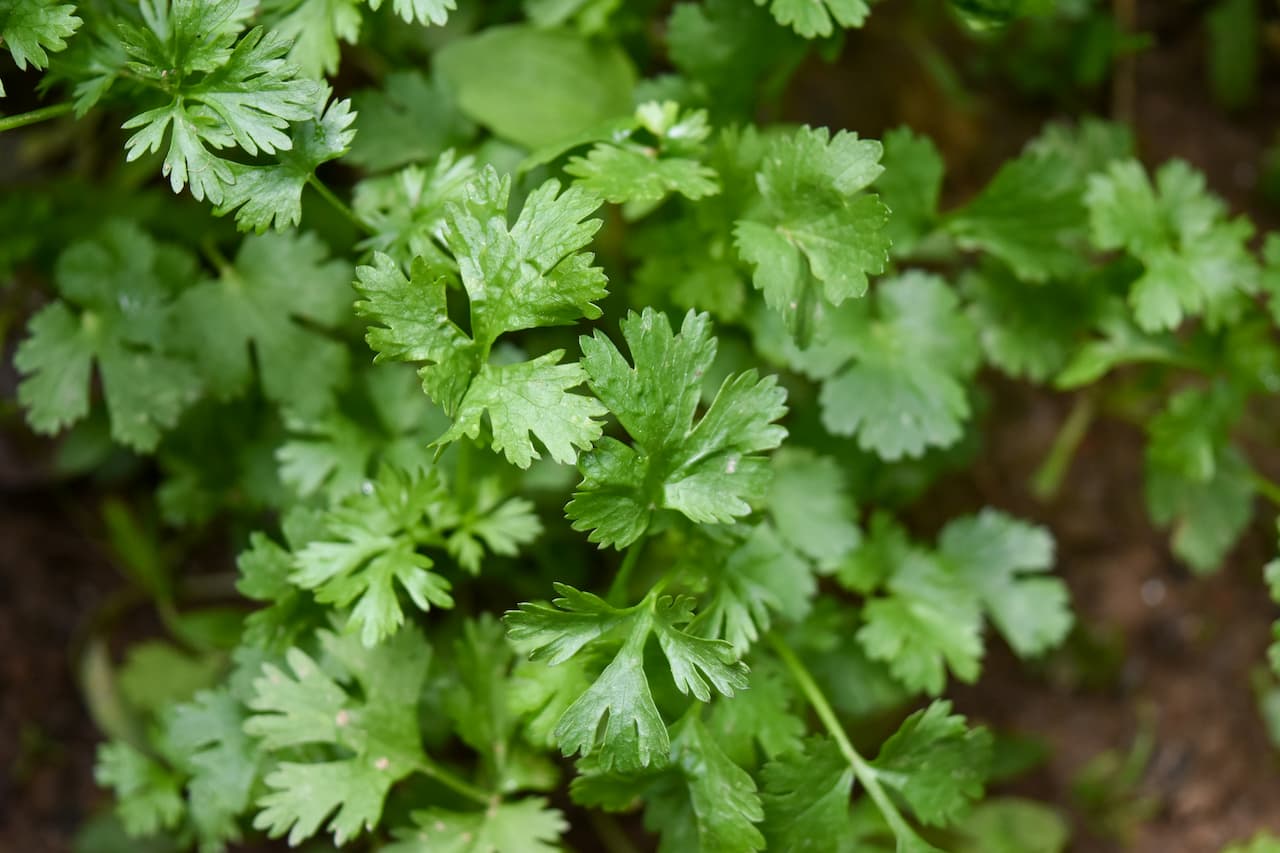
Coriander (Coriandrum sativum) is the herb that most UK gardeners have tried and given up on at least once. The problem is almost always the same: the plant germinates readily, produces a rosette of broad, aromatic lower leaves, and then – within a few weeks and apparently regardless of care – throws up a thin flower stem, the leaves become feathery and sparse, and the usable harvest window closes before you have had a chance to make it worthwhile. This is bolting, and it is the defining challenge of growing coriander in the UK.
The good news is that coriander is not genuinely difficult to grow. It germinates reliably, grows fast and has very few pest problems. The challenge is entirely about understanding and managing its biology rather than any complex care regime. Once you understand what triggers bolting and what slows it down, coriander becomes a productive and satisfying kitchen garden crop – one that can supply fresh leaves from May through to October with very little effort, provided the sowing and timing strategy is right.
Understanding bolting – why coriander does it and how to slow it down
Coriander is a cool-season annual native to the eastern Mediterranean and Central Asia. In its natural habitat it completes its life cycle rapidly: it germinates in autumn or early spring, produces leaves in the cooler months, then switches to flowering and seed production as day length increases and temperatures rise, setting seed before the summer heat arrives. This is not dysfunction – it is precisely what the plant evolved to do. In a UK garden, the long days of May through July trigger this switch regardless of care, and there is no method that reliably prevents a coriander plant from eventually bolting.
What can be done is to slow the process and understand which conditions accelerate it. Four factors trigger bolting in coriander, and managing them extends the leaf-production window significantly.
Long days are the primary driver and cannot be managed away. The practical response is to accept that each outdoor sowing from May onwards will bolt progressively faster as day length peaks, and to work with this by making small frequent sowings rather than expecting one planting to last all season. Root disturbance is the easiest trigger to eliminate – coriander must be sown direct in its final position, never transplanted. Even careful transplanting causes enough root damage to trigger premature bolting. Heat and drought together create the second most powerful bolt trigger: keeping plants consistently moist and positioning summer sowings in partial shade significantly extends the leaf window. Overly fertile soil – particularly high nitrogen – encourages rapid, leggy growth that bolts quickly; moderately fertile soil produces denser, slower-bolting plants.
Never transplant coriander. Root disturbance is one of the fastest bolt triggers. Supermarket coriander pots, tray-grown seedlings and any plant that has had its roots disturbed will almost always bolt within days of being moved. Always sow coriander where it is to grow – directly into its final container or growing position.
How to sow coriander successfully
Coriander seed is technically a small dried fruit containing two seeds. Before sowing, gently roll each round “seed” between your fingers or press it lightly against a hard surface to crack it – this splits the fruit case and exposes both seeds inside, significantly improving germination rates and consistency. Do not crush hard enough to damage the seeds inside.
Sow directly into the final growing position, 1cm deep. For leaf production, sow clusters of three to four seeds every 15-20cm, then thin to the strongest seedling in each cluster once seedlings are 5cm tall. The thinnings are edible – young coriander seedlings are mild and delicious in salads. For seed production, space more generously at 20-25cm to allow plants to develop fully. Germination takes 10-21 days depending on soil temperature. Soil temperature should be at least 10°C before sowing outdoors; below this, germination is very patchy. A soil temperature of around 18°C gives the fastest germination.
April through August is the main outdoor sowing window. Early April sowings in a sheltered position can work but the soil may still be cool, which slows germination. Late April through to early June gives the most reliable germination and the best early-summer leaf harvest. August sowings are worth making: while days are shortening by August, the temperatures are still warm and August-sown coriander often produces usable leaves well into October before cold stops growth. An autumn sowing under a cold frame or cloche in September can extend the season further into November in mild years.
For indoor growing, choose a deep pot of at least 20cm – coriander develops a substantial taproot and does not do well in shallow containers. A south or west-facing windowsill provides sufficient light in spring and summer. Indoor-grown coriander in winter grows slowly in the short days but is unlikely to bolt, which means it stays in leaf-production mode for longer than outdoor summer plants. For compact, continuous indoor supply, sow a new small pot every four weeks on a bright windowsill.
Succession sowing and the leaf vs seed decision
The most important single technique for growing coriander productively is succession sowing – making small sowings every three to four weeks through the season rather than one large sowing. Each outdoor sowing in summer provides a leaf harvest of roughly two to five weeks before bolting ends it. With a succession of sowings running behind it, there is always a fresh batch at peak production as older batches flower. The whole approach is similar to how chervil and other bolt-prone herbs are best managed.
The leaf vs seed decision affects the growing approach. If you want coriander primarily for cooking – the fresh leaves used in curries, salsas, salads and Asian dishes – choose slow-bolt varieties, sow in succession, position in partial shade in summer, and harvest frequently. If you want coriander seeds for cooking (they have a completely different flavour from the leaves – warm, citrusy and spiced – and are a key ingredient in many spice blends), sow a batch in spring or early summer in full sun and allow it to bolt and set seed. The seeds ripen around 90-100 days from sowing. The two uses call for different strategies and it is worth deciding which you are growing for before choosing varieties and planning positions.
Coriander self-seeds generously in sheltered, undisturbed ground once plants have been allowed to set seed. Leaving a few plants to flower and seed at the end of the season, then not disturbing the soil too much over winter, often results in a natural flush of seedlings the following spring. This self-sown crop will not be as dense or as controllable as a succession-sown planting, but it is free and requires no effort. In a kitchen garden where coriander is grown regularly, self-seeding provides a useful early crop before the planned sowings get going.
Varieties worth growing
For most UK gardeners growing coriander primarily for leaves, ‘Leisure’ is the starting point – it is widely stocked, consistently vigorous and genuinely slower to bolt than the unimproved species. ‘Cruiser’ is worth seeking out for container growing; the compact habit makes it a better fit for pots than the taller-growing types. ‘Calypso’ has the useful property of resprouting after being cut back, which gives a second flush of leaves from the same plant – not indefinitely, but it adds a few extra weeks to each sowing. ‘Confetti’ is grown more for its ornamental fine-cut foliage than for kitchen use, though it is fully edible and can substitute for standard coriander leaves. If growing for seed only, the plain species or a quick-bolting variety like ‘Moroccan’ is the best choice – there is no advantage in a slow-bolt variety when the seed is the target.
Growing conditions and care
The interaction between sun/shade and bolting speed is the most counterintuitive aspect of growing coriander, and the most practically useful. For leaf harvest, partial shade is genuinely better than full sun from late May through August. A position that receives morning sun and is shaded by taller plants from midday onwards will keep plants significantly cooler and slow the bolt rate noticeably. This is the opposite of what most herbs want, and it makes coriander a useful underplanting crop beneath taller vegetables or next to north-facing fences that would not suit basil, thyme or sage.
Soil should be fertile and well-drained but moisture-retentive. Coriander is not a drought-tolerant plant – dry soil is a bolt trigger and leaves become yellow and stressed in prolonged dry conditions. Consistent moisture, particularly in warm weather, is one of the more important things you can do to slow bolting and maintain leaf quality. Mulching around plants helps retain moisture and keeps the root zone cool. In containers, check moisture daily during warm spells as pots dry out much faster than in-ground planting.
Harvesting leaves and seeds
Begin harvesting leaves once the plant has developed several mature leaf pairs – usually three to four weeks after germination. Always cut from the outside of the plant, leaving the central growing point intact. Take no more than a third of the plant at any one harvest. Cutting the outer leaves and stems back to about 5cm from the soil surface encourages a second flush of fresh growth. Harvesting regularly and frequently is actively better for the plant than leaving it untouched – it delays bolting by keeping the plant in vegetative mode.
The entire plant is edible. The lower, broader early leaves have the strongest flavour. The upper, feathery leaves that appear as the plant begins to bolt are milder but still usable. The flowers are edible and carry a faint coriander flavour. The green unripe seeds are also usable in cooking and have a milder, fresher flavour than dried seeds; they work well in fresh chutneys and salsas. The dried seeds that form once flowers are pollinated are the coriander spice – warm, citrusy and completely unlike the leaf flavour. Collect seed heads when the seeds start to turn light brown, place into a paper bag and leave in a dry spot for a week or two until fully dry, then shake out and store.
Common problems and solutions
Coriander has very few pest or disease problems once past the vulnerable seedling stage. Almost all difficulties come back to management rather than pest pressure. The same principles that make parsley and chervil manageable under UK conditions apply here: direct sowing, consistent moisture, shade in summer heat, and fresh sowings every few weeks rather than expecting one planting to last.
Slugs and snails are the main predator of young coriander seedlings, particularly in damp conditions. The small seedlings are highly vulnerable in their first two weeks – once the plant has developed several true leaves it becomes less attractive to slugs. Sowing a little more densely than needed and accepting some losses to slugs is a practical approach, and is better than over-thinning a sparse row; alternatively, sowing in containers raised off the ground avoids the issue almost entirely. Aphids occasionally colonise the soft growth but rarely cause serious damage and are dealt with by a blast of water. Powdery mildew can appear on leaves in very dry conditions, showing as a white coating – consistent watering and good air circulation prevent it.
The most common non-pest problem is yellow, drooping leaves on a plant that was growing well. This is almost always a watering issue – either too dry (triggering stress bolting) or too wet in a container with poor drainage (root rot). Check the soil moisture and adjust. A yellow lower leaf here and there is normal as the plant ages, but widespread yellowing signals a watering or drainage problem. The second most common problem is a plant that bolts immediately after germination or very early in its life – this is almost always caused by root disturbance at planting, either from transplanting or from disturbing the root zone during thinning. Thin seedlings by snipping at soil level with scissors rather than pulling, to avoid disturbing the roots of neighbouring plants. A brown or yellow tip to an otherwise healthy leaf is not cause for concern – it is cosmetic damage from wind, frost brushing or handling. Simply harvest up to that point and use the remainder of the leaf.
Share on socials: