At a glance
Gooseberries deserve far more space in UK gardens than they currently get. They produce reliably in partial shade where almost no other fruiting plant performs well. They establish quickly from bare-root stock, require only modest annual care, produce dependably even through a poor UK summer, and a single well-managed bush yields enough fruit for jam, crumbles, compotes and eating fresh every June and July for twenty years or more. Their reputation as unfashionable is almost entirely the product of people eating under-ripe, commercially harvested supermarket gooseberries rather than a fully ripe dessert variety eaten warm off the bush on a summer afternoon.
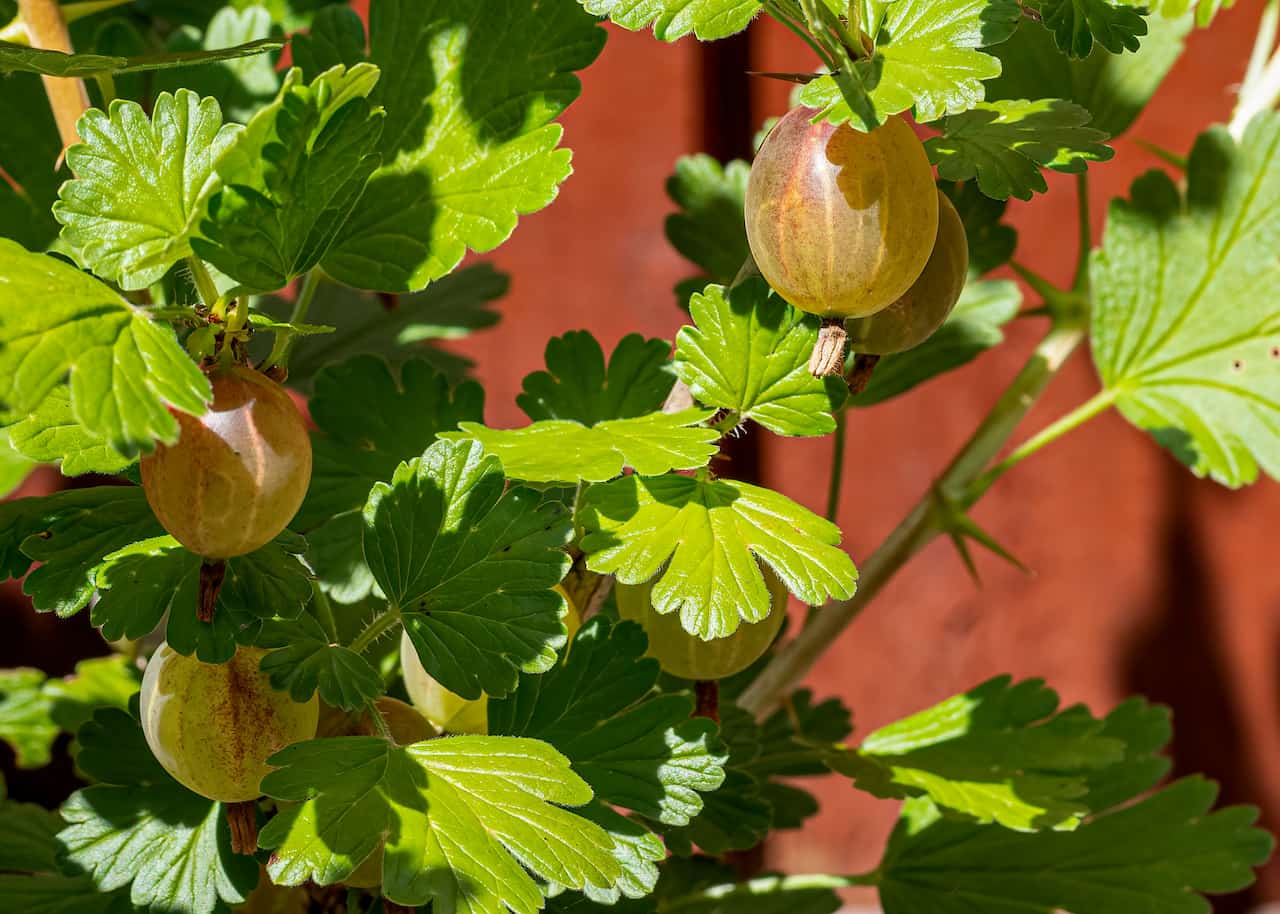
A fully ripe Hinnonmaki Red in late July is sweet, perfumed and juicy in a way that has nothing in common with the hard, sharp berry most people picture when they think of gooseberries. Choosing the right variety and harvesting at full ripeness changes the experience entirely – and a bush planted this autumn will be producing fruit next summer, reliably, for the rest of your gardening life. For other productive soft fruit that works alongside gooseberries through the summer season, our guide on how to grow raspberries UK covers the cane fruit that peaks at the same time.
Best varieties for UK gardens
Gooseberries tolerate more shade than any other commonly grown UK soft fruit. A north-facing bed, the shaded side of a wall or dappled shade beneath deciduous trees all suit gooseberries. They produce less prolifically than in full sun but crop usefully in positions where raspberries, strawberries and redcurrants would give very little. This shade tolerance makes them uniquely valuable in gardens where good sunny spots are already spoken for.
Planting and establishment
Plant bare-root gooseberry bushes from November to March – bare-root is considerably cheaper than pot-grown with no reduction in establishment success. Before planting, remove all perennial weeds from the entire planting area. Once a gooseberry bush is established over couch grass or bindweed, the two become virtually impossible to separate cleanly without lifting the whole plant. Dig in generous organic matter and plant at the same depth the bush was growing at the nursery, with 1.2-1.5m between bushes.
After planting, prune each branch back by half. This feels severe but it is essential – cutting back reduces the demands on the newly establishing root system and encourages the bush to build a strong structural framework from lower down the stems. The bush looks drastically cut back immediately after planting but responds with vigorous new growth from the base the following spring. Resist the temptation to leave the full length of branches intact – you will set the bush back by a full season.
The annual pruning routine
Gooseberries fruit on short spurs on older wood and at the base of the previous year’s side-shoots. Annual pruning maintains the open goblet shape that maximises air circulation – the most important single factor in mildew prevention – and keeps the productive spur systems on the main branches in good order.
Prune in winter between December and February. Remove dead, diseased or crossing branches first. Then shorten all the current year’s side-shoots to 2-3 buds from their base. Reduce the leading shoot on each main branch by a third. Remove anything growing into the centre of the bush to maintain the open structure. An optional summer prune in late June – shortening all new side-shoots to 5 leaves – improves light to developing fruit, reduces mildew risk and makes picking significantly easier and less painful. It takes 20 minutes and is worth doing on any bush that tends towards mildew.
As an Amazon Associate I earn from qualifying purchases. Prices correct at time of publishing.
Feeding and watering
Apply a balanced general-purpose fertiliser along the drip line of each bush in early spring as buds begin to break, then mulch around the base with well-rotted compost or manure – keeping mulch clear of the main stems to prevent rot at the base. A sulphate of potash dressing in late February promotes flower and fruit set. Gooseberries are more drought-tolerant than most soft fruit once established but appreciate consistent moisture during fruit swelling in June and July – water stress at this stage produces small, dry fruits that do not develop their full flavour or size.
Mildew, sawfly and birds
Gooseberry sawfly can defoliate an entire bush within a week if not caught early. The caterpillars begin feeding deep in the centre of the bush where they are invisible from outside, then work outward. By the time outer leaves show obvious damage, most of the bush may already be stripped bare. Check the centre by looking up through the bush from below every week from May – the caterpillars are green and well-camouflaged against the stems but visible on close inspection.
The two harvests from one bush
Gooseberries offer two distinct harvests from a single plant – a feature that makes them uniquely productive per square metre of garden space. In June, thin the developing fruits by removing every other one while they are still small, hard and sharp. These thinnings make excellent gooseberry fool, crumble, jam and compote – their sharpness is an asset in cooked dishes in a way that fully ripe fruit would not be. The thinning operation itself is important: it allows the remaining fruits to receive more light, air and nutrients and develop into significantly larger, sweeter specimens than they would in an unthinned crop.
Leave the remaining fruits on the bush until late July for dessert varieties. A fully ripe Hinnonmaki Red or Captivator softens, deepens in colour and develops a sweetness and fragrance that is genuinely remarkable from a fruit most people have only ever eaten under-ripe from a supermarket. The comparison between an unripe commercial gooseberry and a fully ripe garden-grown dessert variety is as stark as the comparison between a shop tomato and one picked warm from the vine – which is exactly why growing your own matters.
As an Amazon Associate I earn from qualifying purchases. Prices correct at time of publishing.
Share on socials: