At a glance
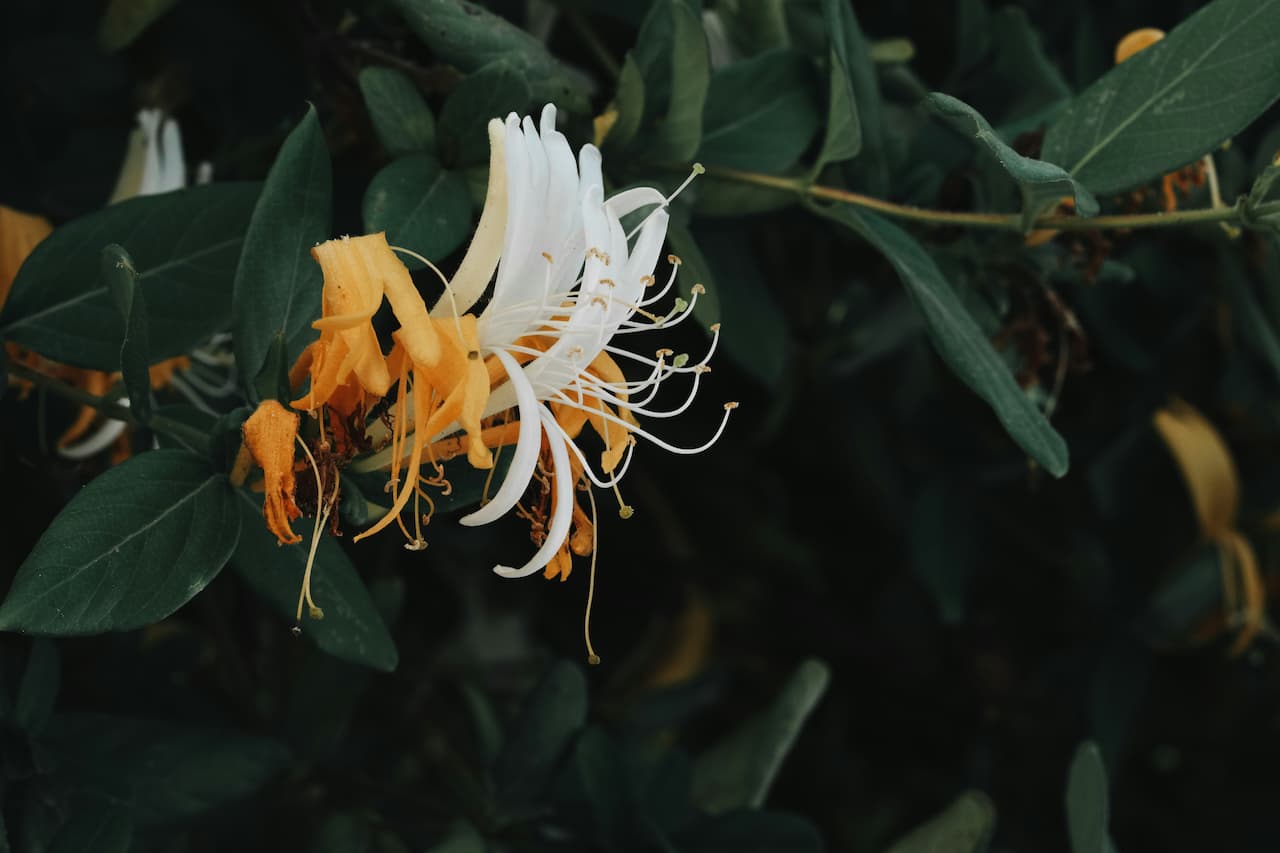
Honeysuckle is one of those plants that seems almost unfair in what it gives back for so little effort. Plant it against a fence or up a trellis and within a couple of seasons it will cover the structure, fill the garden with one of the most recognisable scents in the British summer, and attract moths, bumblebees and hummingbird hawk-moths in extraordinary numbers. Few climbers are as easy to establish, as tolerant of difficult positions, or as rewarding to sit near on a warm evening.
The main challenge with honeysuckle is not getting it to grow but keeping it from becoming a tangled bird’s nest of unproductive old stems. Left entirely unpruned for several years, most climbing honeysuckles accumulate a mass of dead wood at their centre while new growth surges from the top, producing flowers only at the far ends of long stems far above eye level. The remedy is straightforward – a periodic hard prune – and a honeysuckle that receives this treatment will flower more freely and look better for decades.
Best varieties for UK gardens
There are two main groups: climbing honeysuckles (Lonicera) that twine up supports, and shrubby honeysuckles that grow as self-supporting bushes. For most garden situations, the climbing types are what people want – fragrant flowers, wildlife value and coverage of an awkward fence or wall. The shrubby types such as Lonicera nitida are primarily used as hedging and have little floral value.
For scent and wildlife value, the native Lonicera periclymenum and its cultivars Belgica and Serotina are the outstanding choices. Planting both Belgica and Serotina together extends the season from May through to October. Lonicera x tellmanniana is an excellent choice for a shady north-facing fence where fragrant varieties would not flower as freely – it produces spectacular orange-yellow flowers without any scent, but its tolerance of shade is unmatched among honeysuckles.
Planting and position
Honeysuckle is one of the most adaptable climbers for UK gardens. It will grow in full sun to full shade, in most soil types, and in exposed or sheltered positions. The one condition it dislikes is a very dry, impoverished soil with no organic matter – in such a position it will survive but flower poorly and be more susceptible to aphid attack. Before planting, dig in a generous amount of well-rotted compost or manure and water the plant thoroughly both before and after planting.
Plant 30-40cm away from a wall or fence to avoid the dry soil at the base of the structure. Lean the plant toward its support and attach the stems immediately – honeysuckle twines naturally and will find its own way once given an initial direction. Container-grown plants can be planted at any time of year, but autumn and spring are ideal as the soil retains more moisture than in summer. Keep the crown at soil level, unlike clematis which benefits from deeper planting.
Training and support
Honeysuckle twines naturally – it wraps its stems around any support it encounters rather than clinging with tendrils or adhesive pads. This makes it ideal for trellis, wire, pergolas, arches and obelisks. It will also grow happily through a large shrub or small tree, where it can be left entirely to its own devices. On a flat wall with no framework, it will not attach – horizontal wires or a trellis panel must be provided.
In its first season, guide the main stems in the direction you want growth to go and tie them loosely in. After that the plant manages itself, twining around the support as it grows. The only intervention needed is to guide particularly vigorous new growth away from areas that are already covered and toward spaces that still need filling. Once a mature honeysuckle is established over a large support, it becomes almost completely self-managing between its biennial or triennial prunes. On an arch or pergola, honeysuckle typically covers the full structure within three seasons of planting, at which point the scent as you walk through is one of the most memorable experiences a British garden offers.
Pruning – keeping it in check
An unpruned honeysuckle accumulates a dense tangle of old stems that eventually supports very little flower. The solution is a hard renovation prune every two to three years rather than fiddly annual trimming. Annual light pruning – removing the longest trailing shoots after flowering – helps keep the plant tidy between renovation cuts but does not address the underlying congestion.
Annual tidy – after flowering (August-September)
Remove the longest trailing stems that have grown beyond the support. Cut back flowered shoots by about a third to keep the plant compact. This is maintenance only – it does not replace the renovation prune.
Renovation prune – early spring every 2-3 years
In February or March, cut the whole plant back hard – down to around 60cm from the base. This sounds severe but honeysuckle regrows vigorously from old wood and will be back in full flower within two seasons. Remove all the cut stems from the support and compost them.
After renovation – guide and feed
As new growth emerges, guide the main stems back onto the support and tie in loosely. Apply a balanced feed in spring and a high-potassium feed in early summer. The plant will flower again in its second season after renovation and more freely than before.
Care through the year
Common problems
Share on socials: