At a glance
Onions are one of the most practical crops a UK gardener can grow. They are cheap to start from sets, reliable in most well-drained soils, need very little attention through the growing season, harvest in late summer and store for six months or more when properly dried. A single 3-metre row of sets planted in March produces enough onions to supply a household for several months. The flavour and texture of home-grown onions – particularly varieties available only as seed, from sweet Italian reds to sharp pickling types to mild salad onions – is noticeably better than supermarket stock, and the value calculation makes them one of the most cost-effective vegetables to grow.
Onions are a biennial grown as an annual in UK gardens. In their first growing season they develop the bulb that is eaten; if left in the ground through a second winter they would produce flowers and seed. Understanding this biology matters practically: anything that triggers the plant into premature flowering – known as bolting – causes it to divert energy from bulb development to seed production, producing a small, unusable result. Bolt-resistant variety selection and correct planting timing are the main tools for preventing this.
Sets or seed – which to choose
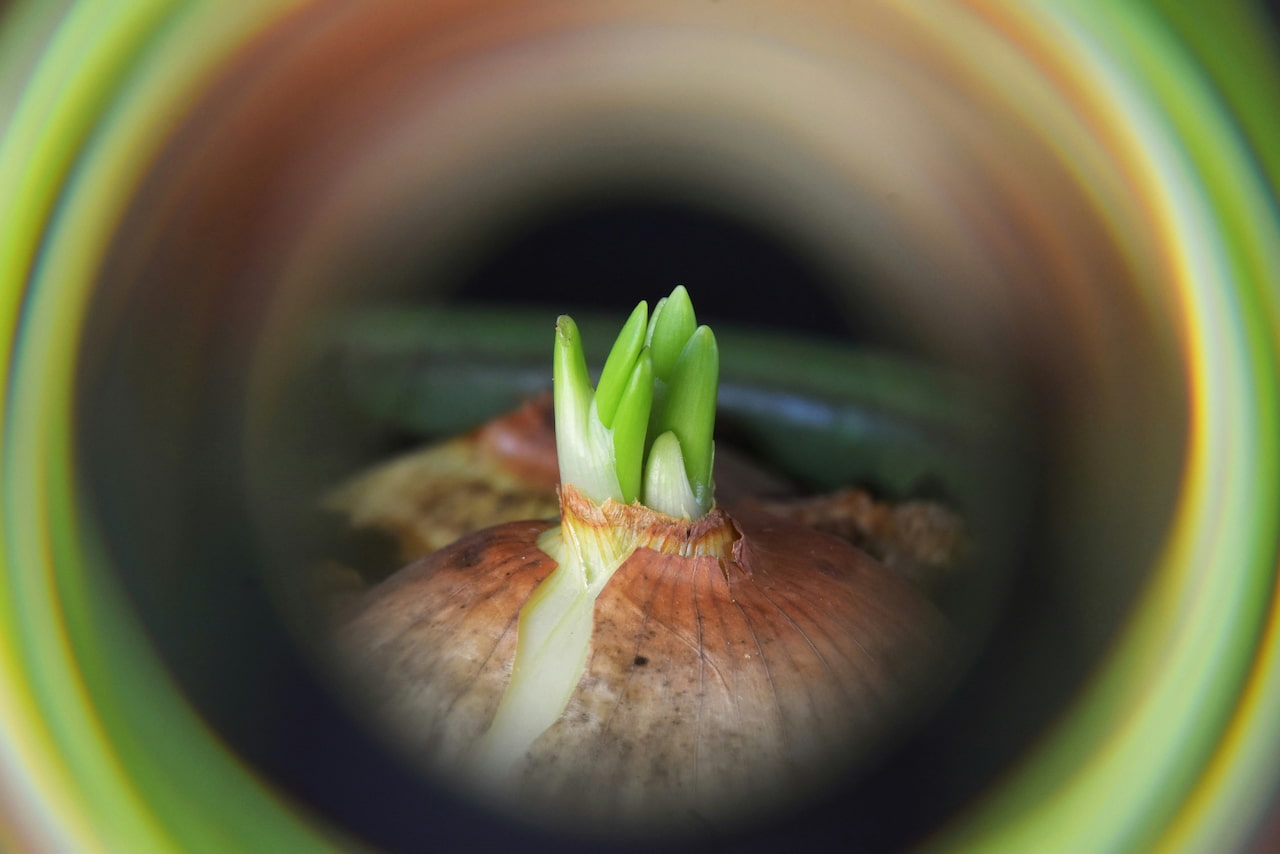
Sets are small, immature onion bulbs grown the previous year and dried for replanting. They are the easiest and quickest route to a crop – push them into prepared ground in March and harvest mature bulbs in late July or August. Most sets sold in UK garden centres are heat-treated during the drying process, which interrupts the flowering trigger and makes them significantly less likely to bolt than untreated sets or onions grown from seed. For most gardeners growing onions for the first time or without a heated greenhouse, sets are the right choice.
Seed offers a wider range of varieties and lower cost per plant, but requires starting indoors in January or February, managing seedlings through the coldest months and transplanting out in March or April. Seed-grown onions take longer to reach harvest – around 90-100 days from transplanting compared to 16-20 weeks from sets – but are often considered superior in quality and are less prone to bolting than untreated sets, because the seedling has not experienced the interruption to its development that triggers the flowering response. For gardeners willing to invest the extra time and propagation space, seed is worth the effort.
Among spring sets, Sturon is the standard reliable brown onion – widely available, consistent yield and excellent storage life of four to six months. Hercules is similarly reliable with good size. Red Baron is the most popular red set variety, producing deep red bulbs with good flavour, though red onions store less well than brown varieties and are best used within two to three months. Centurion F1 is a bolt-resistant F1 hybrid particularly suited to early spring planting. For alliums with mild flavour, Ailsa Craig grown from seed is a classic exhibition and kitchen variety with large, straw-yellow bulbs and outstanding mild sweet flavour.
Autumn planting is a third option. Japanese onion varieties bred specifically for overwintering – including Senshyu Yellow and Autumn Champion – can be planted as sets in October and November to overwinter in the ground and produce a crop in June or early July, several weeks ahead of spring-planted varieties. They are less reliably hardy than spring-planted sets in very cold northern regions, but in most UK gardens represent a useful way to extend the season at the earliest end. They are available from specialist bulb suppliers in August and September and should be planted as soon as stock becomes available.
Soil, site and rotation
Onions need a sunny, open position and a fertile, free-draining soil. They will not produce good bulbs in compacted or waterlogged ground. Their root system is relatively shallow – onions cannot reach moisture from deep in the soil the way tap-rooted vegetables can – which makes them more dependent on surface soil moisture in dry conditions and more vulnerable to weed competition than deeper-rooted crops. A full day of sun is ideal; partial shade produces smaller, less well-developed bulbs.
Prepare the bed in autumn where possible, digging in well-rotted compost or manure and allowing it to consolidate over winter. Onions prefer a reasonably firm seedbed – freshly dug, very loose soil encourages the sets to move around after planting and makes birds’ work easier. Avoid adding fresh manure immediately before planting, as this encourages soft leafy growth rather than solid bulb development and increases the risk of neck rot in storage. If manure is unavailable, a balanced general fertiliser raked into the top few centimetres before planting provides adequate establishment nutrients.
Onions are particularly sensitive to soil pH. They grow best in a slightly alkaline to neutral soil – pH 6.5 to 7.0. On acidic soils, applying garden lime several weeks before planting raises the pH and significantly improves bulb development. Testing soil pH with an inexpensive kit before committing to a bed is worthwhile if previous crops have been disappointing.
Crop rotation is essential for onions. Growing any member of the allium family – onions, leeks, garlic, shallots, chives – in the same ground in consecutive years builds up soil-borne pathogens, particularly white rot (Stromatinia cepivora), for which there is no chemical treatment and which can persist in the soil for 20 years or more. Rotate onions to a different bed each year, returning to the same ground no more than once every three to four years as a minimum.
Planting – timing and technique
Spring sets should be planted from mid-March to mid-April when the soil is workable and beginning to warm. Planting into cold, wet soil in February tends to produce poor results – the sets sit without rooting and are vulnerable to rotting. A soil temperature of at least 7°C produces reliable establishment. Autumn sets go in from October through to November.
Push each set into the soil so that the tip is just visible at the surface – the flat base goes down, the pointed tip upward. Space sets 10-15cm apart within the row, with 30cm between rows. Closer spacing produces smaller bulbs in larger numbers; wider spacing produces larger individual bulbs. For standard kitchen onions, 10cm spacing within a row produces a reliable yield.
For seed-grown onions, sow into modules or seed trays in January or February under cover – a cool greenhouse or heated propagator is ideal. Sow one or two seeds per module at about 1cm depth. Thin to the strongest seedling once germinated. Harden off for 10-14 days before transplanting outdoors in late March or April, once the risk of hard frost has passed. Transplant at 10cm spacing, handle the fragile seedlings carefully and water in well.
Growing and care through the season
Onions need very little attention once established but consistent weeding is the most important maintenance task. Their shallow root system and upright, thin foliage provides almost no competition to weeds, and a weed-infested onion bed produces significantly smaller bulbs than a clean one. Hoe between rows regularly through spring and early summer, being careful not to disturb the surface roots. As the bulbs begin to swell and hoe access becomes more restricted, hand-weed carefully around individual plants. Weeds competing with onions in June and July during the critical bulb-swelling period cause the most damage to final yield.
Watering: onions need consistent moisture during the main bulb-swelling period from late spring through to early July. In a dry spring or early summer, watering once or twice a week at the base of the plants rather than overhead prevents stress that slows bulb development. Stop watering in mid to late July as the bulbs approach maturity – continued watering at this stage encourages soft growth and poor storage quality.
Feeding: a nitrogen-based feed applied in May when plants are actively growing helps build leaf area, which in turn produces larger bulbs. Blood, fish and bone is a reliable choice at about a handful per square metre worked into the surface. Stop all feeding by late July. Continuing to feed after this point encourages soft new growth that will not dry well and significantly reduces storage life – onions from over-fed beds tend to go soft within weeks of harvest rather than lasting months.
Bolting – where a plant produces a flower stem rather than developing a bulb – is the most frustrating problem in onion growing. Once a plant bolts, the bulb it produces will be small and hard in the centre, will not store and should be used fresh immediately. Remove the flower stem promptly and use the onion straight away. The remaining plants in the row will not be affected. Heat-treated sets, correct planting timing and avoiding very small sets significantly reduce the risk. Unusually cold spells after planting in spring can also trigger bolting in some varieties.
Harvesting and storing
Onions are ready to harvest when the tops begin to yellow and fall over naturally – this is the plant’s signal that the bulbs have reached maturity and are entering dormancy. Most spring-planted sets reach this stage between late July and September, with autumn-planted varieties ready from June. Do not rush harvesting: bulbs left in the ground for an extra week or two after the tops fall continue to ripen and develop the dry outer skins that are essential for good storage. In a dry warm summer some gardeners bend the tops over manually to encourage ripening, though this has limited effect compared to simply waiting for natural senescence.
Choose a dry day for harvesting. Loosen the bulbs gently with a fork rather than pulling by the tops, which can separate the neck from the bulb. Lay the harvested onions on the soil surface or on racks in a greenhouse or shed for two to four weeks to cure – the outer skins dry and harden into the papery layer that protects the bulb in storage. In a wet summer, move onions under cover to cure rather than leaving them on the ground where they will re-absorb moisture.
After curing, inspect each bulb carefully. Bulbs with thick, soft necks will not store – use them in the kitchen immediately. Only firm, dry bulbs with tight, narrow, well-sealed necks should go into long-term storage. Store in single layers in trays, in net bags, or strung into traditional onion ropes in a cool, dry, frost-free place with good air circulation. Under these conditions, well-grown and well-cured onions keep for four to six months – through to the following spring in a good season. Check stored onions every few weeks and remove any showing soft spots or mould before they spread to neighbouring bulbs.
Red onions generally store less well than brown varieties and are best used within two to three months of harvest. They are also more susceptible to neck rot. Varieties grown specifically for their storage qualities – including Sturon, Hercules and Jet Set – will reliably last four to six months in good storage conditions. Varieties bred for flavour or exhibition size sometimes sacrifice storage life for other qualities, so it is worth checking variety descriptions when purchasing with long storage in mind.
Pests and problems
Onion white rot (Stromatinia cepivora) is the most serious disease affecting onions in UK gardens. Affected plants show premature yellowing and wilting, and when lifted reveal a fluffy white fungal growth at the base of the bulb. The sclerotia of the fungus persist in the soil for 20 years or more, making the affected ground permanently unsuitable for growing any member of the Allium family – onions, garlic, leeks and shallots included. There is no chemical treatment available to gardeners. Remove and destroy all affected plants and debris immediately – do not compost. The only effective long-term management is strict crop rotation, never introducing infected plants or soil to a clean plot, and sourcing sets and transplants only from reputable suppliers.
Onion fly (Delia antiqua) is a common pest, with the adult fly laying eggs near the base of onion plants in May and June. The larvae tunnel into the bulb and can destroy young plants completely. Covering the bed with fine insect mesh from planting to late June is the most effective preventive. Growing from sets rather than seedlings reduces vulnerability because sets establish quickly and develop tough outer skins before the main egg-laying period. There is no chemical control available to UK gardeners.
Slugs are less troublesome on mature onions than on many crops, but can damage young transplanted seedlings and emerging shoots in spring. Standard slug management – barriers, biological control with Phasmarhabditis nematodes, or iron phosphate pellets – applied around young plants in March and April provides adequate protection during the vulnerable establishment period. Once onion plants have developed several leaves and their outer skins begin to toughen, slug damage becomes insignificant in most garden situations.
Thrips (Thrips tabaci) can cause silvery streaking on onion foliage in hot, dry conditions and, in severe infestations, significantly reduce the leaf area available for photosynthesis, affecting bulb size. They are most active in warm dry summers. Keeping plants well-watered and avoiding water stress during dry periods reduces their impact. In most UK summers thrips are not a serious problem and rarely warrant any action beyond maintaining good growing conditions throughout the season.
Share on socials: