At a glance
Oregano is one of the handful of herbs that genuinely improves when dried rather than losing something in the process. A jar of properly dried home-grown oregano – harvested at peak flavour in midsummer and dried slowly in a warm, airy place – is noticeably superior to anything sold in a supermarket, and the difference in the kitchen is real. It is also among the most forgiving herbs you can grow. It tolerates poor soil, survives drought, asks for almost no feeding, returns reliably from the roots each spring, and once established will be in the garden for a decade or more with minimal intervention.
The main decision when growing oregano is which type to choose, since the flavour, hardiness and appearance vary meaningfully between common oregano and its close relatives. After that, the key management tasks are straightforward: sow seeds on the surface rather than burying them, give the plants a sunny well-drained position, cut back old growth in early spring, and harvest before the flowers open for the most intensely flavoured leaves. This guide covers all of it, from seed to jar.
Choosing which oregano to grow
Several plants share the name oregano and the closely related marjoram, and the common names are used inconsistently both in garden centres and in recipes. It is worth understanding the key distinctions before buying, since flavour intensity and hardiness differ significantly between types.
For most kitchen gardeners the choice comes down to common oregano versus Greek oregano. Common oregano (Origanum vulgare) is the plant sold in almost every garden centre in spring and is perfectly adequate for everyday cooking. It produces a spreading clump of small oval leaves on wiry stems reaching 30-60cm, with pale pink or white flowers from July to October that are highly attractive to bees and other pollinators. The flavour is mild when fresh but concentrates well when dried.
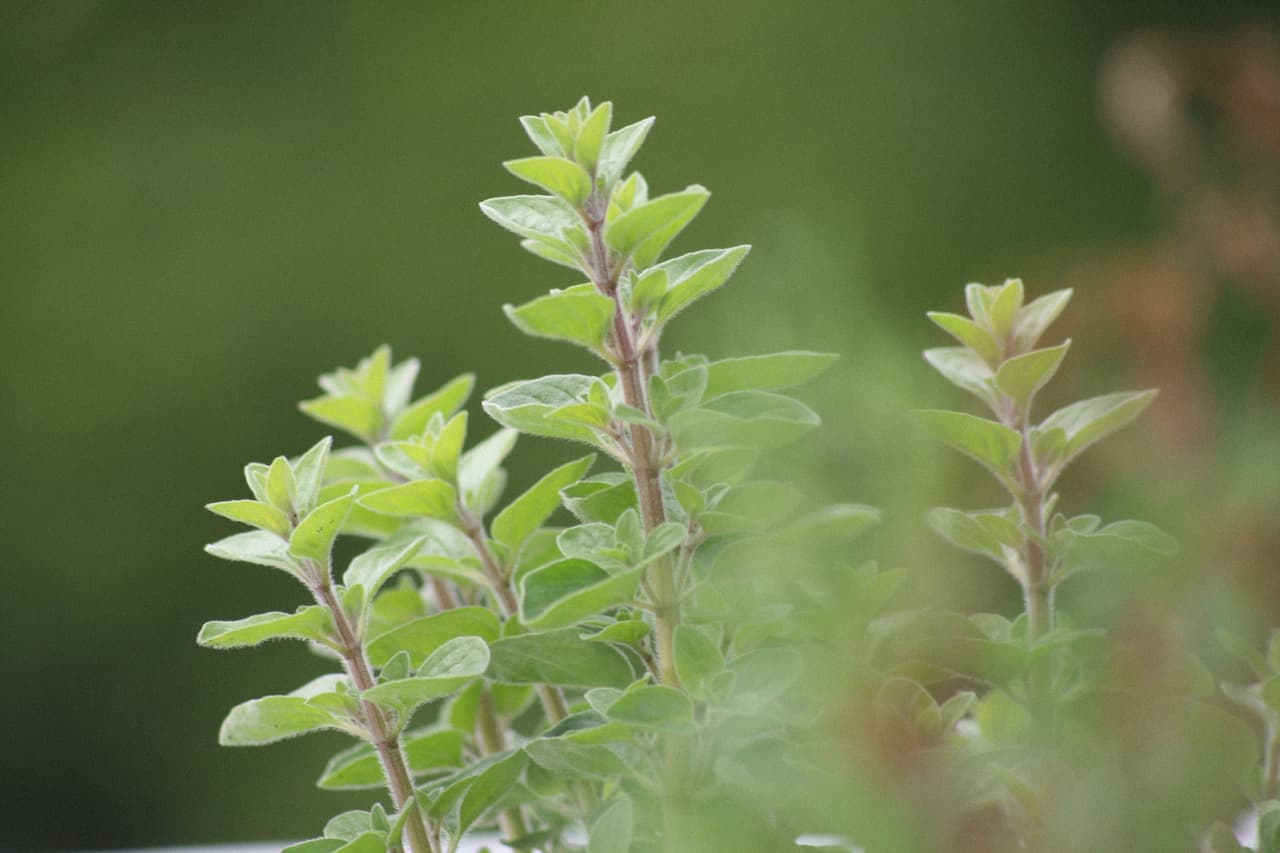
Greek oregano (Origanum vulgare subsp. hirtum) is the variety used in traditional Mediterranean cooking – the one that makes pizza and pasta sauces smell right. The leaves are smaller, thicker, covered in fine white hairs, and the flavour is significantly more intense and peppery than common oregano. It dries exceptionally well. Both are equally hardy in UK conditions, both flower at the same time, and both are grown in exactly the same way. If culinary use is the primary goal, Greek oregano is worth seeking out from a specialist herb nursery – the difference in the kitchen is substantial.
Smell before you buy. Oregano’s flavour varies considerably between seed-raised plants, and many plants labelled simply as oregano in garden centres have been selected for ornamental appearance rather than flavour – including popular varieties like ‘Kent Beauty’. Rub a leaf between your fingers before buying. Strong, peppery, resinous scent means good culinary flavour. Little or no scent means the plant is better suited to the border than the kitchen.
Growing conditions
Oregano’s natural habitat is dry, rocky hillsides in the Mediterranean – poor, alkaline, freely draining soil in full sun. Understanding this tells you almost everything you need to know about growing it well in the UK. The closer you can match those conditions, the more aromatic and intensely flavoured the leaves will be. Paradoxically, oregano grown in rich, fertile soil with plenty of water tends to produce lush, weak growth with diluted flavour – the plant’s survival response to lean, dry conditions is exactly what concentrates the aromatic oils that make it valuable in the kitchen.
In a raised bed filled with free-draining compost and added grit, oregano performs particularly well. The improved drainage replicates its natural growing conditions more closely than heavy garden soil, and the elevated position means roots are never sitting in winter wet. In containers, use a loam-based compost mixed with one part grit or perlite to two parts compost, and ensure the container has drainage holes that cannot become blocked. A terracotta pot in a sunny spot on a patio is close to ideal. The only condition to actively avoid is shade combined with wet soil – that combination produces spindly, flavourless plants and eventually kills them.
Sowing and planting
Oregano can be raised from seed, bought as a young plant, propagated from cuttings, or divided from an existing clump. Each approach has advantages depending on how quickly you want a harvestable plant and whether specific varieties matter.
Sowing from seed is the most economical route and perfectly reliable, but requires attention to one critical detail: oregano seeds need light to germinate and must not be buried. Scatter seeds thinly on the surface of moist peat-free seed compost in small pots or module trays in spring – March to May indoors. Do not cover them with compost. Place in a warm position at around 18-20 degrees or in a heated propagator, and germination occurs within ten to twenty days. Prick out seedlings when large enough to handle and grow on in individual pots before hardening off and planting out after the last frost risk has passed – typically late May to early June. Space plants 30cm apart in their final position.
Do not cover oregano seeds with compost. This is the most common reason sowing fails. The seeds are tiny and require light to trigger germination. Even a thin covering of compost blocks enough light to prevent most seeds from sprouting. Scatter on the surface, press gently to make contact with the compost, and keep moist. That is all that is needed.
Buying a young plant from a garden centre in spring is the easiest and quickest route to a harvestable plant in the same season. A single established plant can be harvested lightly within weeks of planting and will be fully productive from its second year. For specific varieties – particularly Greek oregano subsp. hirtum – specialist herb nurseries are more reliable than general garden centres. Division of an existing clump is the best way to propagate named varieties that cannot be reliably reproduced from seed, and gives an immediately established plant. Lift the crown in early spring or autumn, split into sections each with a good root system, and replant. Stem cuttings taken in early summer also root readily in a gritty compost.
Ongoing care through the year
Once established, oregano is genuinely low-maintenance. The key management tasks are few, but the annual cut-back in early spring is the one that most affects the quality of the harvest. Neglecting it produces increasingly woody, less productive plants over time. The other tasks are minor.
The spring cut-back is straightforward. As new growth emerges from the base in March or early April, cut all the previous year’s stems back close to the ground. The old stems are typically brown, woody and clearly distinct from the fresh green shoots emerging below them. Remove them entirely. The result is a plant that produces a full season of vigorous, leafy, well-flavoured new growth rather than continuing to push a few leaves from the tips of increasingly woody stems. Without this annual renewal, oregano plants become progressively less productive and more difficult to harvest cleanly.
Harvesting and drying oregano
Oregano is harvested from late spring through to early autumn, but the timing within that window significantly affects the quality of what ends up in the kitchen. The concentration of aromatic oils in the leaves is highest just before the flowers fully open – the plant is putting energy into flowering, and the leaves at that point contain the most intense flavour they will have all season. A harvest timed for this moment, typically July in most UK gardens, produces leaves that dry into the best possible culinary oregano.
Dried oregano is genuinely more intense in flavour than fresh – the removal of water concentrates the aromatic oils rather than diluting them. This makes it one of the few herbs where drying is the preferred form for most culinary uses rather than a compromise. The dried leaves can be rubbed between the fingers before adding to cooking to release the oils. Fresh leaves are better used in salads, dressings and dishes where a lighter, more floral herb note is wanted – the raw flavour of fresh oregano is different from the deeper, earthier character of the dried herb.
Common problems and solutions
Oregano is genuinely low-maintenance and largely trouble-free under the right conditions. Almost all of the problems that do arise trace back to either too much water or too little light – the two conditions most at odds with its Mediterranean origins. Pest and disease problems are rare and usually minor when they occur.
Root rot from winter waterlogging is the only genuinely fatal problem oregano faces in UK gardens, and it is entirely preventable with good drainage. If a plant does collapse after a wet winter, cut it back hard and check whether any roots remain firm – occasionally a badly affected plant will regenerate from the base if the crown itself survived. More often it will need replacing. In cold, wet regions or on heavy clay soil, growing oregano in a raised bed or container is the most reliable long-term approach.
Aphids on spring growth are the most common pest, but oregano usually recovers without intervention once natural predators arrive in late spring. A jet of water or a light application of insecticidal soap clears severe infestations on plants intended for harvest. Avoid systemic pesticides on any plant you intend to eat.
Share on socials: