At a glance
December is the quietest month in the UK garden, and for many gardeners it is a welcome pause after the demands of the growing season. Most outdoor work is on hold – the ground is too cold and wet for most cultivation tasks, few crops are growing actively, and the short days and cold temperatures make extended outdoor sessions unappealing. But this quiet period is not entirely without purpose. There is meaningful work to be done in protecting what remains in the garden, carrying out winter pruning while plants are fully dormant, and using the indoor time to plan, order and prepare for the season ahead. The gardeners who emerge in March well-prepared are usually the ones who used December productively.
December is also a month of colour and interest in the garden if you have planned for it. Witch hazel (Hamamelis) produces its spidery flowers on bare stems in the coldest months, hellebores begin flowering from mid-December onward and provide colour for months, and the structural interest of seed heads, bark and evergreen foliage comes into its own when the deciduous framework of the garden is stripped bare. The January gardening guide covers what comes next as the year turns – December is the time to set up for it well.
Vegetable and kitchen garden
The vegetable garden is mostly at rest in December, but there is still work to do. If beds have been cleared after the autumn harvest, now is a good time to dig in well-rotted compost or manure while the soil is not frozen – winter digging incorporates organic matter and allows frost to break down the soil structure, improving it considerably by spring. If you practise no-dig growing, top-dress beds with a 5-10cm layer of compost instead, leaving it for worms to incorporate over winter.
Hardy crops still in the ground in December – kale, Brussels sprouts, leeks, parsnips, winter cabbages and sprouting broccoli – need checking after hard frosts. Kale and Brussels sprouts are very cold-hardy and need no protection in most UK regions, but severe prolonged frost can damage leeks and parsnips. A covering of fleece or straw mulch around the root zone protects the roots and makes lifting easier when the ground freezes solid. Continue harvesting kale, leeks and parsnips as needed throughout December. Last chance in early December to plant garlic cloves if any remain unplanted from the autumn – cloves planted in early December will still establish before the cold shuts growth down entirely.
Under cover, a cold greenhouse or polytunnel often has salad leaves, spinach and winter lettuce growing on slowly through December. Keep ventilating on milder days to prevent the humid conditions that lead to botrytis. Check overwintering tender plants – dahlia tubers in store, canna rhizomes, pelargonium cuttings – for rot and remove any affected material promptly.
Borders and ornamental garden
The main task in the ornamental garden in December is protection. Move tender container plants – tree ferns, agapanthus, large salvias, half-hardy perennials in pots – into an unheated greenhouse, conservatory or against a sheltered house wall. Group containers together and wrap them in bubble wrap or hessian sacking to protect the roots from freezing. In borders, tender plants that cannot be moved – such as a planted-out Canna or a borderline-hardy shrub – benefit from a thick mulch of bark chips or straw over the root zone and a fleece wrap around the top growth.
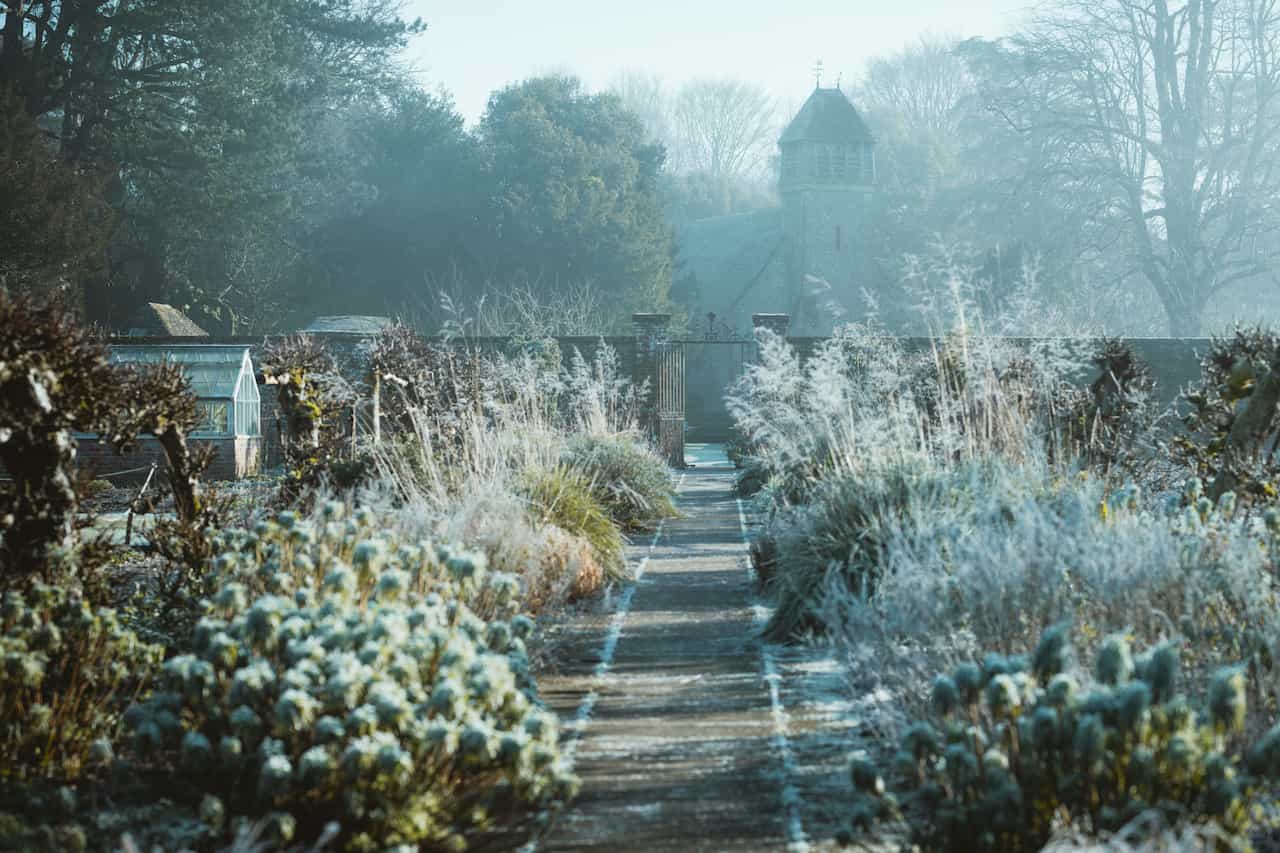
Leave ornamental seed heads and dead stems standing through December – they provide architectural interest in the winter garden, collect frost and snow for dramatic visual effect, and provide habitat for overwintering insects. Many gardeners cut everything back in autumn as a matter of habit, but leaving the structural framework of grasses, sedums, fennel and teasel intact through winter is both aesthetically rewarding and beneficial for garden wildlife. Cut back in late February or early March when new growth is beginning to push through from the base.
Hellebores are entering or approaching their flowering season. Remove any tatty or diseased leaves at the base of the plants now – old foliage can harbour botrytis and removing it allows the emerging flower stems to be seen clearly. Winter bedding planted in October – pansies, violas, cyclamen and ornamental kale – continues to provide colour through December and needs only deadheading to keep it performing. Check stakes and ties on any recently planted trees or large shrubs after strong winds.
Fruit garden and trees
December is a good month for winter pruning of apple and pear trees, gooseberry and currant bushes, and wisteria. All of these are fully dormant and the absence of leaves makes it easy to see the framework of the plant clearly and make informed decisions about which branches to remove. For apples and pears, the aims of winter pruning are to open the canopy to light and air by removing crossing, rubbing or inward-growing branches, and to encourage fruiting spurs by shortening lateral branches to two to four buds.
Plant bare root trees, hedging and soft fruit bushes throughout December while the ground is not frozen. Bare root plants – sold without compost, with exposed roots – must be planted promptly after purchase or heeled in temporarily in a sheltered spot. They establish better than container-grown specimens planted in spring because the roots are in contact with the surrounding soil without a compost-to-soil interface, and the cool conditions promote root establishment before top growth demands water. This is one of the most cost-effective times to add permanent planting to the garden.
December jobs quick checklist
Planning for the year ahead
December is the best month of the year for garden planning – the season is quiet enough to allow unhurried thought, seed catalogues have landed, and any changes made on paper now are easily implemented before the growing season begins. Review this year’s notes on what worked and what did not. Which crops produced abundantly? Which were disappointing? Where did space run short, and where was it wasted? These observations inform the crop rotation plan, bed allocation and seed ordering for next year.
Order seeds early – the most popular varieties sell out by February in a good year. Most seed companies now offer online ordering with immediate despatch, and seeds bought in December are perfectly viable for the following spring. Draw up a sowing calendar that spreads the indoor sowing load rather than concentrating it all in March – peppers, aubergines and chillies can be started in February, tomatoes in late February to March, courgettes and squash not until April or May. Planning this sequence on paper in December prevents the March rush that catches many gardeners out each year. For a complete monthly overview of what to do throughout the year, the lawn care calendar is a useful companion for that specific area of garden management.
Tool maintenance is the other December indoor priority. Clean all tools thoroughly, removing soil and rust with a wire brush, sharpen hoe and spade edges with a file, oil any metal surfaces to prevent winter rust, and check handles for cracks that should be replaced before spring. Clean and disinfect seed trays and pots with a diluted garden disinfectant solution – disease pathogens from this year’s compost are a common cause of damping off in next year’s seedlings if old trays and pots are not properly cleaned. A half-hour spent on tool maintenance in December saves frustration in March when everything needs to be ready at once.
Force bulbs for January and February colour indoors. Amaryllis bulbs potted up in late November or early December typically produce their dramatic trumpet flowers six to eight weeks later – in time for the darkest weeks of January and February. Plant one bulb per 15cm pot, with the top third of the bulb above the compost surface, in a warm bright position and water sparingly until growth appears. Paperwhite narcissus can be started in water alone in a shallow bowl of pebbles, producing fragrant white flowers within four to six weeks of starting – successive plantings from October onward provide a continuous indoor display through the darkest months.
Common December problems
Share on socials: