At a glance
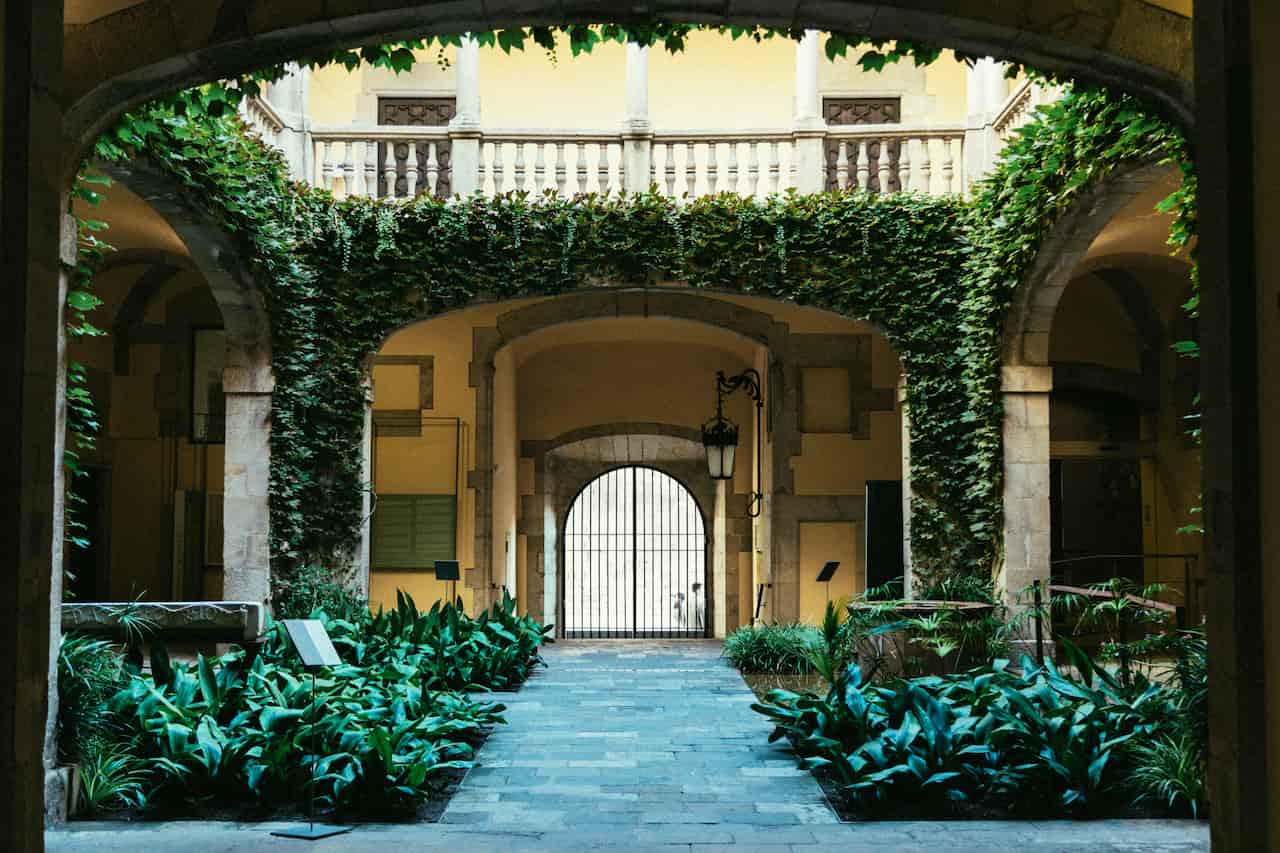
A courtyard garden’s greatest asset is the enclosure itself. The walls and boundaries that would feel restricting in a larger garden become an advantage in a small enclosed space, creating a sheltered microclimate that allows more tender plants than the surrounding area would otherwise support, framing the space as an outdoor room rather than simply a section of garden, and providing vertical surfaces that are arguably more valuable growing space than the floor area they surround. A well-designed courtyard feels generous, considered and private in a way that an open garden of the same square footage rarely achieves.
The design challenge is to make the space feel expansive and intentional rather than cramped and cluttered. This is almost entirely a matter of restraint and focus – fewer things done better, each element earning its place, nothing included merely because it fits. The courtyards that work best have a clear primary purpose, a single focal point, one quality surface material and a planting palette that feels coherent from every angle. Those that feel unsatisfying almost always suffer from the same problem: too many things competing for attention in too little space.
Design principles for courtyard gardens
The single most effective design principle for a courtyard is restraint. One strong focal point – a well-chosen specimen plant in a large container, a small water feature, a piece of sculpture – is more powerful than multiple competing elements. One quality surface material rather than a patchwork of different finishes. One coherent planting palette rather than a collection of unrelated plants assembled over successive seasons. The eye needs somewhere to settle comfortably in a small space, and multiple focal points create visual noise that makes the space feel smaller and more chaotic rather than larger and calmer.
Decide what the courtyard is primarily for – sitting, eating, growing, visual enjoyment – and design the space around that function. Return to that primary function when deciding what to add or remove. Every element should earn its place against that single clear purpose. A courtyard designed for evening entertaining has different priorities to one designed as a kitchen garden or a year-round visual display. Trying to be all three simultaneously produces a space that fulfils none of them particularly well. Vertical planting on walls and fences is the one principle that applies universally regardless of purpose – it adds height, character and growing space without consuming any of the limited floor area.
Light-coloured walls make a courtyard feel twice the size. Dark walls in an enclosed space close it in visually and absorb light that could be reflecting onto plants. Painting walls and fences in off-white, pale stone or soft grey dramatically increases the sense of space and light, and for north-facing courtyards especially makes the difference between a gloomy enclosure and a bright, pleasant outdoor room. Even a single freshly painted wall can transform the atmosphere of an enclosed space at very low cost.
Planting for walls and containers
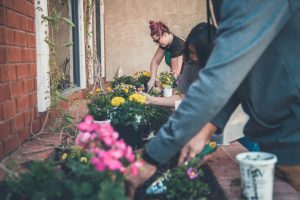
The walls of a courtyard are its primary growing surface. Climbers trained against walls add height, softness and fragrance to what would otherwise be bare masonry, and in a south-facing courtyard the wall warmth enables species that would struggle in an open position. The right climber for each aspect makes the difference between a plant that thrives and covers well and one that sulks and barely grows. Container planting should prioritise architectural plants with strong year-round presence – fatsia japonica, phormiums, bamboo in root-control pots, clipped topiary balls and cones – over seasonal bedding that requires annual replacement and looks poor for half the year.
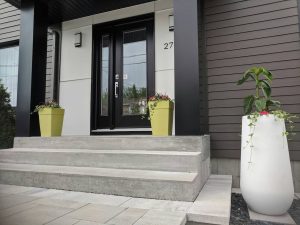
A container of well-grown fatsia provides bold, architectural year-round interest from a single pot. Supplement structural planting with seasonal interest: spring bulbs pushed up through the compost, summer climbers on an obelisk, autumn grasses and late perennials. The same principles that apply to patio container growing apply here – large containers, permanent framework planting, and seasonal additions layered around it. The structural plants carry the courtyard through winter when seasonal planting has gone; without them the space feels bare for five months of the year.
Surfaces and materials
A courtyard is predominantly hard surface by nature, so the quality and character of the paving material matters more than in a larger garden where planting dominates. Natural stone – York stone, limestone, slate – gives the most timeless result and improves with age as it weathers and develops character. Porcelain tiles offer a more contemporary look with lower maintenance and are now available in large format sizes that suit enclosed spaces particularly well. Both are preferable to standard concrete flags in a courtyard where the paving is always visible and the quality of materials is immediately apparent at close range.
Gaps left in paving for planting pockets are one of the most effective ways to soften a hard courtyard. Even small gaps of 10-15cm filled with alpine plants, thyme, sempervivums or ornamental grasses break up the hardness of a paved surface and add character at no extra cost. Avoid using too many different materials – one primary paving material with a complementary edging is far more cohesive than mixing three different surfaces in a small enclosed space where everything is visible simultaneously.
Water features and lighting
A small water feature – a wall-mounted mask with a short fall into a basin, a millstone bubbler, a simple self-contained bowl fountain – adds sound, movement and wildlife value to a courtyard that static planting cannot. The sound of moving water is particularly effective in an enclosed urban space, masking street noise and creating a sense of separation from the surrounding environment. Solar-powered features requiring no mains connection are practical for most courtyard positions and have improved significantly in reliability in recent years. Even a small container pond with a marginal plant or two delivers insect habitat and wildlife interest from a footprint no larger than a large container.
Lighting extends the courtyard into the evening and creates a completely different atmosphere at dusk. Warm white LED lighting – wall lights mounted on the boundary walls, uplighters at the base of specimen plants, simple string lights across the overhead space – transforms a courtyard into an evening destination. Keep lighting warm in tone rather than cool white, and aim for low-level ambient illumination rather than bright functional lighting. The goal is to see the plants and the space without flooding it with working light. A few well-placed uplighters at the base of key plants will do more for evening atmosphere than a dozen underpowered fairy lights scattered at random around the perimeter.
Common mistakes and solutions
Working with difficult aspects
The aspect of a courtyard – which direction its primary wall faces – is the single most important factor in plant selection, and one that cannot be changed. A north-facing courtyard receives little or no direct sun and must be planted accordingly; attempting to grow Mediterranean sun-lovers in deep shade will always fail regardless of soil quality or care. The good news is that shade-tolerant planting includes some of the most beautiful and architecturally impressive plants available, and a well-planted north-facing courtyard is in no way inferior to a sun-drenched one. The key is working with the aspect rather than against it.
Check whether climbing plants will damage your walls before planting. Self-clinging climbers such as ivy and climbing hydrangea attach directly to masonry using aerial roots or adhesive pads. On sound, well-pointed brickwork or rendered walls this causes no damage. On older, repointed or friable mortar, or on timber fences and cladding, removal can pull the surface apart. Climbers on trellis fixed away from the wall surface with spacers are always the safest choice for walls in questionable condition.
Share on socials: