At a glance
I’ve spent the past month testing five cordless pressure washers on the same muddy bike, the same car and the same patch of driveway, from a handheld unit that fits in a bag to a unit that carries its own 15 litre water tank. None of them are trying to replace a mains pressure washer, and that’s the point, they’re built for the gap a mains machine can’t fill: anywhere without a socket nearby.
What separates the five isn’t really the headline bar figure, although that ranges more widely here than it does between corded machines, it’s how each one is designed around actually using it away from home: how it draws water, how long the battery genuinely lasts against the job, and what you’re trading away for the convenience.
How we tested: Each washer cleaned the same muddy bike, the same car, and a timed patch of driveway, drawing water from a bucket every time to keep things fair. We assembled every one from the box ourselves and used every setting it came with, rather than just the one most likely to flatter it.
Quick verdict summary
All 5 cordless pressure washers ranked
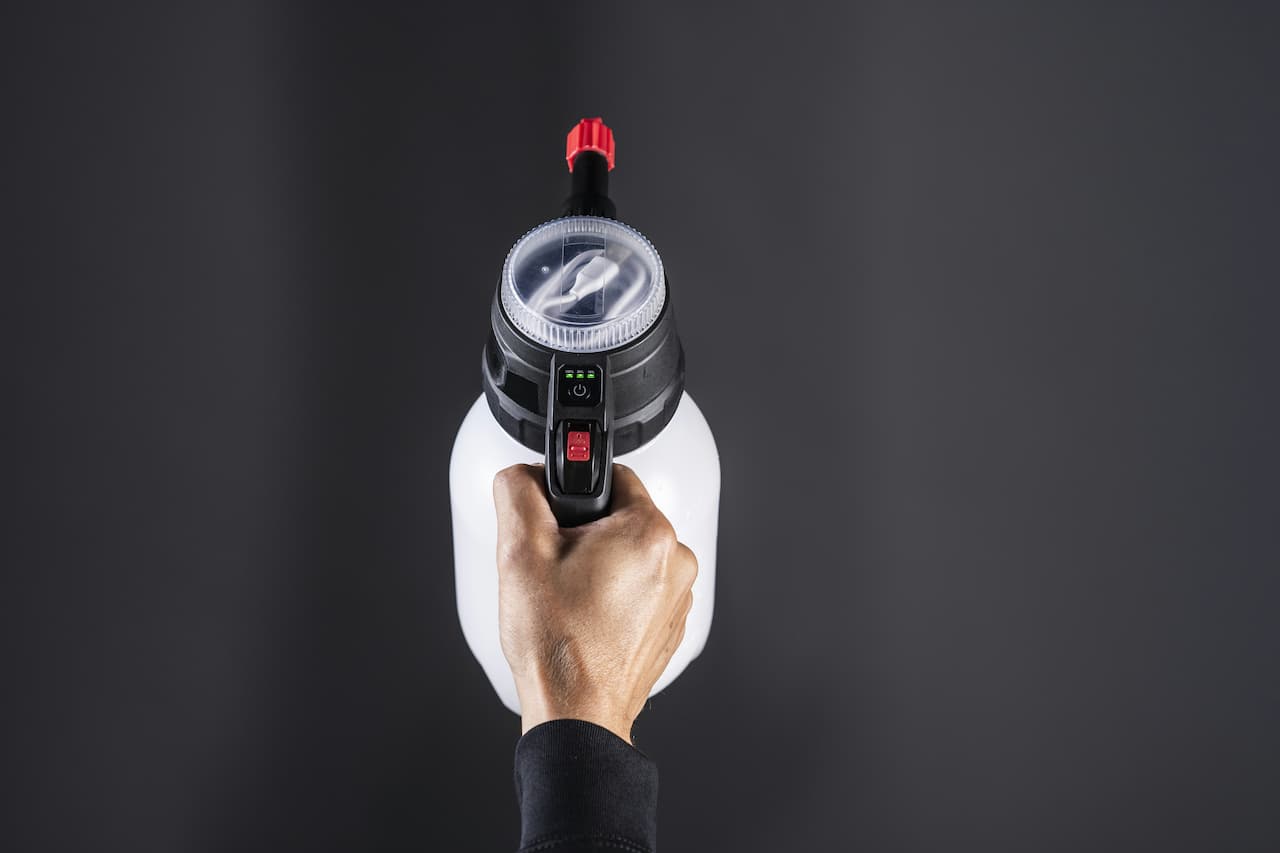
The most powerful handheld here at 56 bar, and the one that draws from absolutely anything, a bucket, a lake, even an empty drinks bottle in a pinch. Setup takes under a minute and there’s no wheels or handle to deal with at all.
Battery life genuinely limits how much you get through in one sitting, 20 to 30 minutes depending on the setting, and it’s the wrong tool for a patio or driveway. For bikes, cars and anything away from a tap, nothing else here matches it for sheer convenience.
As an Amazon Associate I earn from qualifying purchases.
41 bar genuinely feels like real pressure rather than a number on a box, with three selectable power settings and a trigger lock to stop it firing by accident. It made proper work of paving and general garden grime, not just light surface dirt.
The battery was never the limiting factor, the water supply was, a 10 litre watering can lasted barely four minutes and the bottle adapter even less. Bring more water than you think you’ll need and this earns its second place comfortably.
As an Amazon Associate I earn from qualifying purchases.
Built specifically for cleaning somewhere with neither a tap nor a socket, a farm track, a layby, anywhere a mains machine simply can’t go. Two batteries come in the box rather than one, and it’ll run from a tap as readily as a bucket if one happens to be nearby.
The trigger is stiffer than it needs to be and the storage bag doesn’t quite swallow everything, but six spray patterns including one built specifically for wheel arches gave it more range than its modest 22 bar suggested on paper.
As an Amazon Associate I earn from qualifying purchases.
The only one here that removes the water problem entirely, the 15 litre built-in tank means no bucket, no tap, nothing to find when you arrive. The SmartBrush attachment genuinely earns its place rather than feeling like a gimmick.
20 bar is the lowest pressure here, and a full tank pushes the whole unit past 25kg, genuinely heavy for what it is. Brilliant for the specific problem it solves, less so if you’ve got any water source at all nearby.
As an Amazon Associate I earn from qualifying purchases.
Genuinely simple, with a watering lance included alongside the pressure one, more powered watering can than pressure washer at just 0 to 16 bar. Furniture, pots and a detergent-assisted car rinse are all within easy reach.
16 bar is the lowest figure on this list by a clear margin, and it shows against anything with real grime behind it. Honest about its limits rather than overselling itself, which counts for something even at the bottom of this list.
As an Amazon Associate I earn from qualifying purchases.
Head to head comparison
| Model | Max pressure | Weight | Water source | Score |
|---|---|---|---|---|
| Worx Nitro HydroShot WG633E | 56 bar | 1.5kg | Any source | 4.1 / 5 |
| Ryobi 18V ONE+ HP Power Washer | 41 bar | 2.4kg | Bucket / tank | 4.0 / 5 |
| Sealey CP20VPWKIT | 22 bar | 1.6kg | Bucket or tap | 3.9 / 5 |
| Bosch Fontus Gen II | 20 bar | 9.8kg | Built-in 15L tank | 3.9 / 5 |
| Draper D20 | 0-16 bar | 3.3kg | Bucket only | 3.4 / 5 |
What to look for when buying
Bar figures swing far more wildly between cordless washers than they do between mains ones, from 16 bar up to 56 bar across this group. That gap matters more here than it does for a corded machine, since there’s no getting around it with patience the way you sometimes can with a mains unit.
Worth thinking through before you buy:
- Where will you actually use it? If it’s always somewhere with a tap and socket, a cordless washer is solving a problem you don’t have.
- How will it draw water? A built-in tank, a tap connection and a bucket-only design all behave very differently in practice.
- How much battery capacity comes as standard? A second battery is a sensible budget line for several of these.
- What’s the job, really? Bikes and cars are well within reach of all five. A driveway tests every one of them differently.
The water supply runs out before the battery does on most of these. Bring more water than you think you’ll need, a full bucket rather than a half one, and you’ll get far closer to what the spec sheet promises.
Final verdict and recommendations
For most people wanting a genuinely useful cordless washer: Worx Nitro HydroShot WG633E. The most power combined with the most flexible water source of anything here.
For real pressure in a portable format: Ryobi 18V ONE+ HP Power Washer. 41 bar that actually feels like 41 bar, especially useful if you’re already on the Ryobi platform.
For cleaning somewhere with absolutely no water or power nearby: Sealey CP20VPWKIT or Bosch Fontus Gen II, depending on whether you’d rather carry your own water source (Sealey) or have it built in (Bosch).
For light jobs on a budget: Draper D20. Honest about being closer to powered watering than pressure washing, and priced accordingly.
None of these are trying to replace a mains pressure washer, and judged on that basis all five earn their place somewhere. The Worx Nitro HydroShot is the one we’d recommend first, with the Sealey and Bosch Fontus waiting for the specific jobs where there’s genuinely no water or power nearby at all.
As an Amazon Associate I earn from qualifying purchases.
Share on socials: