At a glance
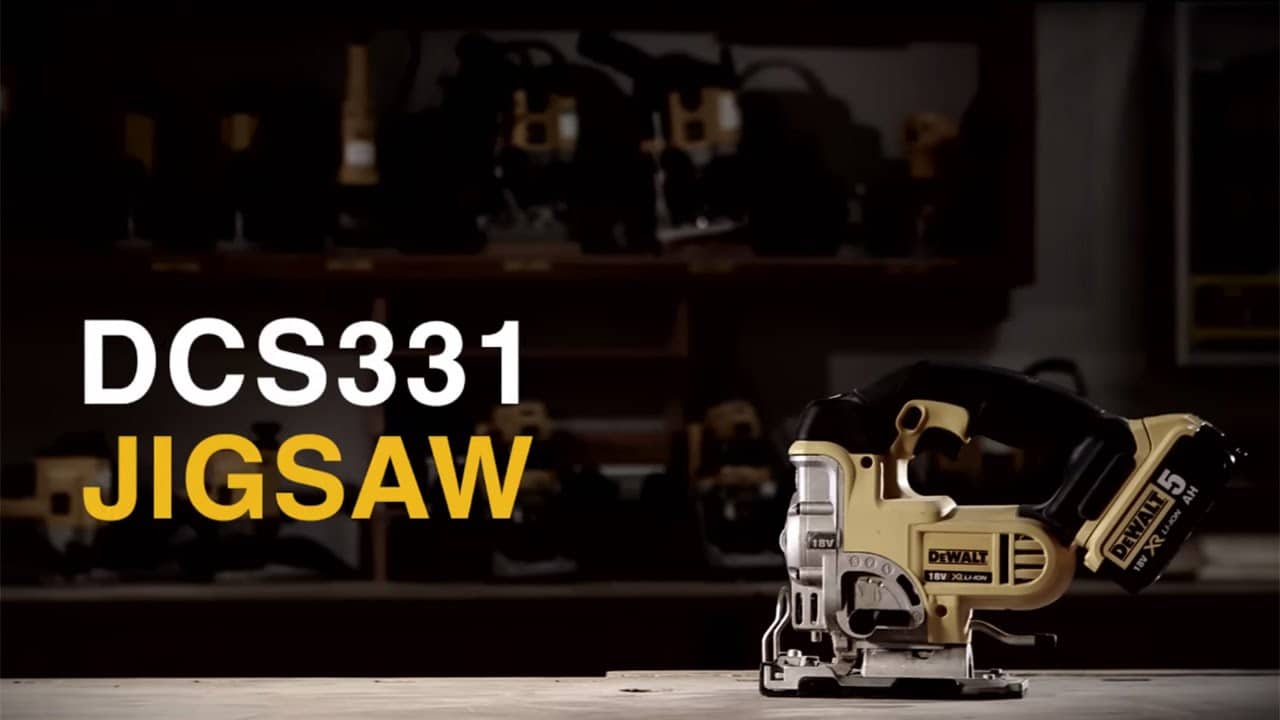
The DeWalt DCS331 is the 18V XR jigsaw sitting at number two in our best cordless jigsaws UK comparison, and its position on the most widely stocked cordless platform in UK retail is a significant practical advantage. XR batteries are available at B&Q, Screwfix and Toolstation as standard, which means a spare or replacement is never hard to find. The DCS331 itself is a capable, well-built tool with a 3,000 spm maximum stroke rate – slightly faster than the Makita DJV182Z at 2,600 spm – and four orbital settings that cover the full range of cutting tasks.
Where the Makita edges it is on cut precision, anti-vibration and the brushless motor’s efficiency. The DCS331 uses a brushed motor, which means slightly lower runtime per charge and a shorter projected motor lifespan under heavy use. For trade professionals using a jigsaw daily these differences are real. For an existing XR platform user who cuts with a jigsaw several times a week, the DCS331 delivers strong performance at a competitive price point.
Overview and first impressions
The DCS331 is immediately recognisable as a DeWalt XR tool – the yellow and black livery, the solid feel and the consistent build quality that DeWalt maintains across its professional range. The grip is well-proportioned with a comfortable rubber overmould, and the balance when fitted with a standard blade is good. At 2.3kg with a 3.0Ah battery it is slightly heavier than the Makita but the difference is not significant in normal use.
The blade change is tool-free via a key-type release lever – faster than a traditional tool-required system but slightly less positive than the Makita’s sliding lever. There is minimal blade play in the holder which keeps cut precision acceptable. The base plate pivots for bevel cuts up to 45 degrees and locks firmly via a thumbscrew. The dust blower is effective and keeps the cut line clear throughout most cutting operations. The four orbital settings are selected by a clearly marked dial with detents at each position.
Build quality throughout is consistent with DeWalt’s XR range – solid housing, firm switches and a gear assembly that feels robust under load. The variable speed trigger is well-calibrated with usable slow-speed control at the bottom of travel, though the very low end is slightly less refined than the Makita’s brushless trigger response.
Specifications and scores
How it performed in our tests
The DCS331 performed strongly across all standard cutting tasks. In 18mm plywood on orbital setting 1, cut quality was very good – the edge was clean and straight with only minor tear-out on the exit face that any fine-toothed blade would minimise further. In 45mm softwood at orbital setting 2, cutting speed was fast and the motor handled the material without strain. In hardwood at orbital setting 0, the cut was clean and the blade tracked the marked line accurately.
The highest stroke rate in the comparison – 3,000 spm against the Makita’s 2,600 spm – translates to faster cutting speed in straight runs through softwood and sheet material. In precision work and curves, the slightly less refined low-end trigger feel compared to the brushless Makita is the more relevant factor. For trade use where speed matters more than finish quality in most cuts, the 3,000 spm ceiling is a genuine advantage.
The DCS331 is compatible with DeWalt POWERSTACK batteries. POWERSTACK batteries charge in around 30 minutes and deliver more consistent power under load than standard Li-ion packs of the same Ah rating. If you are buying batteries alongside the DCS331, a POWERSTACK 5.0Ah is worth considering for sustained cutting sessions where maintaining full speed through thick material matters.
Battery system and runtime
The DCS331 runs on DeWalt’s 18V XR platform – the most widely stocked cordless battery system in UK retail. XR batteries are available at B&Q, Screwfix, Toolstation and Amazon as standard, which gives the DCS331 a practical advantage over rivals on less widely distributed platforms – a replacement battery can be sourced from a high street store in most UK towns without ordering online. This availability advantage is particularly relevant for trade professionals who cannot afford downtime waiting for delivery.
The brushed motor is less efficient than the Makita’s brushless unit, resulting in moderately lower runtime per charge on equivalent tasks. In our testing the DCS331 completed approximately 20% fewer cuts per charge than the Makita DJV182Z on the same 3.0Ah battery cutting the same material. Over a full working day this difference compounds – a brushless motor-equipped jigsaw will typically complete a full day’s cutting on a single 5.0Ah charge where a brushed equivalent may need a mid-afternoon top-up.
Performance and limitations
The DCS331 is a strong performer that sits comfortably behind the Makita DJV182Z in our comparison primarily due to the brushed motor’s runtime and longevity disadvantages rather than any significant cut quality deficit. For XR platform users the choice is clear – the DCS331 is the natural pick and the performance gap versus the Makita is not large enough to justify switching platforms. For buyers starting fresh without existing tools, the XR platform’s unmatched UK retail availability is a genuine practical consideration that adds real value to the DCS331 beyond its headline specification.
- Highest stroke rate in comparison – 3,000 spm
- XR platform – most widely stocked batteries in UK
- Solid build quality throughout
- 4-stage orbital action and effective dust blower
- Brushed motor – lower runtime and longevity than Makita
- Less refined low-speed trigger feel
- No anti-vibration system
- Body only – battery cost for new XR users
- Existing DeWalt XR platform users
- Buyers prioritising battery platform availability
- Trade users wanting fast straight-line cutting speed
- DIY users wanting a capable mid-range jigsaw
- Makita LXT or Milwaukee M18 platform users
- Those prioritising brushless efficiency above all
- Budget-first buyers – better value options exist
Final verdict – is it worth it?
The DeWalt DCS331 is a very capable jigsaw that earns its position as the second-best in our comparison with strong all-round performance and the considerable practical advantage of the XR platform’s UK retail availability. The 3,000 spm maximum stroke rate makes it the fastest cutter in straight runs through softwood and sheet material, and the build quality is consistent with DeWalt’s well-regarded XR standard. For an existing XR user it is the obvious choice.
The comparison with the Makita DJV182Z comes down to brushed versus brushless motor and the associated runtime and longevity differences. For a trade professional using a jigsaw daily, the Makita’s brushless efficiency advantage is real and worth the slightly higher price. For a serious DIY user or a tradesperson who uses a jigsaw several times a week rather than daily, the DCS331’s performance is entirely competitive and the XR battery convenience tips the balance in its favour for anyone already on that platform.
The DCS331 is honest value for a professional-grade jigsaw on the UK’s most convenient battery platform. It is not the top pick in our comparison but it is a strong second and the right choice for a significant proportion of UK tool buyers.
A very capable jigsaw with the fastest stroke rate in comparison and the most convenient battery platform in UK retail. The brushed motor is the only meaningful performance disadvantage versus the class-leading Makita. The clear choice for XR platform users and a strong option for buyers starting fresh who value battery availability.
Share on socials: