At a glance
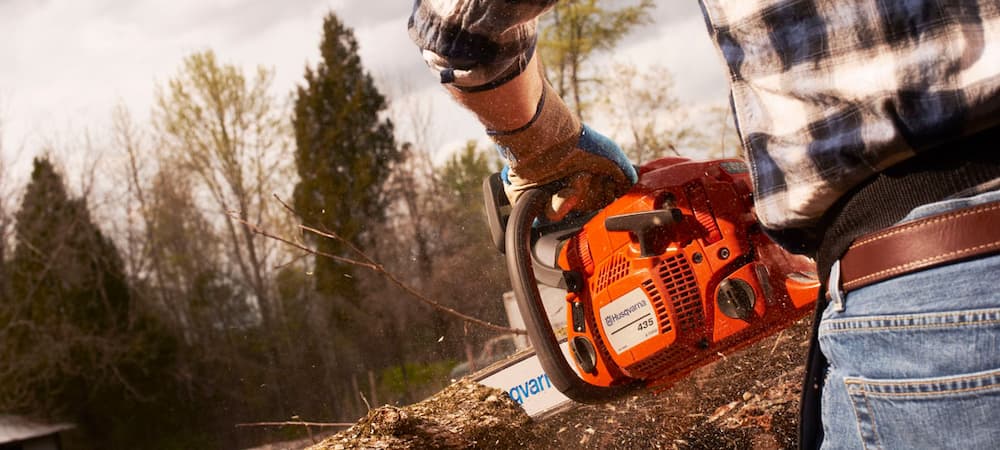
When I picked up the Husqvarna 435 II for the first time I thought it was going to be underpowered for the amount I was expecting it to do. I’ve spent a lot of time with a heavier saw and I’d started to associate power with weight, which is not the same thing and the 435 demonstrates that fairly convincingly. It is 40.9 cc and 1.6 kW in a package that weighs 4.2 kg without the bar and chain, and when I put it to work clearing willow at the edge of the plot, multiple stems and some of the thicker trunk sections, it handled the afternoon without bogging or protesting. That was not what I expected.
The 435 II is the current iteration of a saw Husqvarna has been refining for a while, and the II designation matters because it carries several improvements over the earlier version, most noticeably in the starting system. It comes as standard with a 38cm bar, compatible with anything from 33 to 45 centimetres. The chain is 0.325″ pitch at 1.3mm gauge. It is available through UK dealers including Garden Machinery Direct, Radmore and Tucker, and Red Band, and through some third-party marketplace listings. The 2-year warranty is straightforward. This is not a saw you can buy from Husqvarna’s own direct website in the usual way; you go through a dealer, which some people find inconvenient and others find reassuring.
Overview and first impressions
Husqvarna’s X-Torq engine design claims up to 20% better fuel consumption and up to 75% reduction in exhaust emissions versus equivalent engines without the technology, and two things are noticeable in practice that I attribute to it. The first is that a full tank, 370 ml, lasts longer than I expect. On a working afternoon of mixed cutting, light firewood processing and clearing, I was consistently getting 35 to 40 minutes before the fuel level window showed low. The second is that the engine smells different to older two-stroke saws, less of that sharp petrol fume, and I notice it less at the end of the day, though I appreciate that is not a measurement and not everyone will care about it in the same way.
The saw runs on 50:1 mix, same as any petrol chainsaw at this level. Husqvarna recommend their own two-stroke oil or alkylate pre-mixed fuel, and I use the pre-mix when the saw is going to sit for more than a few weeks because alkylate fuel is more stable and kinder to the fuel system components. The standard advice about not leaving old ethanol-laced pump petrol in the carburettor applies here the same as it does to any petrol chainsaw. The Air Purge system, which removes air from the carburettor and fuel system before starting, reduces the chance of flooding on a cold start and is probably the main reason the 435 II starts as reliably as it does in cold conditions. The oil tank holds 0.25 L and the fuel tank 0.37 L.
Specifications and scores
How it cuts: willow, ash and a full day coppicing
The day I used it hardest was two days coppicing hazel and ash on a managed section of hedgerow. Most of the material was under 15cm, coming at volume, repeated cuts over several hours. The 435 II handled this well; it is light enough that by the end of the first day my arms and shoulders were not the limiting factor, which has not always been true with heavier saws. The LowVib system uses anti-vibration dampeners at 3.1 m/s² on the front handle and 3.8 m/s² on the rear, and over a sustained session I felt this in the difference between how I felt at four o’clock versus how I’d felt after a similar stint with an older saw. Less numbness in the palms.
On larger material I pushed it into ash up to about 14 inches in diameter, cutting from both sides. It did the job. It was not fast and I was aware of the engine working, but it did not stall or choke, and the cuts were clean. I would not buy this saw primarily for processing large-diameter hardwood in volume; the 40.9 cc has a ceiling and sustained work beyond 12 to 14 inches in a single pass runs up against it. For the domestic use cases this saw is designed for, pruning, storm clearance, coppice work, firewood in the 10 to 12 inch range, it has more than enough in it.
The Smart Start system requires noticeably less pull force to start the engine, up to 40% less according to Husqvarna, and this was one of the first things I noticed in comparison with older saws. The combined choke and stop switch means the starting procedure is simpler: you do not have to remember which of several positions to put multiple controls in. The Auto-return stop switch brings the choke control back automatically after starting so there is no risk of flooding the engine by forgetting to move it. On a cold morning in February, which is when I first ran it, this mattered.
The chain speed at maximum power is 17.3 m/s, which is above the threshold that requires a CS39 chainsaw certificate for professional or employed users in the UK. For domestic buyers there is no legal purchase restriction, but if you are employed to use this saw you will need the appropriate training certificate. Most domestic buyers in the garden and smallholding use cases this saw is built for will not need one.
Use alkylate pre-mix if the saw sits for weeks between sessions. Alkylate fuel is more stable than standard pump petrol and will not degrade and block the carburettor the way ethanol-containing pump fuel can. Husqvarna XP+ is the recommended option.
The details that separate it from cheaper saws
The flip-up fuel cap is something I mention because it is not the case on every saw at this level and it makes a real difference when you are refuelling mid-session with gloves on. On the Stihl MS 170 at a similar price point the fuel cap is a screw-type requiring a screwdriver or a coin to open, and I have lost count of how many times I have stood there looking for something to put in the slot while the engine cools. The 435 II opens with a thumb. Small thing, but the kind of small thing you notice every time you use it.
The Air Injection centrifugal air cleaning system removes larger particles before they reach the air filter, which extends the intervals between filter cleans. In dusty or debris-heavy conditions, cutting dry dead wood or working in dry summer grass, this is not nothing. The quick-release air filter needs no tools to remove for cleaning or replacement, and the snap-lock cylinder cover gives access to the spark plug without tools as well. The side-mounted chain tensioner is accessible and straightforward. The transparent fuel window means I can check fuel level without stopping the engine and opening the cap.
The felling marks moulded into the casing are a feature I did not expect to use as much as I do. They give a reference point when making a felling cut, and for anyone who does not fell trees every week, having a visual guide for the cut angle removes a small but real source of uncertainty. The forged three-piece crankshaft is not something you see on cheaper saws at this level and it contributes to the feel of controlled robustness that distinguishes a saw you trust with larger material from one you are never quite sure about.
Performance and limitations
At 4.2 kg bare the 435 II is not the lightest thing in its class, but it is light enough for the jobs it is designed for, and the weight distribution feels better than the spec number suggests when the saw is in use. The ergonomic rear handle with its soft inlay and asymmetric shape is something that sounds like marketing until you have spent four hours with it and then used a different saw for comparison.
The oil pump is fixed flow, not adjustable. On Husqvarna’s professional saws you can adjust the oil output for different materials. On this saw you get the fixed rate, which is appropriate for the range of materials a domestic user is likely to encounter. If you are regularly cutting very resinous or very abrasive wood that requires more lubrication, you will be running this saw at its limits in other ways as well.
The sound level is 102 dB(A) at the operator’s ear and 114 dB(A) sound power. This is a petrol saw and ear protection is not optional. The noise carries further than a battery equivalent and is more fatiguing over a long session.
There is a category of complaint about the 435 generally, primarily from chainsaw forums, that amounts to poor carburetion from factory. The 435 II has addressed the worst of these cold-start issues. On the saw I have used, I have not needed to adjust anything from factory settings, and it has started correctly and run cleanly from the first session. Starting problems that persist in some accounts are nearly always fuel-related, either old ethanol fuel or incorrect mix ratio.
- X-Torq engine: better fuel life and less emissions than equivalents
- Smart Start + Air Purge: reliable cold starts with minimal pull effort
- Flip-up caps, tool-free filter access, snap-lock cylinder cover
- LowVib dampeners: comfortable for sustained coppice and limbing work
- Forged crankshaft and Air Injection: above spec-level build for the price
- Not suited to sustained large-diameter hardwood in volume
- Oil pump fixed flow (not adjustable)
- Dealer-only purchase; not direct ecommerce
- Same ethanol fuel discipline required as any petrol saw
- Domestic and smallholding use: coppice, pruning, storm clearance
- Anyone wanting a petrol saw with better starting and maintenance than entry-level
- Firewood up to 12 inches, mixed-species work, estate maintenance
- Commercial timber processing or professional arborist daily use
- Sustained felling above 14 inches at volume
- Anyone who will not follow the fuel storage rules for any petrol saw
Final verdict: is it worth buying?
The 435 II is a step above the entry-level petrol chainsaw category and it shows. The X-Torq engine, the smart starting system, the Air Injection, the flip-up caps, the LowVib dampeners: none of these is present on the cheapest petrol saws, and having used this alongside less well-specified alternatives I can say the combination is noticeable rather than theoretical. For domestic users who want a reliable petrol saw for mixed garden and smallholding work and want it to start without ceremony and feel comfortable over a full day, this is a strong option.
The limitations are what you would expect at the spec level: 40.9 cc is not a commercial timber saw, and if your work regularly involves sustained large-diameter hardwood processing you will feel the ceiling. The two-year warranty is standard, the dealer-only route for purchase is a trade-off, and the fuel discipline required to keep any petrol saw running correctly applies here in full.
For what it is designed to do, it does it well. The willow session, the coppice days, the ash in the hedgerow: the 435 II turned up each time and got through the work without making me wish I was using something else. That is a reasonable test of whether a saw is worth having.
A well-specified domestic petrol chainsaw with more under the bonnet than the entry-level label might suggest. Smart Start, X-Torq, Air Injection and flip-up caps all make real-world differences. Comfortable over a full day’s coppice work. Know the fuel discipline and know the ceiling; within those bounds, a reliable and capable saw.
Share on socials: