At a glance
I hired a pressure washer for years before I owned one. Every spring the same routine: drive to the tool hire place, queue behind three blokes doing the same job, lug it home in the boot, then take it back the next day smelling of diesel and other people’s driveways. After the third year of that I worked out I’d spent more on hire fees than a decent machine would have cost me outright, so I bought a Kärcher K4 Power Control and have used it every year since.
It sits in the middle of Kärcher’s domestic range, not the cheap one you buy for a bike and a watering can, and not the big one you’d want if you were running a driveway cleaning round. If you’ve got a patio, a path, a shed base or a car that needs more than a hose and a sponge a few times a year, this is the size of machine you want.
Overview and first impressions
The K4 Power Control puts out 130 bar and 420 litres an hour through a water cooled motor, which in plain terms means it can shift proper ground in dirt without overheating itself halfway through a job the way the cheaper plastic pump machines do. It comes with two lances: a Vario Power lance you twist to change pressure, and a Dirt Blaster lance with a rotating jet for the genuinely stubborn stuff.
You don’t get this thing out of the box and start spraying. The wheels, the handle and a couple of brackets all need screwing on, and the instructions are the sort that show you a diagram and assume you’ll work out the rest. I had mine assembled in about twenty minutes, but that was with a screwdriver already in my hand from another job and no real surprises, because I’d watched someone else struggle with theirs the year before and knew what to expect.
Threading the high pressure hose through from the back of the unit to the front trips people up more than anything else, more so than the wheels or the brackets. Give yourself the full twenty minutes the first time and don’t try to do it standing in the rain, which is exactly when I did mine.
Go in soft and work up, not the other way round. I learned on an old fence panel that the hard setting takes paint off as readily as it takes moss off, and the Dirt Blaster lance will cut a circle straight through render or grout between patio slabs if you linger on one spot.
Specifications and scores
How it performed in our tests
The path down to my shed gets full shade for half the day and goes green within a couple of months every winter. Before I owned this machine I’d scrub it with a stiff broom and bleach, which worked for about a fortnight before the algae came straight back. With the K4 on hard and the Dirt Blaster lance, the same path comes up properly clean in under an hour, not just lighter green but back to bare stone, and it stays that way for months rather than weeks because you’re actually shifting the algae rather than just knocking the colour off it.
It’s just as good on block paving. I did the base under my greenhouse last winter, years of compacted mud and moss, and watched it go back to bare concrete in patches I’d genuinely forgotten existed. Decking wants more care: go in on hard the way you would on stone and you’ll strip the grain of the wood along with the dirt, so keep it on soft or medium for anything timber and leave the Dirt Blaster in the bag.
Start every new surface on soft. It only takes a second to twist the lance up to medium or hard once you’ve seen how the surface reacts, and that one second has saved me from a few mistakes I’d rather not repeat.
Pressure settings and attachments
The bit that sold me on this over a cheaper machine is the gun. Twist the Vario Power lance and an LED display on the handle shows you which setting you’re on, so you don’t have to guess or swap nozzles every time you change what the water’s doing. The Dirt Blaster lance is a separate attachment with a rotating jet built in, harder going than the standard lance, and it’ll cut through a patch of moss in seconds.
Between the two lances and the four settings, there’s a combination for almost everything I throw at it. Below is roughly how I split my own use across a typical year.
Performance and limitations
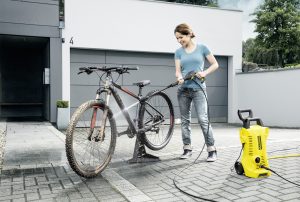
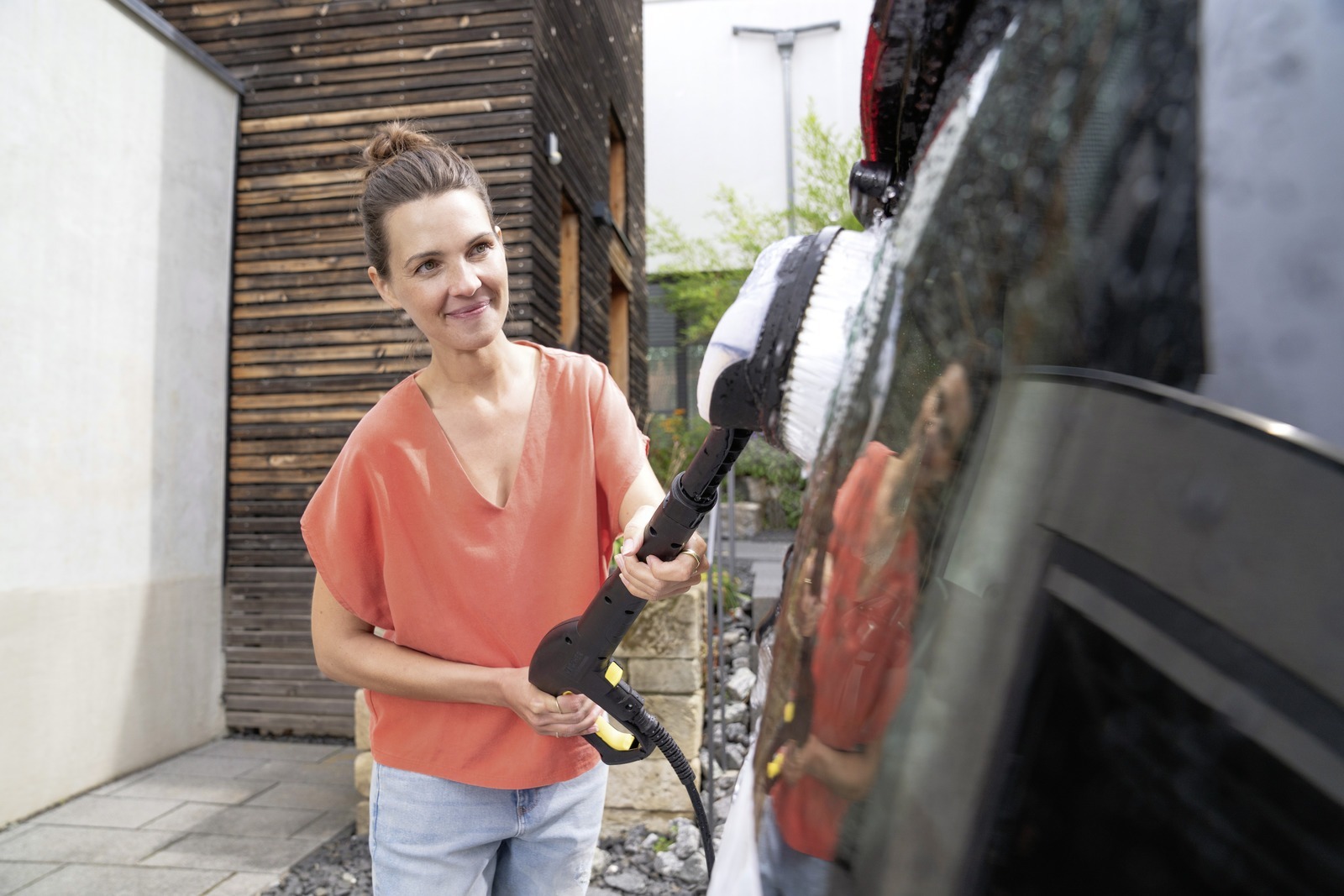
I wasn’t sure this would earn its keep on the car as well as it does on hard standing, but it’s become the thing I use it for most. Soft setting with detergent pulled through the mix function, leave it to sit for a few minutes, then a rinse on medium, and you’ve done a better job than most car washes manage in less time than it takes to drive to one. Wheels are the one place I’ll use a bit more pressure, working the Dirt Blaster round the inside of the arch where brake dust builds up, since that’s tougher and less likely to mind a harder jet than the paint will.
If I’m honest about where this machine falls down, it’s the hose. It’s stiff even after three years of use, and coiling it back onto the hooks at the end of a job takes longer and more patience than the rest of the clean up combined. The Premium version comes with a reel that solves this, and if I were buying again I’d pay the difference just to avoid wrestling with eight metres of awkward hose every single time. The other niggle is storage for the lances themselves: the clips on the unit aren’t generous, and mine have come loose and rattled around in the shed more than once.
- Powerful enough for proper hard standing without overheating
- Pressure display on the gun stops you guessing
- Dirt Blaster lance cuts through ingrained algae fast
- Will draw from a water butt, not just a tap
- Stiff hose with no reel on this version
- Lance storage clips aren’t generous
- Assembly instructions are thin on detail
- Heavy enough that moving it solo upstairs is hard work
- Anyone with a path or patio that goes green every winter
- Anyone who’d rather wash the car at home than pay for it
- Households with proper hard standing to keep on top of
- Anyone with just a bike and the odd garden chair
- Anyone who wants a hose reel included as standard
- Anyone who’ll need to carry it solo into awkward spaces
Final verdict
Three years in, I’d buy it again without much hesitation. It’s earned its keep on hard standing, paving and a fair few cars without a single problem worth dwelling on, and the pressure control on the gun means I trust it on things I wouldn’t have pointed a hired machine at without a second thought.
If all you’ve got is a bike and the odd garden chair, you’re paying for more machine than you need and a smaller Kärcher will do you fine. But if you’ve got proper hard standing to deal with, paths that go green every winter the way mine does, or a car you’d rather not pay someone else to wash, this is the size that earns its keep and then some.
The hose is the one genuine letdown, and if you use a pressure washer often enough to mind coiling it by hand every time, the Premium version with its reel is worth the extra outlay. For everyone else, the standard Power Control does the job and keeps doing it.
A genuinely capable mid-range pressure washer that handles everything from algae covered paths to car bodywork without fuss, let down only by a stiff hose with nowhere proper to put it. Worth the money for anyone with real hard standing to look after.
Share on socials: