At a glance
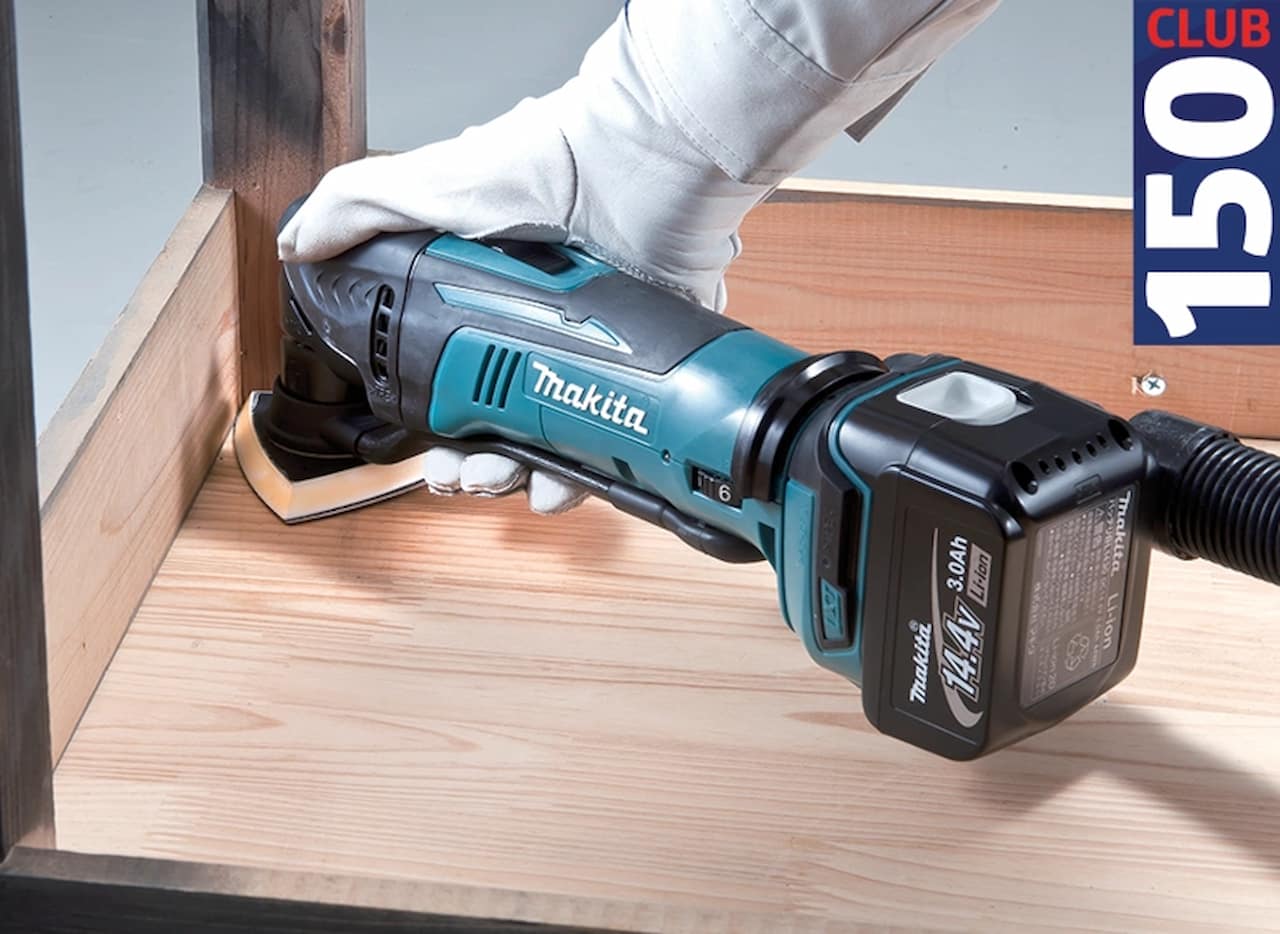
The oscillating multi-tool is one of those workshop tools that seems unnecessary until you actually need one, at which point it becomes indispensable. No other tool can plunge-cut into a skirting board without touching the wall behind it, remove grout from a tiled joint without damaging adjacent tiles, sand into a tight corner that no orbital sander can reach, or cut the end off a nail that is already buried in timber. The Makita DTS141Z is the 18V LXT brushless version, bringing the brushless motor’s advantages of consistent power output and lower heat build-up to a tool that benefits considerably from both.
We tested the DTS141Z across a range of tasks typical of UK renovation and decorating work – undercutting door architraves for new flooring, removing grout from bathroom tiles, cutting through copper pipe in a tight recess, sanding in confined corners and plunge-cutting into floorboards. The question was whether the brushless motor and the LXT ecosystem make a meaningful practical difference, and whether the body-only pricing makes sense against the brushed alternatives available at a lower outright cost.
Overview and first impressions
Out of the box the DTS141Z is noticeably more compact than many oscillating multi-tools. The slim barrel-grip design means it fits into tight spaces more easily than bulkier alternatives, which matters because tight spaces are exactly where multi-tools earn their keep. The build quality is consistent with the wider LXT range – solid, well-assembled and clearly built for sustained professional use rather than the lightweight construction that characterises cheaper oscillating tools in the sub-£60 bracket.
The blade change system uses Makita’s Star Protection lock mechanism, which allows tool-free blade changes without the need for a separate Allen key or wrench. This is a practical advantage during work where blades get changed frequently between tasks – cutting with a segment blade, then swapping to a sanding pad, then back to a scraper – and the mechanism is positive and secure without being stiff or awkward to operate. The variable speed dial runs from 6,000 to 20,000 oscillations per minute and the settings click firmly into place rather than being a continuous sweep, which makes repeating a previously effective speed setting straightforward.
The DTS141Z is sold body only. An 18V LXT battery and charger are required separately. For buyers without existing LXT batteries, budget an additional £60-80 for a 5.0Ah battery and fast charger. Existing LXT users will find the battery situation a non-issue – the DTS141Z is compatible with every battery in the 275+ tool LXT range.
Specifications and scores
The headline specification on an oscillating multi-tool is the OPM range – oscillations per minute – and the DTS141Z’s 6,000 to 20,000 OPM range covers everything from slow careful work in delicate materials to fast aggressive cutting in timber. The oscillation angle of 3.2 degrees is at the wider end of the range for this class of tool, which gives slightly faster stock removal in cutting applications at the cost of slightly more vibration at maximum speed compared to tools with tighter angles. For renovation and DIY use this is the correct trade-off – speed and versatility over the very fine control needed in specialist joinery applications.
How it performed in testing
Undercutting door architraves and door linings for new flooring is one of the most common renovation tasks where a multi-tool proves its value. With the DTS141Z set to around position 3 on the speed dial and fitted with a segment blade, the cuts were clean and consistent. The compact head allows the tool to sit flat on the new floor surface while cutting, giving an accurate undercut depth without marking the floor. This is the task that sells the multi-tool concept to most UK homeowners and the DTS141Z handles it as well as any tool in this class.
Grout removal from ceramic bathroom tiles is a more demanding application. The DTS141Z maintained a consistent speed under load without the slowdown that characterises brushed multi-tools when the blade begins to bite into harder grout. The brushless motor’s ability to maintain speed under varying load is the single most useful characteristic in grout work, where pressure and resistance fluctuate constantly as the blade moves along the joint. Vibration is noticeable in this application – it is unavoidable in grout removal work regardless of the tool – but the DTS141Z’s rubberised grip absorbs a reasonable proportion of it.
Blade compatibility tip. The DTS141Z ships with a universal blade adapter that accepts blades from other manufacturers with a different mounting system. This is a genuine practical advantage – the wide ecosystem of third-party blades for oscillating multi-tools is available, not just the Makita-branded accessories. Check compatibility before purchase but in most cases the universal adapter does the job.
Battery and runtime
The DTS141Z runs on Makita’s 18V LXT platform, which gives access to the full range of LXT batteries from the compact 2.0Ah through to the high-capacity 6.0Ah. For multi-tool work, battery runtime is a different calculation than for a drill or saw – the tool is not running continuously and the motor rarely runs at full load for extended periods. On a 5.0Ah battery a typical renovation session involving undercut work, some grout removal and sanding will run for a full day without the battery running flat.
Performance and limitations
The DTS141Z performs very well within the scope of tasks an oscillating multi-tool is designed for. The brushless motor advantage is most evident in sustained tasks – grout removal, extended sanding sessions, repeated plunge cuts – where a brushed motor would show progressive speed reduction and heat build-up. The DTS141Z runs cool and maintains consistent speed throughout, which translates directly into more consistent cutting and finishing results.
The limitations are inherent to the multi-tool format rather than specific to this model. Oscillating multi-tools are slow cutters compared to purpose-built saws – they are designed for precision and access rather than speed. Anyone expecting a multi-tool to replace a circular saw or jigsaw for general timber cutting will be disappointed regardless of the model. The DTS141Z works with the format’s strengths rather than overcoming its fundamental constraints, and buyers should have realistic expectations about what any oscillating multi-tool can and cannot do before purchase.
- Brushless motor maintains consistent speed under load
- Compact and light at 1.3kg body only
- Tool-free blade change with universal adapter included
- Full LXT compatibility across 275+ tools
- Body only – significant added cost without LXT batteries
- No blades or accessories included in the box
- Inherently slow cutter compared to dedicated saws
- Vibration noticeable in grout removal applications
- Existing LXT users adding a multi-tool to their kit
- Renovation and decorating work in UK homes
- Flooring installers needing accurate undercut capability
- Tiling and bathroom renovation tradespeople
- New buyers without LXT batteries – total entry cost is high
- Occasional users who need a multi-tool a few times a year
- Anyone expecting the speed of a saw for general cutting
Final verdict – is it worth it?
The Makita DTS141Z is a well-made, compact brushless multi-tool that performs to a high standard across the tasks an oscillating multi-tool is designed for. The brushless motor is the key specification advantage – consistent speed under load, lower heat build-up and a longer service life than the brushed alternatives available at lower prices. For renovation and decorating work in UK homes the combination of undercut capability, grout removal performance and detail sanding makes this a versatile and reliable addition to any toolkit.
The body-only pricing is the main barrier for new buyers. Added to the cost of LXT batteries and a charger, the total investment is significant. For existing LXT users that calculation is straightforward – the DTS141Z is simply the correct multi-tool choice for the platform, and the brushless advantage over cheaper brushed options justifies the price premium. For those building a cordless toolkit from scratch, the decision depends on whether LXT is the platform being built around and how frequently the multi-tool will be used.
For its intended user – an LXT owner who needs a capable, reliable multi-tool for renovation and decorating work – the DTS141Z earns a clear recommendation. It does exactly what it promises, quietly and without drama, which is precisely what you want from a multi-tool that gets picked up for the tricky jobs no other tool can handle.
A compact, brushless multi-tool that handles the precision tasks no other tool can manage. The LXT platform advantage is real and the brushless motor makes a tangible difference in sustained use. Body-only pricing limits the audience to existing LXT users, but for them it is the clear choice.
Share on socials: