At a glance
The Owl Intuition is a clamp-on whole-home electricity monitor that clips onto your mains electricity cable and transmits real-time consumption data wirelessly to a display unit and the Owl app – all without any involvement from your energy supplier. For households on a standard meter who want detailed consumption data without waiting for a smart meter installation, or for those who want more granular data than a smart meter’s in-home display provides, the Owl Intuition fills a genuine gap in the market.
We tested the Owl Intuition in a three-bedroom semi-detached property over three weeks, monitoring accuracy against actual meter readings, assessing the app’s usefulness for identifying consumption patterns and evaluating the real-world data quality versus the smart meter in-home display it was used alongside. The core question was simple: does it tell you enough useful information and how does its data quality compare to what a supplier-fitted smart meter delivers for free?
Overview and first impressions
The Owl Intuition hardware consists of three components: a clamp sensor that clips around the live wire on your electricity supply cable, a transmitter that sends data wirelessly to the receiver, and a display unit that shows current consumption in watts and estimated cost per hour. Installation takes around 20 minutes and involves accessing your electricity meter or consumer unit to fit the clamp. No wiring changes are required – just clipping the sensor around the existing cable – but the environment involves live electrical equipment, so anyone uncomfortable near a consumer unit should have an electrician fit the clamp sensor instead.
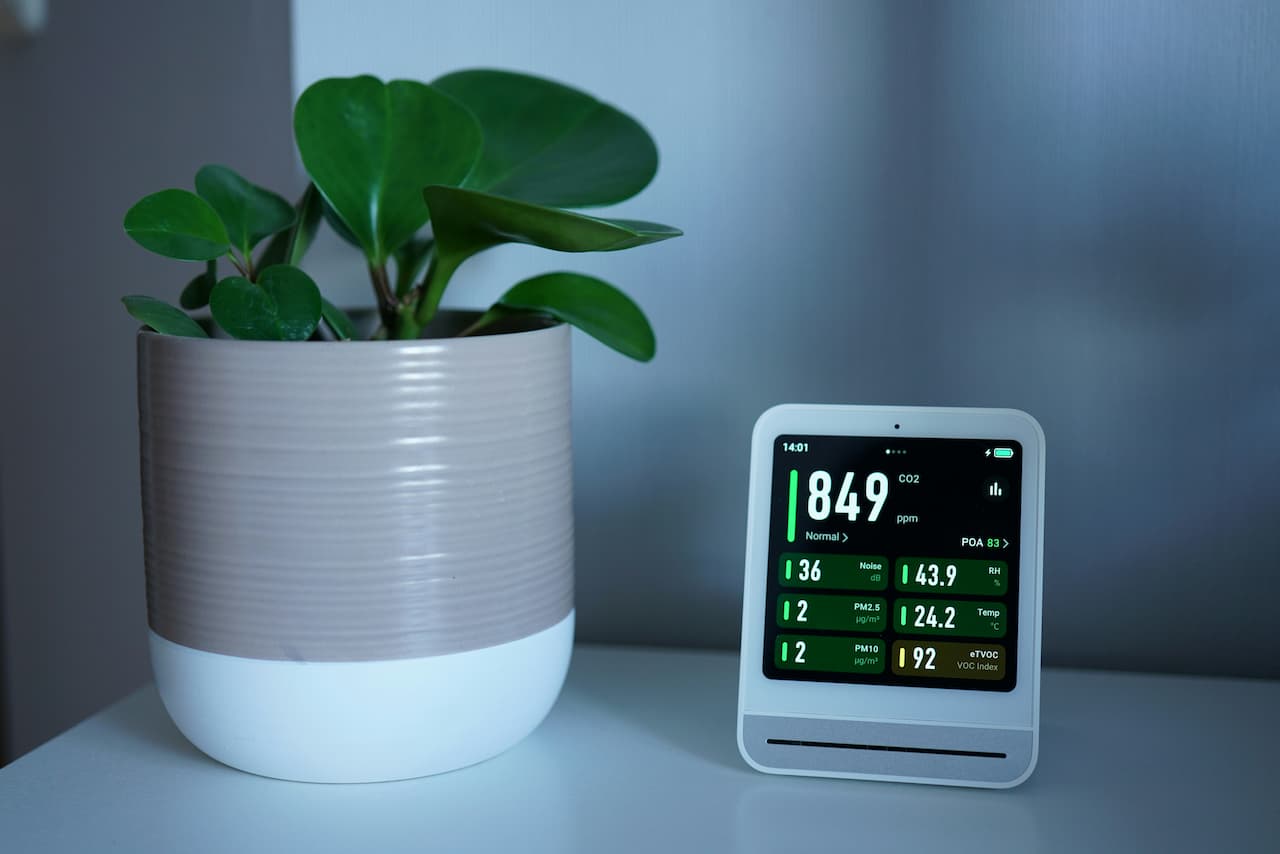
The display unit is small and designed to sit on a worktop or be mounted on a wall. It shows current consumption, cost per hour and daily and weekly totals at a glance. The screen is clear and readable from across a room without squinting. Build quality is solid for the price point – the components feel robust and the transmitter in particular is compact and unobtrusive when fitted at the meter. Signal range between the clamp transmitter and the receiver display is rated at 30 metres and performed reliably throughout testing with the units positioned at opposite ends of a semi-detached property including passing through two internal walls.
Setting the tariff rate and standing charge in the device settings is the most important first step after installation. The default cost calculations use a generic unit rate that is unlikely to match your actual tariff – once correctly configured, the cost-per-hour and daily cost figures become meaningfully accurate rather than illustrative. This setup step takes five minutes and transforms the practical usefulness of the display from the moment it is done.
Installation requires access to your electricity meter or consumer unit. The clamp sensor clips around the live electricity supply cable at your meter or consumer unit. If you are not comfortable working near electrical equipment, have a qualified electrician fit the clamp – the unit itself requires no wiring but the environment involves live electricity. The installation does not require the supply to be switched off.
Specifications and scores
How it performed in our tests
Accuracy was the most important metric in testing and the Owl Intuition performed well. Over three weeks, the cumulative kWh consumption reported by the Owl was within 2-3% of the actual meter reading – well within acceptable tolerance for a clamp sensor that is inferring consumption rather than directly measuring it. The real-time wattage display updated every six seconds and responded immediately to large load changes – switching on a kettle, electric shower or tumble dryer was visible within seconds on the display and provided immediate confirmation that the sensor was tracking live consumption correctly.
The most practically useful feature proved to be the baseline display – the consumption level when no high-draw appliances are running. Setting a known baseline and watching the display through a normal evening quickly identified several appliances drawing more standby power than expected, including an aging set-top box and a plasma television consuming around 180W even in standby mode. That single discovery – a standby load costing around £19 per month at current rates – covered a significant portion of the purchase price in avoided running costs within the first month of use.
Use the display for a week before making any changes. The most valuable use of the Owl Intuition is establishing your baseline consumption patterns before acting on them. Spend the first week simply observing which activities cause spikes and what your overnight standby load is. The data from that observation period tells you exactly where to focus your energy saving efforts rather than guessing at the highest draws.
App and data
The Owl Intuition app connects via your home WiFi through the display unit and provides historical consumption data, cost tracking and comparison against previous periods. The interface is functional rather than elegant – the design feels dated compared to more modern smart home apps like Hive or the Tapo range – but the underlying data is genuinely useful and the information it presents is comprehensive for a whole-home monitor at this price point.
Half-hourly consumption graphs for the past 24 hours, daily totals for the past month and the ability to set tariff rates for accurate cost calculation are all present and work reliably. The tariff configuration deserves particular mention – correctly entering your unit rate and standing charge means the cost display and app calculations are accurate to your actual bills rather than using generic averages. This makes the cost-per-hour display meaningfully useful rather than approximate, and transforms the daily totals from illustrative figures into genuine audit data against your actual bill.
Up to two years of historical data is stored, which allows meaningful year-on-year comparisons once the device has been running for a full annual cycle. This is a genuinely useful feature for understanding seasonal patterns and for confirming whether energy saving changes made over the year have had the intended effect on consumption. The app also supports multiple tariff configurations, which is useful if you switch supplier mid-year and need to update the unit rate without losing historical data.
Performance and limitations
The Owl Intuition monitors electricity only – there is no gas monitoring capability and none is available as an add-on. For homes where gas is the primary heating fuel, this limits its usefulness for understanding total energy costs through the winter months. The electricity monitoring covers everything on your electrical circuits comprehensively, but a gas boiler, gas hob and gas hot water system are completely invisible to it. In a typical UK home where gas central heating represents the majority of winter energy spend, this is the most significant practical limitation of the device.
The app quality is the other notable weakness relative to the price point. Compared to the polished apps from Hive or Nest, or even the free Tapo app that accompanies a £12 smart plug, the Owl app feels significantly dated and navigation is less intuitive than it should be. The data it presents is sound but the presentation is not. Owl has not updated the app design substantially in several years and it shows. This does not affect the core functionality but it does affect the daily experience of using the product long-term.
- Accurate within 2-3% of actual meter
- No supplier involvement needed
- Fast 6-second updates
- 2 years history stored
- Electricity only – no gas monitoring
- App feels dated and unintuitive
- No appliance-level breakdown
- Requires meter cupboard access to fit
- Homes without a smart meter
- Those wanting immediate monitoring data
- Electricity-heavy households
- Gas-heavy households in winter
- Those already with a smart meter IHD
- App-quality conscious buyers
Final verdict – is it worth it?
The Owl Intuition does what it promises accurately and reliably. If you do not have a smart meter and want whole-home electricity monitoring now rather than waiting for a supplier installation appointment, it is a sensible purchase. The 2-3% accuracy is good enough for meaningful consumption tracking, and the standby load identification capability is practically useful from day one – the kind of discovery it facilitates, such as an ageing plasma television drawing 180W in standby, can recover the purchase price in avoided running costs within a single month.
Its limitations are real and worth weighing before purchase. For a UK home where gas heating dominates winter energy costs, monitoring electricity only misses the majority of the spend during the months when bills are highest. A smart meter from your supplier is free and covers both gas and electricity automatically – if you are eligible and willing to wait for an installation slot, that is a better solution for total energy visibility. The Owl is the right answer specifically for households who cannot or do not want to wait, and for those where electricity is genuinely the dominant cost.
For maximum impact, pair the Owl with broader energy saving measures across the home rather than treating the monitor as the intervention itself. The monitor tells you where the cost is – it does not reduce it. Acting on what the data shows, consistently, is where the actual saving comes from, and the Owl gives you enough data quality to make those actions informed and measurable over time.
The Owl Intuition is a solid whole-home electricity monitor for households without a smart meter. Accurate, reliable and genuinely useful for identifying consumption patterns – but the electricity-only limitation and dated app hold it back from a higher score. Best for homes with significant electrical loads wanting immediate monitoring data without waiting for a supplier installation.
Share on socials: