At a glance
V-TUF don’t pretend this is for the driveway, and the list of places they say it’s built for makes that obvious before you’ve even unboxed it: construction sites, manufacturing plants, railways, food production lines, even airport runways. The DD130 is a genuinely industrial machine, and I wanted to know whether the spec backed up that positioning once it was actually running.
It runs a 13HP Honda engine at a working pressure of 250 bar, with 300 bar available at maximum, and a flow rate of 900 litres an hour. Net weight is 69kg. The question was whether something built this specifically for industry still makes sense reviewed the way I’d review anything else, on what it actually does rather than just what it claims to be for.
Overview and first impressions
This comes almost fully built, the frame, wheels and handle already assembled rather than needing to be fitted from scratch. The black powder-coated frame and puncture-proof wheels feel properly substantial, closer to something you’d see parked on a building site than in a garden centre. The pump head is nickel-plated with a cataphoretic paint coating underneath, genuine corrosion resistance rather than just a marketing line, and extra cooling fins help it run cooler over a long shift. It’s made in Britain, which isn’t something I’d usually flag, but for a machine built this specifically for industrial use it felt worth knowing.
Before running it at all, the manual is specific about water supply: it needs an incoming supply between 1 and 8 bar, and running it dry or underfed risks serious damage to the waterproofing inside. There’s a decompression valve that has to be left open when starting, letting water run out in a strong stream for about 10 seconds before closing it, a step that genuinely makes the engine easier to pull over and saves wear on the starter mechanism.
The kit includes a soft-grip trigger gun, a stainless steel lance, the 10m high-pressure hose, five quick-release nozzles and a separate turbo nozzle for the toughest jobs. There’s also a 3m crush and kink resistant suction hose with a weighted filter, genuinely useful if you’re drawing from a tank or barrel rather than a tap. The inlet filter itself sits behind a blue cap that unscrews for cleaning, and it needs to stay both clean and properly airtight when refitted, or you’ll be chasing a pressure problem that’s actually just a dirty filter.
Check your water supply pressure before starting. The manual’s own range is 1 to 8 bar. Outside that, you risk damaging the pump’s waterproofing rather than just losing performance, so it’s worth confirming your actual supply rather than assuming a garden tap is enough.
Specifications and scores
How it performed in our tests
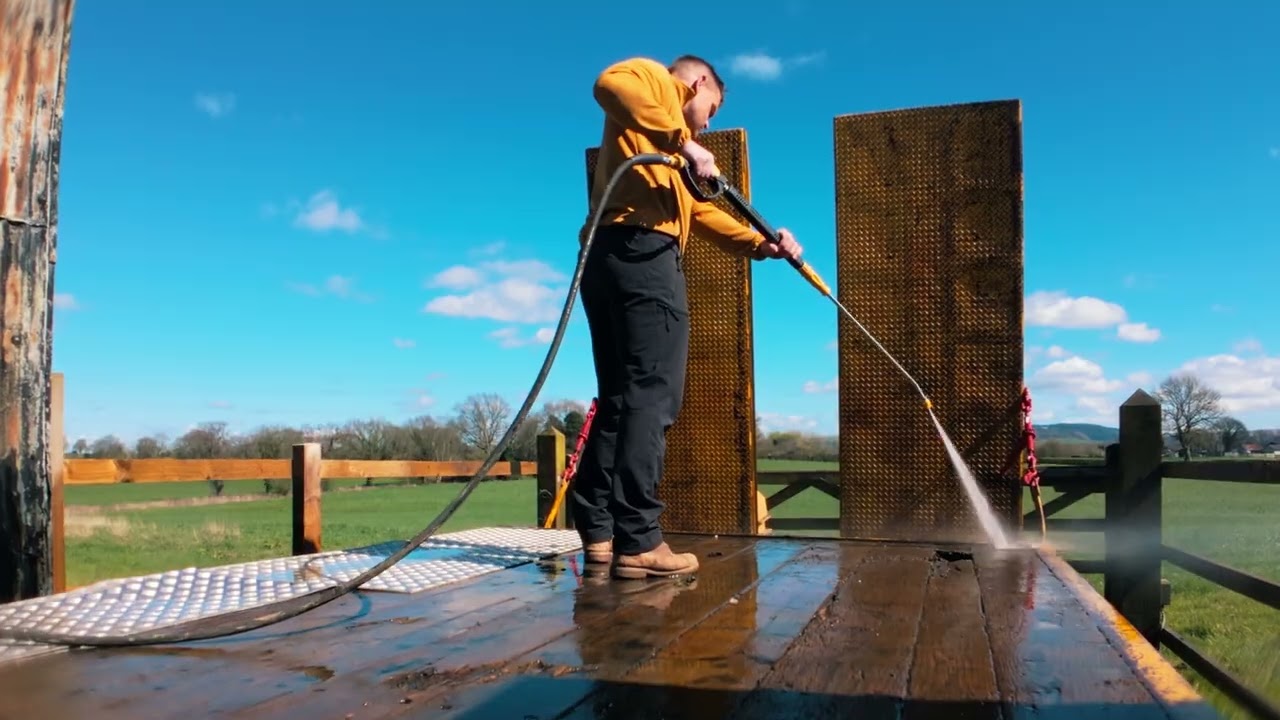
A stretch of industrial-feeling concrete flooring in a workshop, years of oil and general grime baked in, was the genuine test here, and at 250 bar working pressure it lifted staining I’d expect to need repeated passes with anything smaller in a single, methodical sweep. The flow rate kept pace properly too, the surface stayed wetted rather than the jet outrunning the water on a larger area.
The pressure and flow adjustment knobs both genuinely matter in practice, not just on paper. Dialling pressure down for a painted surface and back up for bare concrete took seconds, and being able to adjust flow separately meant I wasn’t stuck choosing between too much force and too little water.
For the detergent pass, I followed the manual’s advice rather than my own habit and didn’t pre-wet the surface first, pointing the nozzle to the ground until detergent appeared, then working up from the bottom in overlapping strips. It made a genuine difference, more even coverage than soaking the surface first ever gave me. Worth knowing too: not every detergent is suitable to go through the machine itself, some of V-TUF’s own range are meant to be hand-applied and rinsed off separately rather than drawn through the pump, so it’s worth checking a product’s own instructions before assuming it’ll work through the lance.
Don’t pre-wet before applying detergent. It feels counterintuitive, but the manual is specific about this for good reason, a wet surface leaves a film that dilutes the detergent and gives a worse result. Point the nozzle down, wait for detergent to appear, then work up from the bottom.
Engine and running costs
The 13HP Honda starts with the decompression valve open and a firm pull, settling into a steady, genuinely substantial drone once running, this is loud equipment and hearing protection is non-negotiable for anything beyond a couple of minutes. It meets the Euro V emissions standard, worth knowing if you’re using it anywhere with its own environmental rules to follow, which given V-TUF’s own application list includes plenty of sites that do. If a Honda GX390 isn’t available, V-TUF offer a 14HP Briggs & Stratton substitute, worth knowing if stock is ever an issue.
The pump uses V-TUF’s own Pressure Lube oil rather than a generic gear oil, filled to halfway in the reservoir via the sightglass, with the first change due after 50 hours and every 500 hours after that, a genuinely low-maintenance schedule once it’s running. The thermal protection valve and extended bypass system work together to stop the pump overheating if it’s ever left running without spraying, which matters more on a long industrial shift than an occasional weekend job.
Warranty is 12 months as standard, running from the date the machine left the factory rather than the date you bought it, worth checking if you’re buying through a distributor rather than direct. It covers defective mechanics or assembly, not wear and tear, and is void if non-original parts or unauthorised repairs are used.
Two practical habits worth picking up: if you’re pausing mid-job for more than 15 minutes, the manual wants you to switch off and release the residual pressure rather than just leaving it idling. And over winter, either run antifreeze through the system or drain the water circuits completely, since leaving it sat with water inside for long periods risks calcium deposits forming in the valves, the kind of thing that causes odd noises or a reluctance to start months later.
Performance and limitations
What this does brilliantly is sustained, adjustable, genuinely industrial-grade cleaning, with the pressure and flow controls giving real flexibility most petrol machines I’ve used don’t offer. Concrete, oil staining and general heavy grime all came up properly, and the low-maintenance pump lubrication is a genuine point in its favour over anything needing a separate gear oil topped up by hand.
The trade-offs are exactly what you’d expect from genuinely industrial equipment. At 69kg this is still a two-person lift in most situations, the noise rules out early starts anywhere near neighbours, and the manual is explicit that this isn’t for washing animals, anyone under 16, or anything itself running on mains electricity. None of that is a flaw, it’s the nature of what V-TUF built this for.
Worth flagging honestly: I couldn’t find an independent test of this specific model anywhere, which is consistent with it being genuinely trade and industrial-focused equipment rather than something widely reviewed for home use. Everything here comes from direct use against V-TUF’s own documentation, not a borrowed test.
- Genuine pressure and flow adjustment, not just one fixed setting
- Low-maintenance pump lubrication schedule
- Genuinely substantial, industrial build quality
- Comes almost fully assembled
- 69kg, a two-person lift in most situations
- Genuinely loud, hearing protection essential
- Only 12 months warranty as standard
- No independent test available to cross-check against
- Genuinely industrial or commercial sites
- Anyone wanting real pressure and flow control, not one fixed setting
- Regular, sustained heavy-duty use
- A typical home driveway or patio routine
- Anyone needing to move it solo regularly
- Occasional, light cleaning jobs
Final verdict
This is genuinely industrial equipment doing exactly what industrial equipment should: sustained pressure, real adjustment, and a build that feels like it’ll outlast anything I’ve reviewed so far. The detergent technique alone, once I actually followed it properly, changed how I think about applying chemicals through any pressure washer.
It’s not for a home routine, and V-TUF aren’t pretending otherwise, their own application list reads like a site inventory rather than a homeowner’s chore list. The weight, the noise and the genuinely conditional warranty are all real costs of that capability.
Check your water supply pressure before you start, follow the detergent technique rather than your instincts, and budget for two people to move it. Do all three, and this is a properly capable piece of equipment for the jobs it’s actually meant for.
A genuinely industrial pressure washer with real pressure and flow control, backed by a low-maintenance pump lubrication system. Held back only by its weight, its noise, and a warranty that asks you to read the small print.
Share on socials: