At a glance
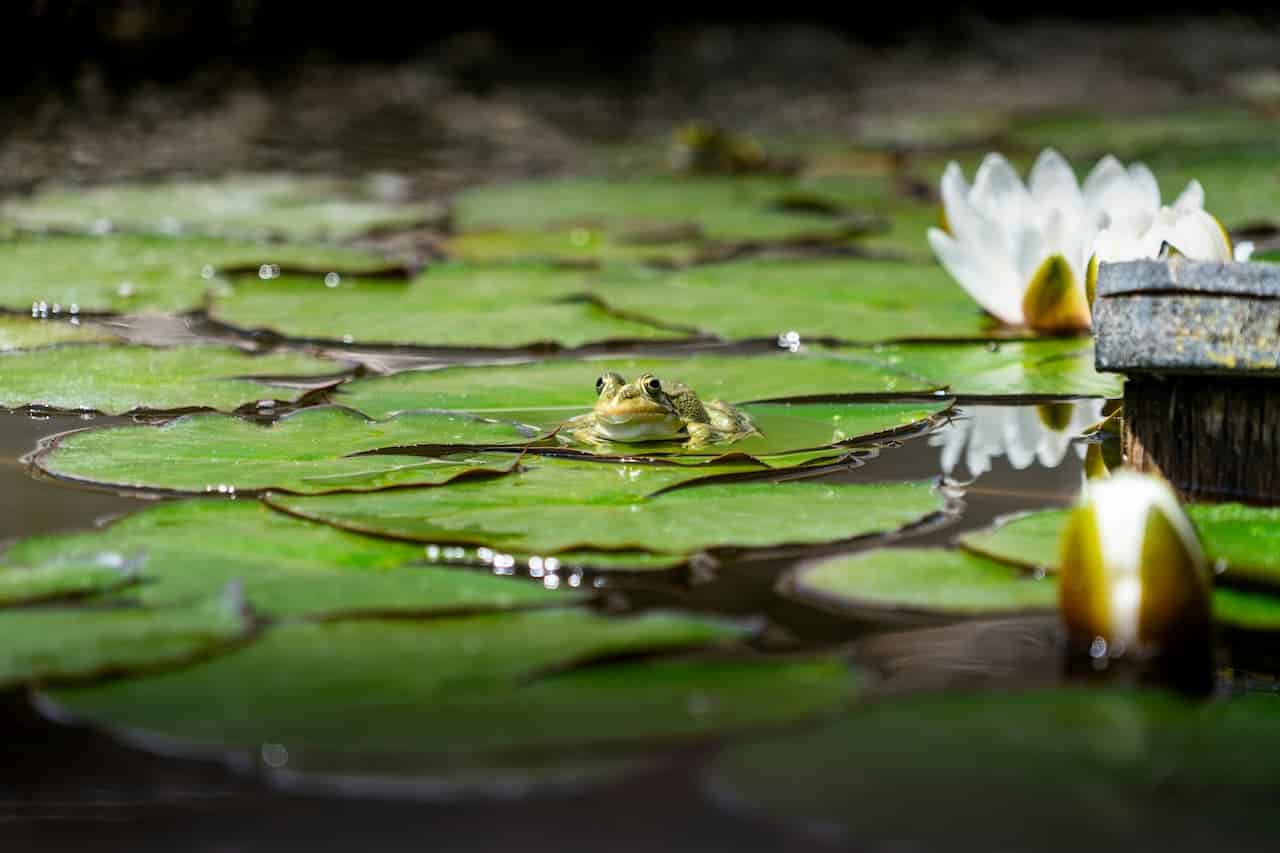
The common frog (Rana temporaria) is one of the most useful visitors a UK garden can attract. A single frog consumes hundreds of slugs, aphids, beetles and other pests over a summer, providing natural pest control that improves year on year as a resident population establishes. Frogs are also a reliable indicator of a healthy garden ecosystem – their presence signals clean water, diverse planting and a habitat that supports beneficial wildlife across the board. The investment in creating frog-friendly conditions pays back for a very long time.
The most important thing to understand about attracting frogs is that they will find a suitable habitat on their own. You do not need to import frogs or frogspawn – frogs from the surrounding area will locate a new pond within a season or two of it being established, then return to breed there year after year. Your job is simply to create the right conditions: primarily a pond, and secondarily the shelter, planting and chemical-free management that keeps frogs on land between breeding seasons. Get both elements right and frogs will do the rest.
Why frogs are good for your garden
Frogs are voracious predators of exactly the pests that cause the most damage in UK gardens. Slugs are the primary prey for most adult frogs – the same slugs that destroy hostas, devour seedlings and damage vegetable crops. An established frog population suppresses slug numbers more effectively than any product, because frogs hunt continuously throughout the season and their population grows as prey becomes abundant. Unlike slug pellets, which must be reapplied repeatedly, a frog population in a garden is a self-sustaining biological control system that costs nothing once established.
The common frog is protected under the Wildlife and Countryside Act 1981, which reflects both its ecological importance and the reality that frog populations have declined significantly across the UK in recent decades, primarily through habitat loss and pond drainage. UK gardens collectively contain an enormous number of ponds that have become an important substitute for the agricultural ponds that have been lost. A new garden pond creates breeding habitat that may support frogs from a wide surrounding area. The conservation value is genuine and the practical benefit to the garden is immediate.
Creating a frog pond
A pond is the single most important factor in attracting frogs. Without water for breeding, frogs will visit a garden opportunistically but will not establish a resident population. The good news is that pond size matters much less than most people expect – a half-barrel sunk into the ground is enough to attract and support breeding frogs. What matters more is the design, the depth in relation to the surface area, and what the pond does not contain.
Depth should reach at least 60cm at the deepest point so the pond does not freeze solid in winter and provides cool refuges in summer. Equally important are the shallow areas – frogs spawn in water of 10-20cm depth, and newly metamorphosed froglets need shallow water at the pond edges to begin their transition onto land. A gradual slope on at least one side serves both purposes: it gives frogs easy access in and out, prevents any frog becoming trapped, and provides the shallow spawning zone they need. A vertical-sided pond with no exit route is usable but far less effective as frog habitat.
Fill the pond with rainwater where possible rather than tap water. Tap water contains chlorine and sometimes other additives that can be harmful to amphibians and pond invertebrates. In practice, most garden ponds filled initially with tap water will naturalise over time as rain dilutes the mains water and the pond ecosystem establishes, but starting with rainwater from a water butt gives a better foundation. Position the pond in partial shade if possible – full sun creates algae problems and allows the water to overheat in summer, both of which reduce the pond’s value. A position that receives morning sun but is shaded from direct afternoon sun is close to ideal.
Oxygenating plants are an important but often overlooked element of a frog pond. Plants such as hornwort, water starwort and Canadian pondweed grow submerged and maintain the pond’s oxygen levels, which keeps the water clear and supports the invertebrates that form part of the wider food chain. Without oxygenating plants, a pond in full sun will typically turn green with algae within a season, which reduces its value as wildlife habitat. Marginal plants – those growing in shallow water at the pond’s edge – serve a different function: they provide the physical structure that frogspawn can cling to during spawning, shelter for froglets leaving the water, and cover for frogs moving between water and land. Both types of plant are needed for a fully functional frog pond.
Never add fish to a wildlife pond. Goldfish and koi are highly effective predators of frogspawn, tadpoles and froglets. Even a small ornamental fish will consume most of the spawn in a wildlife pond within days. A pond with fish is not a wildlife pond – these two things are not compatible.
Never relocate frogspawn. Moving frogspawn between ponds risks spreading Ranavirus and chytrid fungus – diseases that have devastated amphibian populations across the UK and worldwide. Frogs that find your pond will spawn there naturally. Never move spawn, however well-intentioned. It is also an offence under the Wildlife and Countryside Act 1981.
Shelter and habitat
Frogs spend a large proportion of their year on land. From late spring through autumn they hunt through the garden at night, hiding during the day in cool, damp, sheltered spots. In October they begin to seek hibernation sites and remain dormant until late winter or early spring. The quality of the land habitat around the pond matters almost as much as the pond itself for sustaining a resident frog population.
Log piles are one of the single most effective additions you can make for frogs. Stacked loosely in a permanently shaded, damp corner of the garden, they provide the cool, dark, moist microhabitat that frogs need for daytime shelter and winter hibernation. The gaps between logs at ground level are the critical element – frogs need to be able to enter and shelter inside the structure. A log pile that is too neatly stacked, with no internal cavities, provides cover but not the enclosed hiding spaces frogs prefer. Position log piles adjacent to the pond where possible so frogs emerging from the water in summer have immediate access to shelter.
Compost heaps are highly valued by frogs and are often used as hibernation sites. The combination of warmth from decomposition, reliable moisture, and abundant invertebrate prey makes a compost heap close to ideal frog habitat. If your compost heap is active and regularly turned, this disrupts any frogs using it – having a second, resting heap alongside an active one addresses this. From October onward, check carefully before turning or digging out compost, as hibernating frogs buried in the lower layers can be easily injured. Dense herbaceous planting, thick ground cover and areas of long grass all provide additional hunting and resting habitat beyond the pond edge and log pile.
One element of frog-friendly garden design that is frequently underestimated is connectivity. Frogs need to move between the pond, their shelter sites and their hunting grounds, and physical barriers – solid fencing at ground level, expanses of hard paving, raised beds with no exits at ground level – interrupt these movements. Ground-level gaps in fencing between gardens are as valuable for frogs as they are for hedgehogs, and a series of connected gardens creates a much larger effective habitat than any one garden alone. If your neighbours are wildlife-minded, co-ordinating to maintain ground-level access between gardens multiplies the benefit for all amphibians using the area.
Plants that help frogs
The right planting works on two levels: it creates physical shelter and microhabitat that frogs use directly, and it supports the insect and invertebrate populations that frogs feed on. Both of these functions are important, and a garden that combines them provides year-round value well beyond the pond itself.
Planting for frogs does not require a specialist wildflower garden. The most effective approach is to make the area immediately surrounding the pond as structurally varied as possible – a mix of low dense plants, taller herbaceous planting and some areas of long grass gives frogs the transition zone they need between the water and the wider garden. Native plants are generally better than highly bred cultivars because they support a broader range of insects, but even conventional border planting is better than bare soil or hard surface. A frog hunting through a planted border has cover, moisture and prey. A frog crossing paving has none of these things.
What to avoid
Strimmers and mowers are a serious cause of frog mortality that is often not recognised as such. Frogs resting in long grass are effectively invisible, and a strimmer passes over them without warning. This is particularly dangerous in late summer when froglets are still small and dispersing through the garden, and in autumn when adult frogs are seeking hibernation sites in thick vegetation. The simple habit of walking slowly through any area of long grass before cutting – checking for frogs and gently moving any found into safety – prevents most strimmer casualties. When in doubt, cut with scissors around the edges first rather than putting a power tool directly into unmown grass.
Pesticide use is the most directly damaging thing in a frog-unfriendly garden. Slug pellets are acutely toxic to frogs: frogs eat slugs that have been poisoned by pellets and are themselves poisoned in turn. This applies to both metaldehyde-based and ferric phosphate-based products – neither is safe where frogs are present. Insecticides reduce the prey available to frogs and can also directly affect them through their permeable skin. A garden that removes pesticide use creates an immediate and lasting improvement in conditions for frogs and for the entire beneficial wildlife community that depends on the same prey base.
Cats are a significant cause of frog mortality in suburban gardens, particularly during summer when froglets are dispersing from the pond. Positioning the pond in a location where cats cannot easily ambush frogs exiting the water reduces losses. Dense planting around the pond edge provides cover that frogs can use to avoid cat predation as they move between the water and land shelter.
Seasonal frog activity
Understanding the frog’s year makes it possible to support each stage appropriately rather than accidentally disrupting it.
It is worth making a specific point about the frogspawn disease warning. Ranavirus and chytrid fungus are two diseases that have caused severe amphibian population crashes in the UK and worldwide. Both spread through water and through the transfer of infected individuals or spawn. The advice never to move frogspawn between ponds – however well-intentioned the mover – exists because moving spawn is one of the primary ways these diseases spread. Frogs that colonise your pond naturally will bring no pathogens from outside the local population. Spawn transferred from a pond elsewhere brings an unknown disease history. The Wildlife and Countryside Act 1981 makes intentional disturbance of frog spawn and eggs an offence in any case.
From late January or February onward, frogs emerge from hibernation and travel to their breeding ponds – often the same pond they were born in, which they locate with remarkable accuracy across distances of a mile or more. Frogspawn appears in shallow water from February onward, forming the large floating masses familiar to most UK gardeners. Tadpoles hatch after two to three weeks and take approximately twelve weeks to metamorphose into froglets depending on water temperature. From June onward, tiny froglets – often just 10-12mm long – leave the pond and disperse into the surrounding garden. This is the most vulnerable stage in the frog’s life cycle. Keep the grass around the pond long and undisturbed through June and July to give froglets safe passage into the wider garden.
From October into winter, frogs hibernate. They do not all return to the pond – many overwinter on land in compost heaps, log piles and deep leaf litter. A frog-friendly garden in autumn means leaving leaf piles undisturbed, not clearing every bed to bare soil, and allowing the natural accumulation of organic matter that provides hibernation sites. Most winter garden tasks are safe to carry out around hibernating frogs as long as log piles and compost heaps are checked before disturbance, and any deep digging in borders is done with care. These same measures benefit the full range of overwintering wildlife beyond just frogs.
Share on socials: