At a glance
Lawn feeding is one of the highest-impact things you can do for a UK lawn. Grass is a heavily cropped plant – every time you mow, you remove leaf tissue and the nutrients it contains, depleting the soil over time. Without regular feeding, even grass growing in reasonably fertile soil becomes pale, thin and slow to recover from wear and drought. A well-fed lawn is not just greener – it is denser, more resilient to moss invasion, better at outcompeting weeds, and quicker to recover from the damage that a wet UK winter invariably causes. The difference between a fed and an unfed lawn of the same age on the same soil is often dramatic and visible within a few weeks of the first spring application.
The UK lawn feed market is extensive and the labelling can be confusing – spring and summer feeds, autumn feeds, weed and feed products, slow-release granules, liquid concentrates and ready-to-use sprays are all available, often with similar-sounding product names and very different nutrient profiles. Understanding what each type does, when to use it and how to apply it correctly prevents the most common mistakes: applying a high-nitrogen spring feed in autumn (which produces soft growth that winter disease attacks), feeding a drought-stressed lawn (which scorches the grass), or applying at the wrong rate and burning the turf. A well-timed feeding programme works alongside aeration and scarification to produce a lawn that needs progressively less remedial work each year.
Types of lawn feed compared
Granular spring and summer feeds are the most widely used type for UK lawns and the best starting point for most gardeners. They contain high levels of nitrogen to promote vigorous green growth and are applied using a wheeled spreader or by hand – a spreader is strongly recommended for even coverage. They are cost-effective, widely available from garden centres and hardware stores, and a single application covers a large area. Liquid concentrates work faster – grass can show visible greening within five to seven days compared to two to three weeks for granular products – but they require dilution, application with a watering can or hose-end feeder, and more frequent re-application as they are quickly leached from the soil by UK rainfall.
Slow-release granular feeds are increasingly popular because a single application in spring provides a sustained, even feed release over three to six months – removing the need for repeat applications through the growing season. The coating on each granule controls the release rate, producing more even growth without the flush of rapid growth that standard granular feeds sometimes cause. Weed and feed products combine a lawn fertiliser with selective broadleaf herbicide – the herbicide kills lawn weeds like dandelions, clover and plantain while leaving grass unharmed. They must be applied when the grass is actively growing and weeds are in leaf, and should not be used on newly seeded lawns or during drought.
Understanding NPK ratios
Every lawn fertiliser carries an NPK ratio on its packaging – three numbers representing the percentage of nitrogen (N), phosphorus (P) and potassium (K) in the product. Understanding what these numbers mean allows you to choose the right feed for the time of year and the condition of your lawn, rather than relying entirely on seasonal marketing labels.
Nitrogen (N) drives green leafy growth – the higher the first number, the more vigorous the growth response and the greener the colour. Spring and summer feeds have high first numbers, typically 20-30% nitrogen. Phosphorus (P) supports root development – important in newly seeded lawns and after renovation work, less critical in established lawns that are already well-rooted. Potassium (K) hardens the grass plant against cold, drought and disease – autumn feeds are high in potassium (third number) and deliberately low in nitrogen to avoid promoting soft growth that winter would damage. An autumn feed with an NPK of something like 4:4:10 or 3:5:12 is ideal for the UK climate; a spring feed with 30:0:4 or similar delivers the nitrogen push needed for spring green-up after winter dormancy.
When to feed – seasonal calendar
How to apply lawn feed correctly
The most important factor in applying granular lawn feed is even coverage at the correct rate. Overlapping strips produce dark green lines where the lawn has been double-dosed, while gaps produce pale strips that take weeks to even out. A wheeled rotary or drop spreader set to the manufacturer’s recommended opening size removes this problem almost entirely – coverage is even, rate is consistent and the job takes a fraction of the time of hand spreading. For a small lawn without a spreader, divide the recommended quantity in half, apply one half walking in one direction and the second half walking at right angles – this cross-hatching technique significantly improves evenness.
Apply granular feed when the grass is dry but rain is forecast within 24-48 hours, or be prepared to water it in yourself. Granules left sitting on dry grass in sunny weather can scorch the blades as they concentrate. If rain does not arrive within 48 hours of application, water the lawn thoroughly to dissolve the granules and carry nutrients down to the root zone. Never apply lawn feed before a prolonged dry spell – the grass cannot absorb it and scorching becomes likely.
Feeding for specific problems
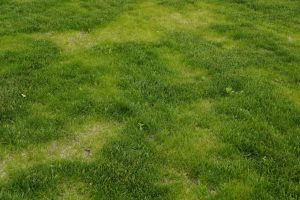
Pale or yellow grass: Yellowing that is not caused by drought or waterlogging is almost always nitrogen deficiency – the most common nutrient shortage in UK lawns. A liquid lawn feed gives the fastest visible response, with colour returning within a week of application in actively growing grass. If the lawn has been unfed for several seasons, a programme of regular feeding rather than a single heavy dose will produce the most sustained improvement. A single heavy application produces a flush of dark green followed by a rapid return to pallor as the nutrients are used up.
Thin or patchy grass: Thin turf benefits from a feed with a slightly higher phosphorus content to support root development alongside the nitrogen that drives leaf growth. After overseeding, wait six weeks before applying any feed to allow new seedlings to establish – feeding too early can burn fragile new roots. Once established, a standard spring feed applied at the correct rate thickens the sward significantly over the following months as the new plants mature and fill in.
Moss-prone lawns: Moss thrives where grass is weak, thin and struggling – which is exactly the condition produced by nutrient deficiency. A moss killer and feed product addresses both the existing moss and the underlying weakness simultaneously. However, killing moss without improving the growing conditions for grass simply allows moss to re-colonise the cleared areas within a season. A consistent feeding programme, combined with improving drainage and reducing shade where possible, provides the long-term conditions that favour grass over moss.
Never apply spring/summer feed in autumn. The single most damaging mistake with lawn feeding is using a high-nitrogen feed in September or October. High nitrogen in autumn promotes lush, soft leafy growth at exactly the time grass should be hardening for winter. This soft growth is highly susceptible to fungal diseases including red thread and fusarium patch – both common and damaging conditions in wet UK autumns. Always check the NPK label before buying: autumn products have a high third number (potassium). If in doubt, check the product is specifically labelled for autumn use.
Common problems and solutions
Share on socials: