At a glance
Garlic is one of the most satisfying crops to grow in the UK vegetable garden. It requires almost no attention once planted, takes up very little space, produces a harvest from every single clove planted, and the results from home-grown garlic are dramatically better than anything available in a supermarket – larger bulbs, stronger flavour, and varieties that simply do not exist in the commercial food chain. Planted in autumn, it spends the winter quietly establishing roots in cold soil, requires nothing from the gardener through the dark months, and emerges in spring to grow on rapidly before harvest in early summer. For the amount of effort invested, few crops offer a better return.
The key biological fact about garlic that shapes everything else about how to grow it is the requirement for vernalisation – a period of cold temperature that triggers the plant to initiate bulb formation in spring. Without adequate cold exposure (typically at least four to six weeks below 10°C), garlic plants produce a single undivided round bulb rather than the multi-cloved head that is the goal. This is why autumn planting is strongly preferred in the UK, and why supermarket garlic (which may have been stored at temperatures that prevent vernalisation) should not be used as planting stock. Garlic grows well alongside other allium-family crops including onions and leeks, though rotation between seasons keeps soil-borne disease pressure low.
Choosing a variety
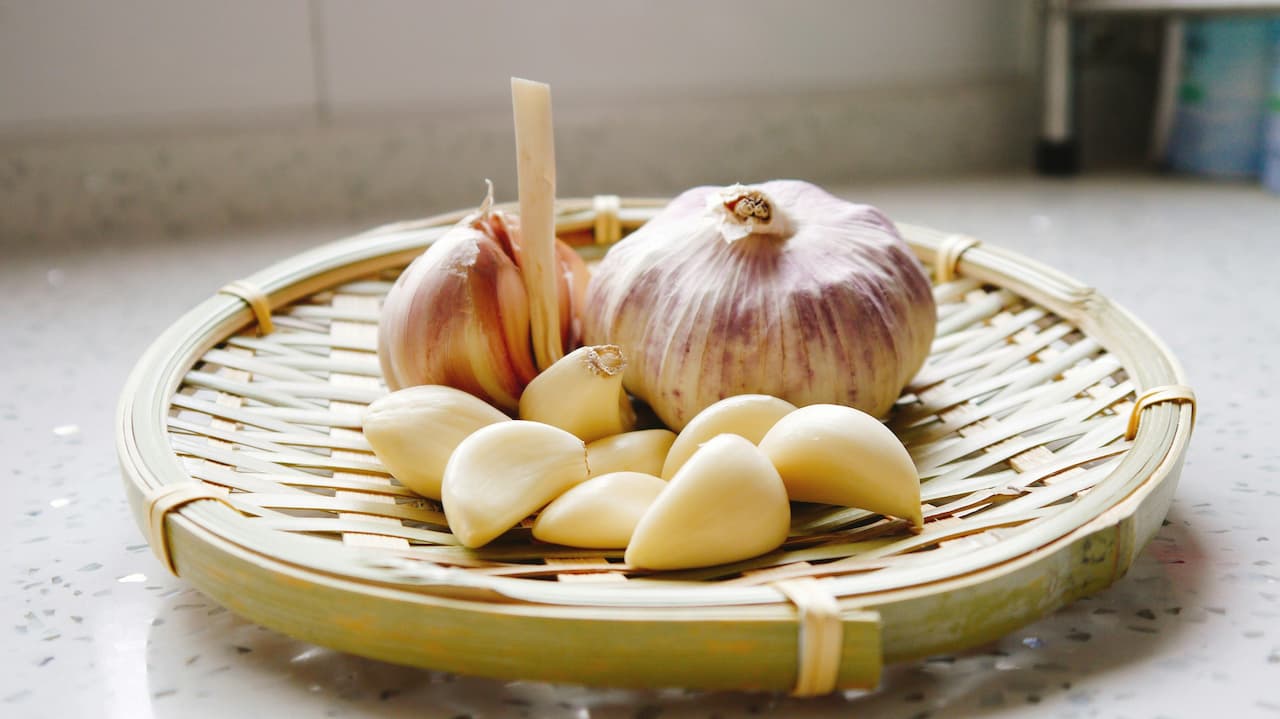
Softneck varieties are the most widely grown in UK gardens and are what most people picture when they think of garlic – papery white skin, tightly packed cloves and the flexible stem that allows traditional braiding for storage. Solent Wight, grown on the Isle of Wight, is the premium UK softneck and produces large, well-flavoured bulbs with an excellent storage life of up to twelve months. Hardneck varieties are preferred by garlic enthusiasts for their more complex, robust flavour and produce a central flowering stem called a scape in late spring – these scapes are edible and delicious in their own right, harvested before they coil to direct the plant’s energy into bulb formation. The trade-off with hardneck is shorter storage life of three to six months. Elephant garlic, despite its name, is more closely related to a leek than true garlic – it produces very large, mild cloves that roast superbly but lack the pungency of standard garlic. Always buy certified seed garlic from a reputable supplier rather than using supermarket bulbs, which may carry disease and are often treated to prevent sprouting.
When and how to plant
Autumn planting between mid-October and the end of November is strongly preferred for UK garlic. The cloves have time to develop a good root system before the ground freezes, receive the cold vernalisation period over winter that triggers bulb formation, and emerge in spring with an established root system already in place. This produces significantly larger bulbs than spring-planted garlic. Spring planting (February to March) is possible and produces a harvest, but the bulbs are typically smaller because the plants have less time to grow before harvest is triggered by day length in early summer.
Prepare the planting site by removing any weeds and working in well-rotted compost or a general fertiliser. Garlic performs best on free-draining soil – it will rot in waterlogged conditions, which is a genuine risk in a typical UK winter. Raised beds are ideal for garlic for exactly this reason – the free-draining growing medium and elevated position prevents the waterlogging that ruins garlic on heavy clay soils. Split the bulb into individual cloves immediately before planting, retaining the papery wrapper on each clove. Push each clove into the soil tip uppermost to a depth of approximately twice the clove’s length – typically 5cm deep – with 15cm between cloves and 30cm between rows. Firm the soil gently after planting. In very exposed positions or on heavy soils prone to waterlogging, garlic can be started in modules of free-draining compost in a cold frame in October and transplanted to the final position in February.
Seasonal care calendar
Harvesting and storing
The timing of the garlic harvest is one of the most important decisions in the growing year. Lift too early and the cloves are undersized and the wrapper skins thin – these bulbs do not store well. Leave too long and the bulb wrapper splits open, exposing individual cloves and dramatically shortening storage life. The correct time is when approximately half the leaves – counting from the bottom – have yellowed and died back, but the upper half of the plant is still green. In practice for UK-grown autumn garlic, this is usually the second half of June or early July for softneck varieties, and slightly earlier for hardnecks.
Lift each bulb carefully with a fork, loosening the soil around it before lifting to avoid breaking the stem. Shake off loose soil and lay the bulbs – with their stems and remaining leaves attached – in a single layer in a warm, dry, well-ventilated space to cure. A greenhouse staging, a slatted shed shelf or a warm windowsill all work well. Leave for two to three weeks until the outer skin is dry and papery, the stem is completely dry and the roots have dried to a tuft. Softneck garlic can then be braided by the stems for decorative storage, or bundled and hung. Hardneck garlic stems become brittle when dry – store these loosely in a net bag or open basket in a cool, dry place. Well-cured softneck garlic stores for eight to twelve months in good conditions.
Companion planting and rotation
Garlic has a well-established reputation as a companion plant – the sulphur compounds in its roots and leaves are reported to deter a range of pest species including aphids, carrot fly and certain fungal pathogens. Whether or not the pest-deterrent effects are significant in a garden setting is debated, but garlic planted at the base of roses is a traditional combination that many experienced gardeners swear by for reducing aphid pressure on susceptible varieties.
Crop rotation is important for all allium-family crops including garlic, onions, shallots and leeks. White rot (Sclerotium cepivorum) is the most serious soil-borne disease affecting alliums in UK gardens – it is a persistent fungal pathogen that remains viable in the soil for up to twenty years and builds up rapidly where alliums are grown in the same ground repeatedly. A strict rotation of at least three to four years between allium crops in any one bed is the only effective prevention, since there is no reliable chemical or biological treatment once white rot is established. Growing garlic in raised beds makes rotation straightforward as each bed can be tracked and managed independently.
Good companions to grow alongside garlic include broad beans, which are planted at the same time of year and appreciate the same well-drained, open bed conditions, and brassicas, which benefit from garlic’s reported pest-deterrent properties. Poor companions are other alliums (rotation applies), legumes other than broad beans, and asparagus, which dislikes the allelopathic compounds garlic releases into the soil.
Save your best bulbs for next year’s planting stock. When harvesting, set aside the largest, healthiest-looking bulbs from each variety to use as next year’s planting stock rather than buying fresh each season. The cloves from a well-grown UK bulb are genetically adapted to your soil and climate, and selecting the best bulbs each year gradually builds a strain that performs particularly well in your specific conditions. Label and store planting-stock bulbs separately from kitchen garlic in a cool, dry place through summer and split into cloves at planting time in autumn.
Common problems and solutions
Share on socials: