At a glance
Aphids are the most common pest in UK gardens and one of the most consistently mismanaged. The instinctive response to finding aphids on a plant is to reach for the nearest pesticide spray – but this approach kills the beneficial insects that were already beginning to control the infestation, removes the food supply that would have attracted more predators, and often results in a pesticide-resistant secondary infestation worse than the original. A garden with a healthy population of ladybirds, lacewings, parasitic wasps and hoverflies can typically deal with most aphid outbreaks without any intervention at all, provided infestations are caught early and predators are not killed by pesticide use.
The most effective aphid management strategy is a combination of early intervention with non-chemical methods – a jet of water, manual removal, or insecticidal soap – alongside active encouragement of the natural predator population that provides long-term biological control. Attracting ladybirds and other beneficial insects is not just a nice-to-have – it is the most sustainable and ultimately most effective form of aphid control available to UK gardeners, and it operates continuously through the season rather than as a one-off reactive treatment that needs repeating after every new infestation.
Identifying the type of aphid
There are around 500 aphid species found in the UK, but a handful account for the vast majority of garden problems. Correct identification matters because the control approach differs significantly between species – woolly aphid and root aphid, for example, do not respond to the same treatments as greenfly or blackfly, and misidentification leads to wasted effort and continued damage. The species also differ in their seasonal behaviour, which affects when and how to intervene most effectively.
Greenfly and blackfly are the most commonly encountered aphids in UK gardens and both respond readily to the same range of controls. Blackfly (black bean aphid) overwinters as eggs on spindle bushes and migrates to its summer hosts – particularly broad beans – in May. Pinching out the growing tips of broad beans once they have set their lowest pods removes the soft tissue that blackfly prefer and dramatically reduces infestation severity. Woolly aphid is more challenging because the waxy coating that gives it its white appearance also protects it from contact sprays – only a stiff brush used to physically remove colonies, or a systemic insecticide absorbed through the plant, reaches the aphid beneath the fluff. Root aphid is the most difficult to manage because it is invisible unless plants are lifted – wilting, yellowing and poor growth in an otherwise well-watered plant are the main indicators.
How aphids damage plants
Aphids feed by inserting their piercing mouthparts into the phloem vessels of plant tissue and extracting sap. A few aphids on an established plant cause negligible damage – the plant can compensate easily. Damage becomes significant when colonies reach hundreds or thousands of individuals, which can happen within days in warm conditions: a single aphid can produce up to twelve offspring per day without mating during the summer phase of their lifecycle, and multiple generations overlap through the season.
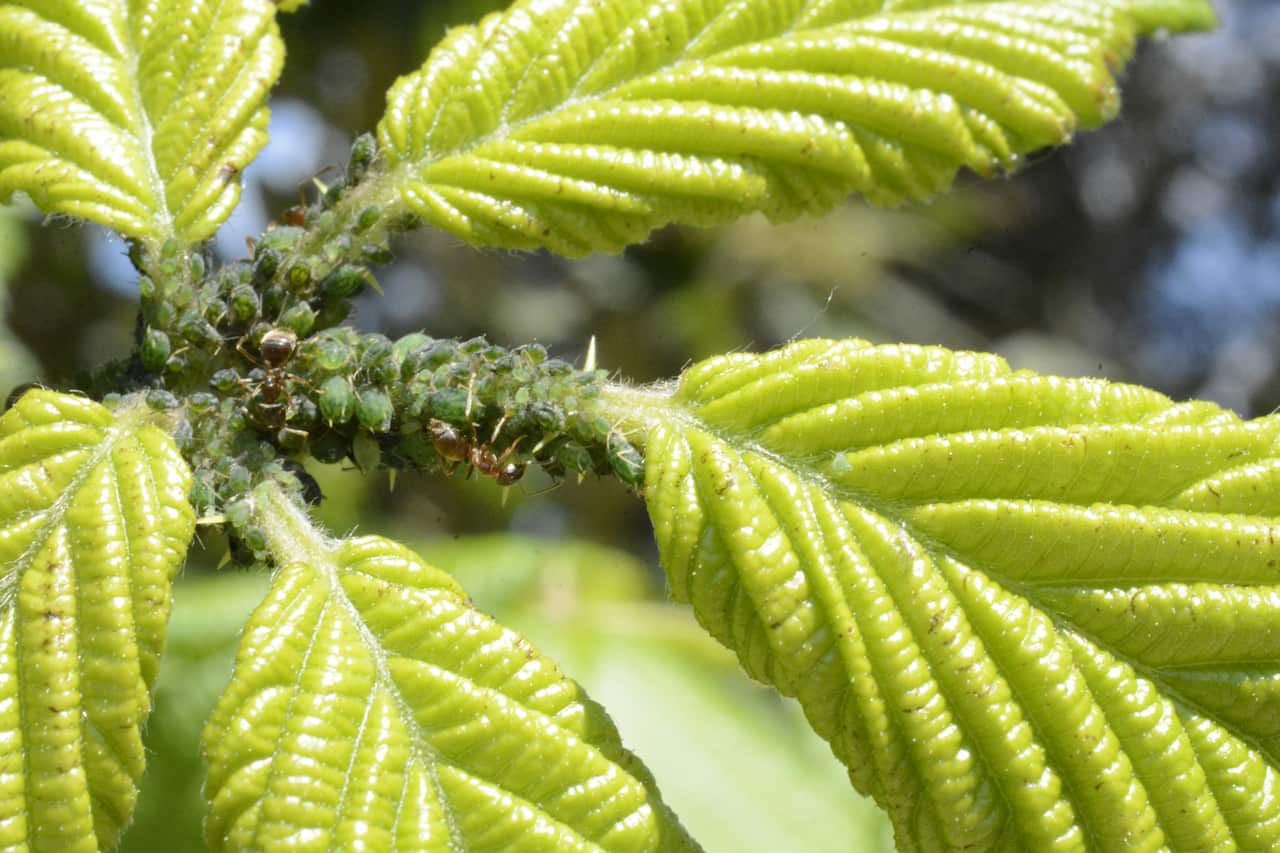
The direct damage from sap extraction causes distorted, curled or yellowed leaves, particularly on soft new growth where the phloem is most accessible. Aphids also excrete a sticky substance called honeydew as a by-product of sap feeding – this coats leaves and stems and provides a growth medium for sooty mould fungus, which turns the affected surface black and reduces photosynthesis. Ants farm aphid colonies for the honeydew, protecting them from predators and moving them to new growth – the presence of ants running up a plant stem is often the first visible sign of an aphid problem on the plant above. A secondary damage pathway is virus transmission – greenfly in particular transmit mosaic and yellowing viruses between plants as they move through the garden, causing damage that persists long after the aphids themselves have been controlled.
Natural and non-chemical controls
A strong jet of water from a hose is the most immediately effective non-chemical control for accessible aphid colonies. Dislodged aphids are unable to climb back onto the plant and die on the ground. The technique works best on colonies on exposed stems and the undersides of leaves – aim the jet directly at the colony, repeating every two or three days until the population is reduced to a level that predators can manage. For small infestations, rubbing colonies off with a gloved finger or removing and disposing of the most affected shoot tips achieves the same result with less water use.
Insecticidal soap – a contact spray based on potassium fatty acids – kills aphids on contact by dissolving their soft body coating and is effective, safe for beneficial insects once dry, and available at most garden centres. It requires direct contact with the aphid to work and has no residual effect, so thorough coverage of the underside of leaves and all affected surfaces is essential. It needs reapplying every five to seven days while the infestation persists. Neem oil works by a similar contact mechanism with the addition of a feeding deterrent effect that persists for several days after application.
Control methods compared
Choosing the right control method depends on the severity of the infestation, the type of plant affected, and the time of season. A method that is effective for a light early-season infestation on a rose may be entirely wrong for a severe outbreak on a food crop close to harvest, or for woolly aphid on apple bark where contact sprays cannot reach the pest. The table below summarises the key trade-offs between the main methods available to UK gardeners, including the critical distinction between those that preserve beneficial insect populations and those that do not.
Pyrethrin sprays and systemic insecticides kill aphids very effectively but also kill a broad range of beneficial insects including bees, hoverflies, lacewings and ladybirds. Using these products on flowering plants, or in a garden with good predator populations, typically causes more harm than good in the medium term by eliminating the biological controls that would otherwise provide ongoing management. They are best reserved for severe infestations on non-flowering plants where other methods have failed, applied in the early morning or evening when pollinators are least active, and where there is no reasonable alternative.
Encouraging natural predators
A single adult ladybird eats up to 5,000 aphids in its lifetime, and a lacewing larva can consume 200 aphids in a week. Building and maintaining a garden that supports these predators is the most powerful long-term aphid management tool available. The key requirements are simple: avoid broad-spectrum pesticide use, provide overwintering habitat, and grow the plants that support the adults through the season. A garden that does all three will maintain a standing predator population from spring through to autumn that responds to aphid outbreaks automatically.
Ladybird adults feed on pollen and nectar as well as aphids – planting umbellifer-family plants such as fennel, dill and cow parsley provides both a food source and shelter for adults through the season. Leave hollow stems and seed heads standing through winter – they provide overwintering habitat for a range of beneficial insects including lacewing adults, hoverfly pupae and parasitic wasp species. Encouraging ladybirds specifically through dedicated habitat and food planting creates a self-sustaining biological control system that operates year-round and requires no active effort once established.
Ants actively protect aphid colonies from predators – their intervention significantly reduces the effectiveness of biological control in heavily ant-populated areas. Applying a physical barrier of insect-proof tape or a sticky barrier product around the trunk or main stems of affected plants prevents ants from reaching the colony and allows natural predators to access and control it without interference. Like managing slugs in the garden, aphid management is most effective when it is part of a whole-garden approach rather than a series of isolated responses.
Do nothing with light infestations in June and July. A light infestation of aphids on an otherwise healthy plant during the peak predator season is often self-resolving within two to three weeks as the predator population responds. Intervening with a spray at this point kills the predators that were responding and removes the food source that would have sustained them. Reserve active intervention for heavy infestations on vulnerable plants, early-season outbreaks before predators have built up, or situations where secondary damage from sooty mould or virus transmission is a realistic risk.
Common problems and solutions
Share on socials: