At a glance
The thing most people get wrong with fuchsias they get wrong before they’ve even bought the plant. They pick one up at the garden centre in May, it looks magnificent, they plant it out, and by November it’s dead. Not because fuchsias are difficult. Because they bought a tender variety and left it outside in October. If you understand the hardy-versus-tender split before you spend any money, growing fuchsias is genuinely easy. Get it wrong and you’ll be buying new ones every spring, wondering what you’re doing differently from the person down the road whose fuchsia hedge has been there for twenty years.
The short version: hardy fuchsias survive UK winters in the ground and come back every year. Tender fuchsias die at the first frost unless you bring them inside. The two types look similar in summer. In autumn they need completely different treatment, and confusing them is where the trouble starts.
Hardy or tender: which do you have
Hardy fuchsias are permanent shrubs. Leave them in the ground through a normal UK winter and they’ll regrow from the base in spring even if everything above ground dies back. The most reliable variety is ‘Mrs Popple’, which reaches around 1.2m by 1.2m over three years and flowers from June until the first frosts. ‘Riccartonii’ is almost as tough and tends to make a larger, more open plant. ‘Tom Thumb’ is a compact option at around 45cm, good for containers or the front of a border. All three will take -10°C without damage to the rootstock.
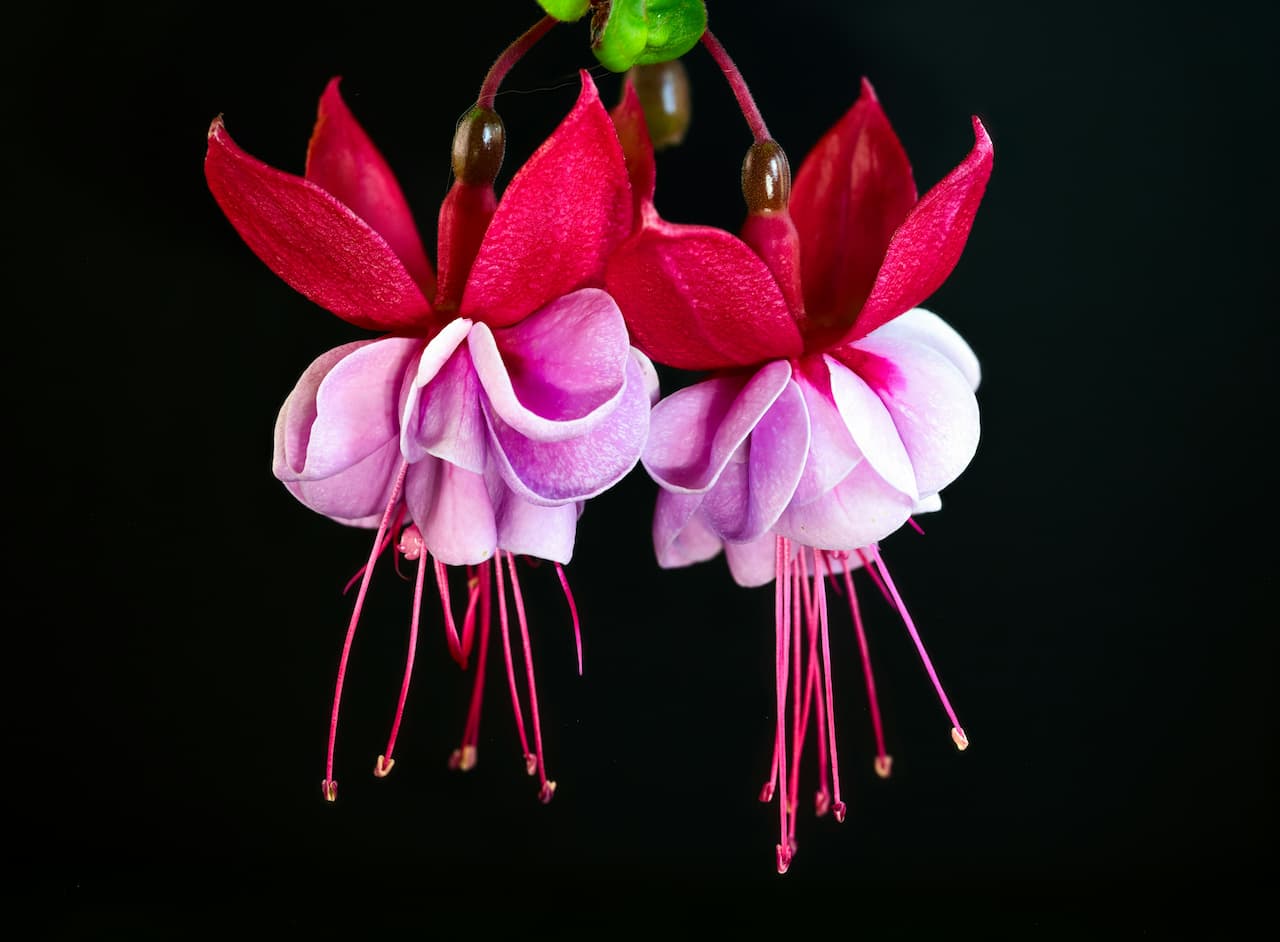
Tender fuchsias are the ones you see in hanging baskets and patio displays. They have larger, showier flowers than most hardy types, often double, with elaborate swept-back sepals in combinations of pink, red, white, and purple. ‘Swingtime’ has double white and red blooms that look almost theatrical. ‘Marinka’ trails well and flowers continuously. ‘La Campanella’ produces masses of small semi-double flowers in pink and white. These are exceptional for summer displays and will flower from June until the first frosts. They will not survive those frosts.
The practical question when buying is: does the label say “hardy”? If it doesn’t, assume it’s tender and plan accordingly.
Position and planting
Fuchsias are not full-sun plants, which surprises people who see them sold alongside pelargoniums in the sunny displays at the garden centre. They want dappled shade or morning sun with afternoon shade. Full sun on a south-facing wall will stop them flowering in midsummer when temperatures peak, and the pendulous blooms shred in wind. A sheltered spot with some shade from the hottest hours suits them best. East or west-facing walls are ideal.
For hardy fuchsias going into the ground, plant in early summer after the frosts have passed. Dig in plenty of well-rotted organic matter, plant a few centimetres deeper than the pot level to give the crown some frost protection, and mulch well after planting. The deeper crown is the one thing that makes the difference in a hard winter: if the top growth dies back, the plant regenerates from below. Space hardy fuchsias at least 60cm apart; they fill in quickly and need the airflow.
Tender fuchsias in containers want free-draining peat-free compost. Don’t pack the pot; they need roots that can breathe. Good drainage holes matter more than the compost brand. For hanging baskets, use a moisture-retaining liner but ensure water can still drain freely; a basket that sits wet invites botrytis and root rot within a week.
Watering and feeding
Fuchsias want consistently moist soil but not wet roots, and the difference matters more in containers than anywhere else. A hanging basket in July sun can need watering twice a day. The test is simple: push a finger into the compost. Dry to the touch means water now. Cool and moist means leave it. Yellowing lower leaves usually indicate overwatering; wilting on a hot day when the compost is dry is underwatering. The two look different if you check the compost first.
Water at the base rather than overhead. Wet foliage in warm weather is an open invitation to botrytis. For baskets, water slowly until it runs from the base; a quick splash wets the surface without reaching the roots.
For feeding, start once flower buds appear. Tomato fertiliser works well as a high-potash liquid feed; applied every one to two weeks, it keeps baskets and container plants flowering hard all summer. Plants in the ground on decent soil need feeding less frequently; a granular general fertiliser in spring and one more application in July is usually enough. Stop feeding in September to let the plant slow down before you bring it in or it goes dormant.
Baskets need more feeding than ground plants because every watering leaches nutrients through the compost. The compost in a new basket usually has enough nutrients for the first three weeks; after that, if you’re not feeding regularly, the display will quietly decline.
Pinching out and deadheading
Pinch out the growing tips of young tender fuchsias three or four times in the weeks after planting or potting up. Take the tip off at the second or third pair of leaves. Each pinched tip produces two or more side shoots, and each of those can be pinched again. The result is a bushy, floriferous plant rather than a few long, bare stems with flowers only at the tips. Stop pinching by late June at the latest or you’ll delay flowering into August.
Deadheading keeps the display going. The flower itself usually falls cleanly, but behind it sits the small green ovary, the would-be seed pod, which the plant will put energy into unless you remove it. Pinch off the ovary every time you water. Letting seed pods develop slows flower production noticeably, especially later in the season.
Remove fallen flowers from the basket liner. Dead flowers that lodge in the foliage rather than falling clear will decay and become an entry point for botrytis. Give the plant a gentle shake when you water to dislodge them.
Pruning hardy fuchsias: the rule everyone gets wrong
Never prune a hardy fuchsia in autumn. The old stems protect the crown from frost through winter, and cutting them off in October removes that protection at exactly the wrong time. Leave the old growth standing until spring.
In late March or April, once you see the first signs of new growth emerging from the base, cut the old stems back hard to around 15cm from the ground. If you’re in a colder area or the plant is young, wait until late April or early May. The new growth tells you where the plant is alive; cut to just above it. Don’t be alarmed by how severe this looks. Hardy fuchsias respond to hard pruning with vigorous regrowth and better flowering, and within six weeks the plant will be back with fresh stems.
Plants that haven’t been pruned for several years can be cut to within a few centimetres of the ground. It’s brutal to watch but they almost always bounce back.
Pruning tender fuchsias before overwintering
Cut tender fuchsias back by about half in September before bringing them in, removing dead growth and any diseased material. Don’t prune hard now. That level of cutting is for spring. The September trim reduces the size so they’re manageable indoors and removes material that would rot over winter. In spring, prune more firmly as the plant starts into growth.
Cuttings
Softwood cuttings of tender fuchsias taken in spring root so easily it’s almost embarrassing. Take a 7 to 10cm tip cutting from a healthy, non-flowering shoot. Cut just below a leaf node, remove the lower leaves, and push into peat-free cuttings compost with added grit or perlite. Water in, put somewhere bright and warm but out of direct sun, and cover with a clear bag or propagator lid to maintain humidity. Unlike pelargoniums, fuchsias benefit from the humidity. Stem rot is not the risk with these. Roots form in 10 to 20 days. Once rooted, pot on individually and pinch out the tip to encourage branching.
Hardy fuchsias can be propagated from hardwood cuttings in late autumn. Cut pencil-thick sections of woody stem to around 15cm, trim just below a leaf node, and push into gritty compost in a cold frame or sheltered spot. They’re slower to root than softwood but extremely reliable, and you can take several from each plant.
Overwintering tender fuchsias
Bring tender fuchsias inside before the first frost. In most of England that means being ready by mid-October, earlier in the north and Scotland. The target storage temperature is 5 to 7°C. Too warm and the plant grows prematurely; too cold and the roots die.
The simplest method: cut back by half, remove most of the leaves, and store in a cool frost-free place such as a garage, shed, or unheated spare room. Water very sparingly, every four to six weeks, just enough to stop the roots drying out completely. The plant will look dead. It isn’t. In March, move it somewhere warm and bright, start watering again, and growth will appear within a week or two.
The most reliable hedge against losses of any kind is to take cuttings in spring. Even if an overwintered plant dies, the cuttings will be ready to replace it.
Problems: what fuchsias are actually vulnerable to
Fuchsia gall mite is the problem most fuchsia growers will eventually encounter and the one with no straightforward solution. The mite itself is microscopic and you won’t see it, but the damage is distinctive: distorted, puckered, hairy growth at the shoot tips, often with a reddish tinge, and flowers that fail to develop properly. It spread from southern England across most of the UK by 2020 and is now common enough that any collection of fuchsias is at risk.
There is no chemical control available to amateur gardeners. The only response is to remove all distorted growth immediately, cutting well below the visible damage, and destroy it. Don’t compost it. In a severe infestation, cut the whole plant to the ground. Never take cuttings from an affected plant. Clean tools between plants, as the mite transfers easily on secateurs. If you’re building a new collection, buy from reputable suppliers with clean stock.
Share on socials: