At a glance
Annuals were the first thing I grew without anyone showing me how, and for the first few years I did them badly in ways that took a while to trace back to the right cause. Seeds that did not come up were usually sown too early, before the soil had warmed. Plants that keeled over in May were half-hardies planted out before a late frost that I had not checked was coming. Once I understood that most annual failures come down to two things, timing and temperature, the whole category got easier.
This guide covers how to grow annuals from seed in the UK, which is different from much of what gets written about it because the last frost dates here, the light levels here, and the soil temperatures here are what determine when everything happens. The approach that works is not the same as what works in California or in a heated polytunnel.
Hardy versus half-hardy: the difference that determines how you grow them
Most people buy annuals as plug plants from garden centres in spring, and that is a perfectly reasonable thing to do. But it costs anywhere from three to ten times as much as growing from seed, and for most annuals the seed route is not significantly more difficult. The main thing you need to know before you start is whether what you are growing is a hardy annual or a half-hardy one, because the method is completely different.
Hardy annuals are frost-tolerant. They can be sown directly outside in spring or autumn, and they will germinate and grow without any indoor warmth. Cornflower, pot marigold, nigella, annual poppy, larkspur, nasturtium, sweet pea, borage, sunflower: these all fall into this group. Hardy annuals are the easiest seed-sowing there is.
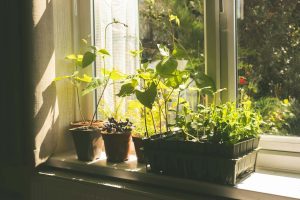
Half-hardy annuals are killed by frost. They need warmth to germinate, and they cannot go outside until all frost risk has passed. Cosmos, zinnia, French marigold, nicotiana, cleome, antirrhinum, lobelia: these are the ones that fill hanging baskets and garden centre displays in summer. They are not hard to grow from seed, but they need a warm windowsill or heated propagator from late February, and they need to be carefully introduced to the outdoors before going in the ground. Skip either of those and you lose the plants.
There is a third group, tender annuals, which includes begonias and impatiens. These need sustained warmth of 21 to 24 degrees to germinate reliably. Without a heated propagator and a warm greenhouse, they are probably not worth attempting from seed. Buy plug plants for those.
Autumn sowing: the route that most people miss
Most of what gets written about sowing annuals from seed focuses on spring, but autumn sowing is the method that produces the best results for hardy types, and it is used by fewer people than it should be. The reason to sow in autumn rather than spring is simple: the plants germinate in autumn, spend the winter as small established rosettes in the ground, and then race away in early spring with a head start of several weeks over anything sown in March or April. Autumn-sown cornflowers and pot marigolds can be flowering by late May; the same varieties from a spring sowing will not flower until mid-July at the earliest.
The sowing method is the same as for spring sowing outdoors. The difference is the timing: late August or September is ideal. You want the seedlings to be small enough to be hardy through winter but well enough established to have a decent root system. Very late autumn sowing can mean seedlings that are too small and vulnerable to a hard frost. If the winter forecast looks particularly brutal, covering the sowings with horticultural fleece or a cloche will bring them through.
Indoor sowing: how to get half-hardy annuals started without damping them off
The window for sowing half-hardy annuals indoors is narrower than most people think. The target is to have plants ready to go out after the last frost, which is late May in most of England and early June further north. Count back ten weeks from that and you get late February to mid-March as the right indoor sowing window. Sow earlier than that and you end up with large, leggy, struggling plants by the time the weather is safe enough to put them out. Sow later and they are small and behind when they go in.
Hardening off: the step that loses the most plants when it gets skipped
Plants grown in a warm house have soft tissue that is not adapted to outdoor conditions. Moving them straight from a warm windowsill into open ground in late May, even if frost is not in the forecast, puts them under more stress than they can absorb at once. Wind, cold nights, direct sun that is stronger than anything they experienced indoors: all of these are shocks. Hardening off is the process of introducing them to those conditions gradually so that the tissue toughens up before planting out.
The method is to move the plants outside during the day for progressively longer periods over about seven to ten days. Start with a couple of hours in a sheltered spot on a mild day. Build up to a full day outside, then a night outside in a cold frame or unheated greenhouse, then several nights out, then plant out once the frost risk has passed. Hardening off failure shows up two or three days after planting: a plant that looked healthy when it went in turns yellow, wilts, and dies back despite no visible frost damage. Scorching from sun the plants were not yet adapted to is usually the cause.
Sowing hardy annuals outdoors in spring: site, timing, and the method that works in a UK climate
The soil temperature threshold for hardy annuals is around 8 degrees. Below that, seeds rot rather than germinate, or sit dormant for weeks and then come up unevenly. A useful indicator that the soil has reached the right temperature is when weed seedlings start to emerge. If nettles and groundsel are coming up in uncultivated patches, the soil is warm enough to sow. The timing varies by location: late March works in southern England in a reasonable year, two to three weeks later further north. Prepare the ground by removing weeds and raking the surface to a fine, crumbly texture. A small amount of general balanced fertiliser raked in before sowing is enough on most soils.
For drills, make shallow grooves with a cane or hoe corner, sow seeds at about half a centimetre apart, cover, and firm. Mark the rows with canes or a sprinkle of sand before sowing so you know where the plants should be before they come up. Mixing the two methods, irregular broadcast patches with offset drills running through them, gives a result that looks more intentional than pure broadcast and more natural than pure drill rows. Succession sowing extends the display: three batches sown two to three weeks apart from late March to early May means flowers from June through September. Several hardy annuals self-seed so freely, nigella, Californian poppy (Eschscholzia californica), Shirley and opium poppies, larkspur, that once established they re-appear each year without replanting. Manage them by thinning rather than trying to collect and resow them exactly.
Ongoing care, and how to keep annuals flowering into autumn
Deadheading is the thing that makes the most difference to how long annuals flower. Once a plant has set seed it stops producing flowers because there is no longer any biological need to attract pollinators. Removing the spent flower heads before the seed develops triggers it to try again. On a plant like cosmos or zinnia, regular deadheading every few days extends the flowering season by weeks. Let them go to seed in September if you want to save the seeds or encourage self-seeding, but keep up with it through July and August.
For saving seed at the end of the season: wait until the seedheads are brown and dry but before the capsules have split and shed. Cut the heads into a paper bag and let them dry further in a warm, airy room. Store in paper envelopes, not plastic, in a cool, dark, and dry place. Hybrid and F1 varieties will not come true from saved seed; open-pollinated types, including most traditional varieties of cornflower, poppy, and nigella, will.